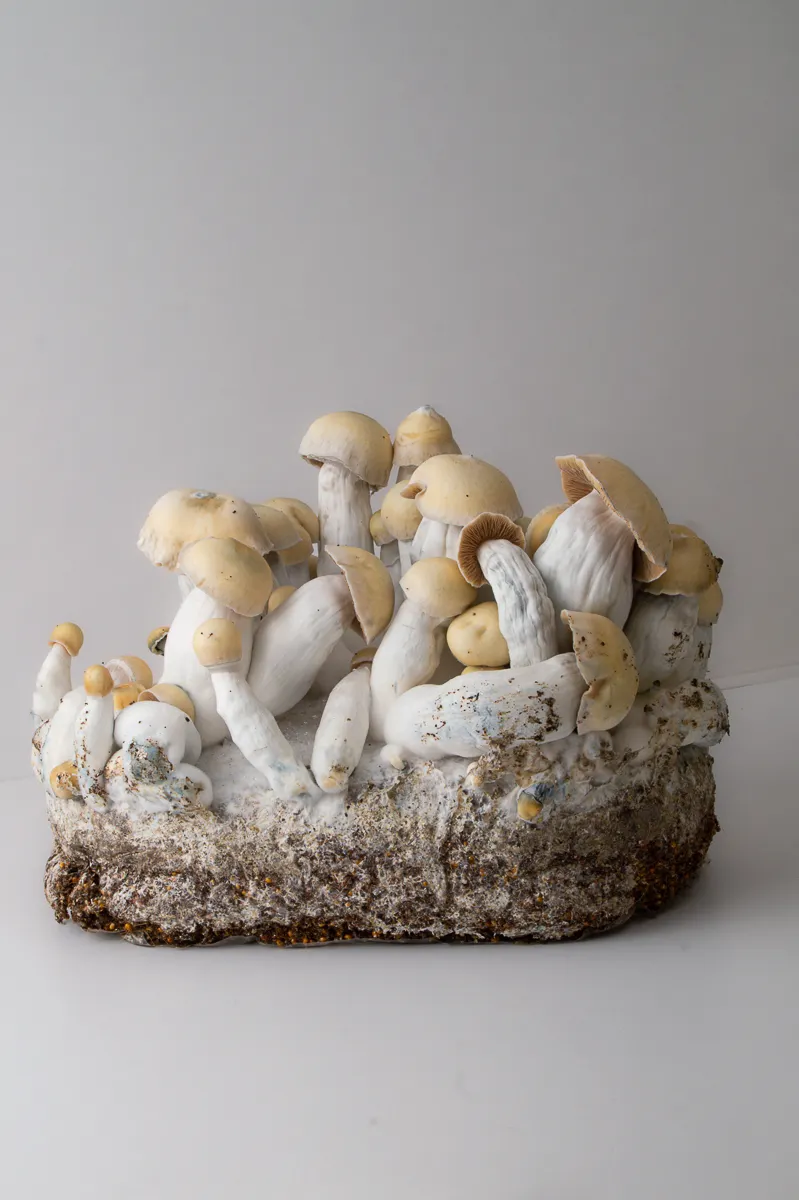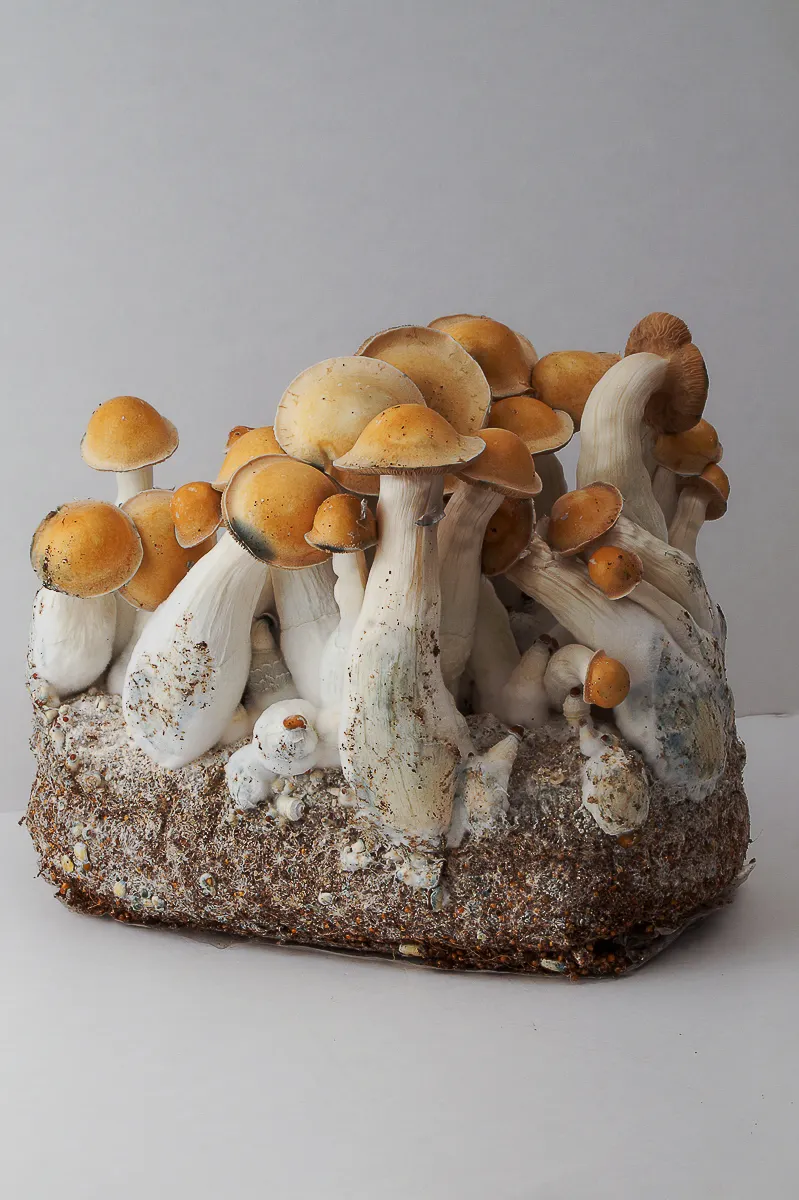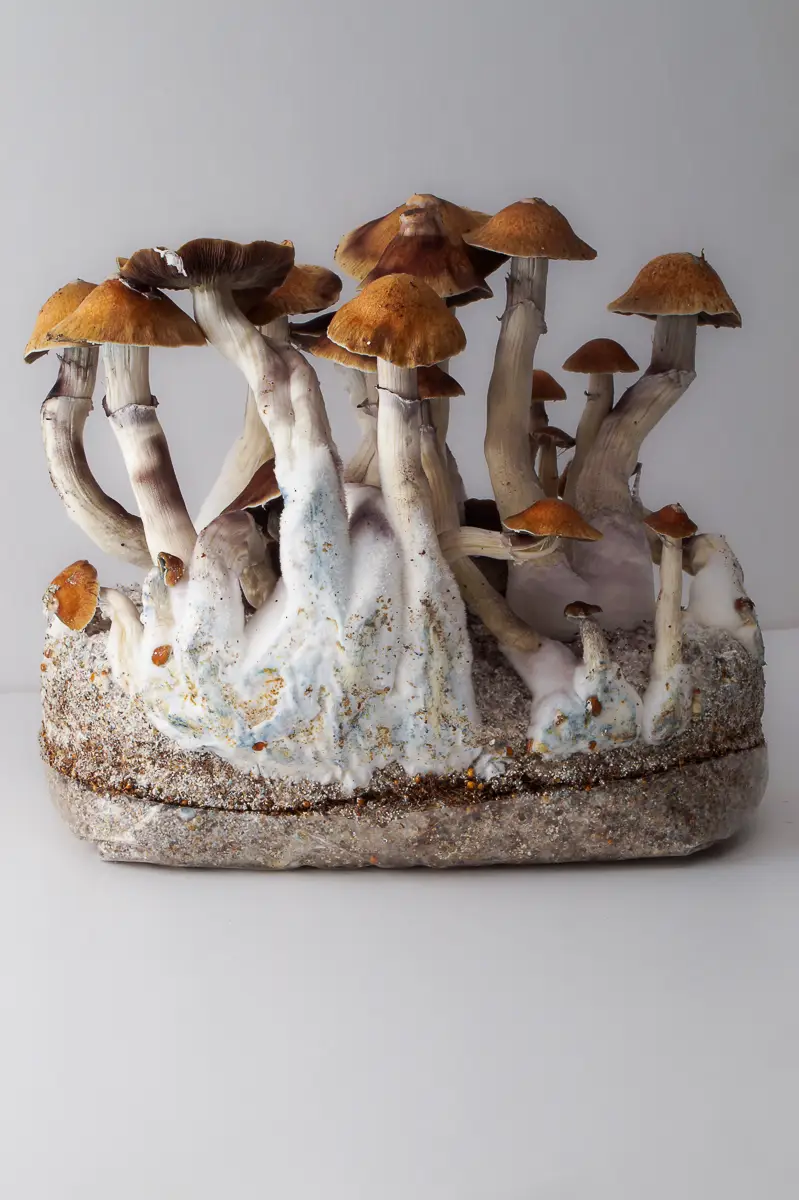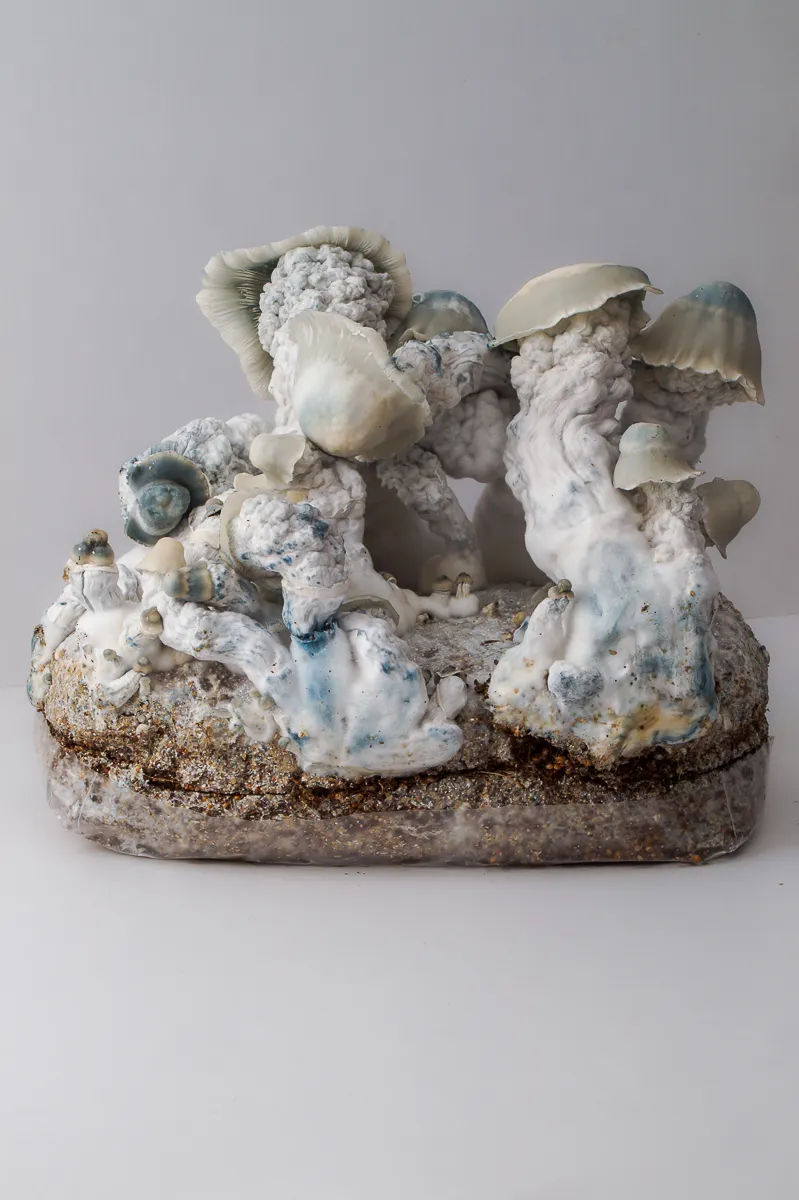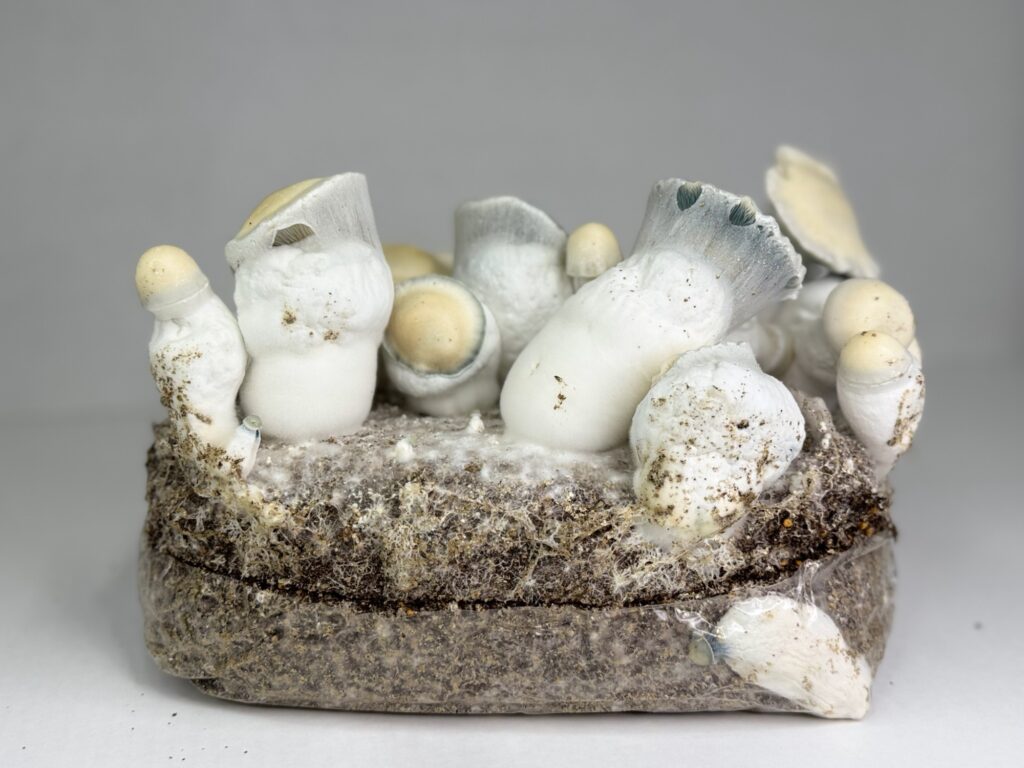

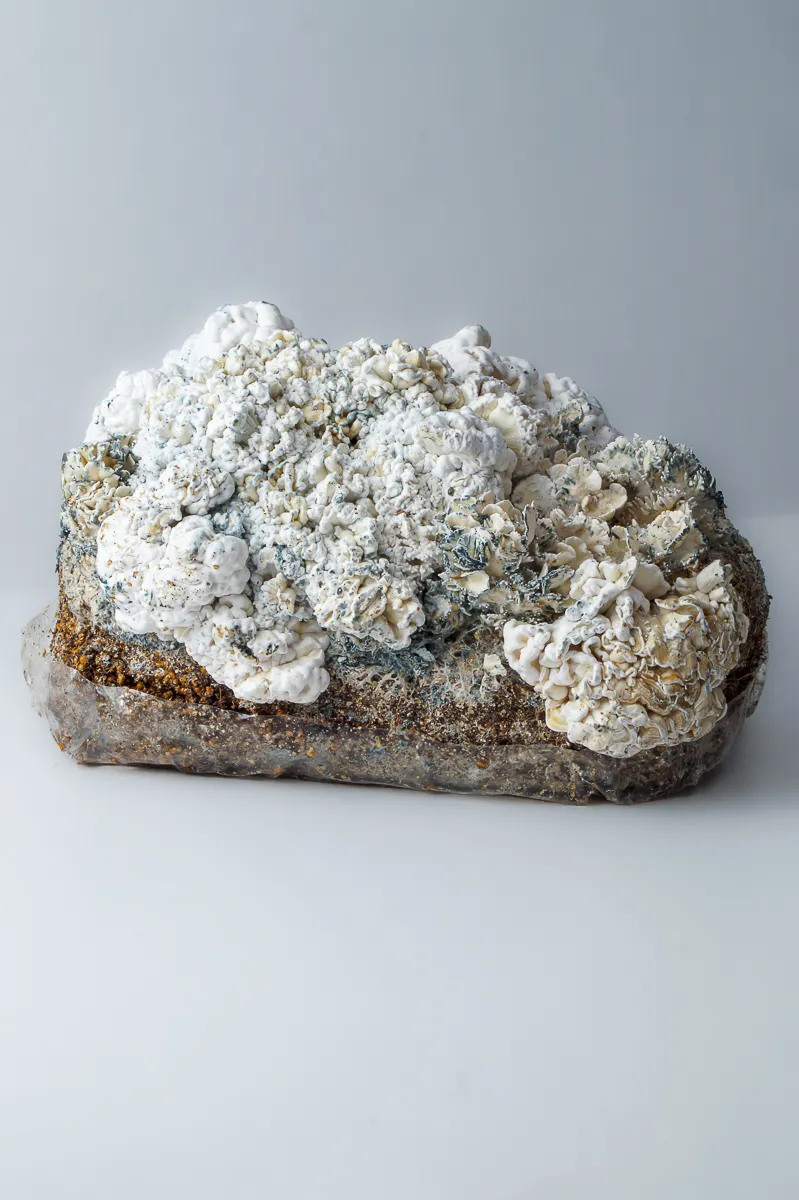



Enigma is a mutation derived from the Tidal Wave line of Psilocybe cubensis.
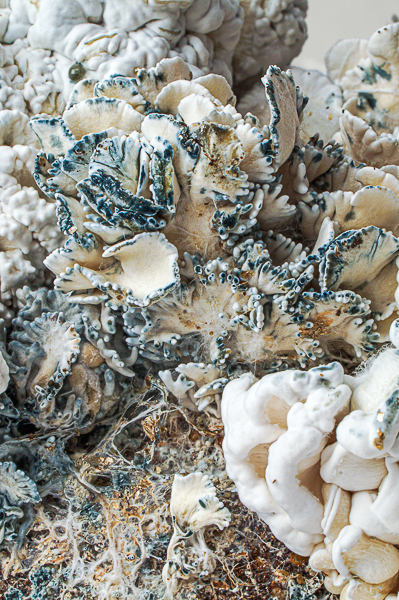
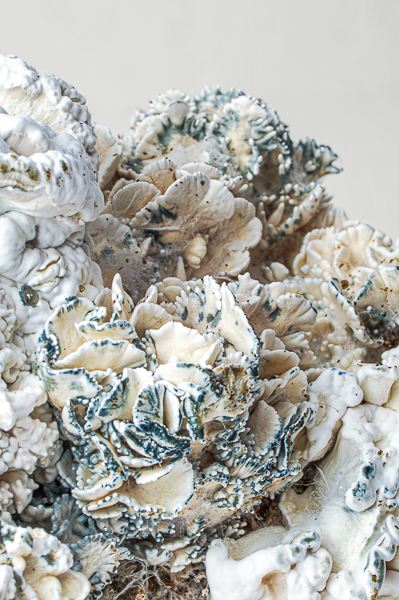
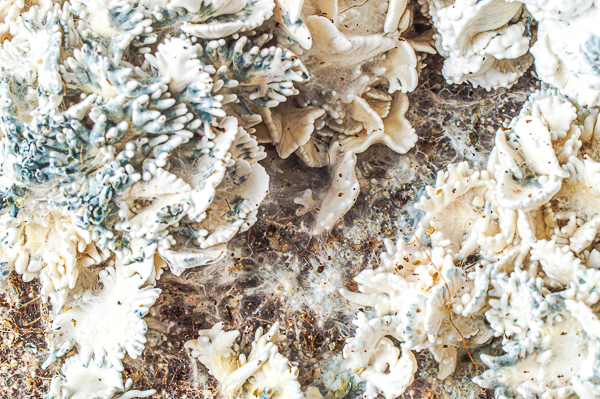
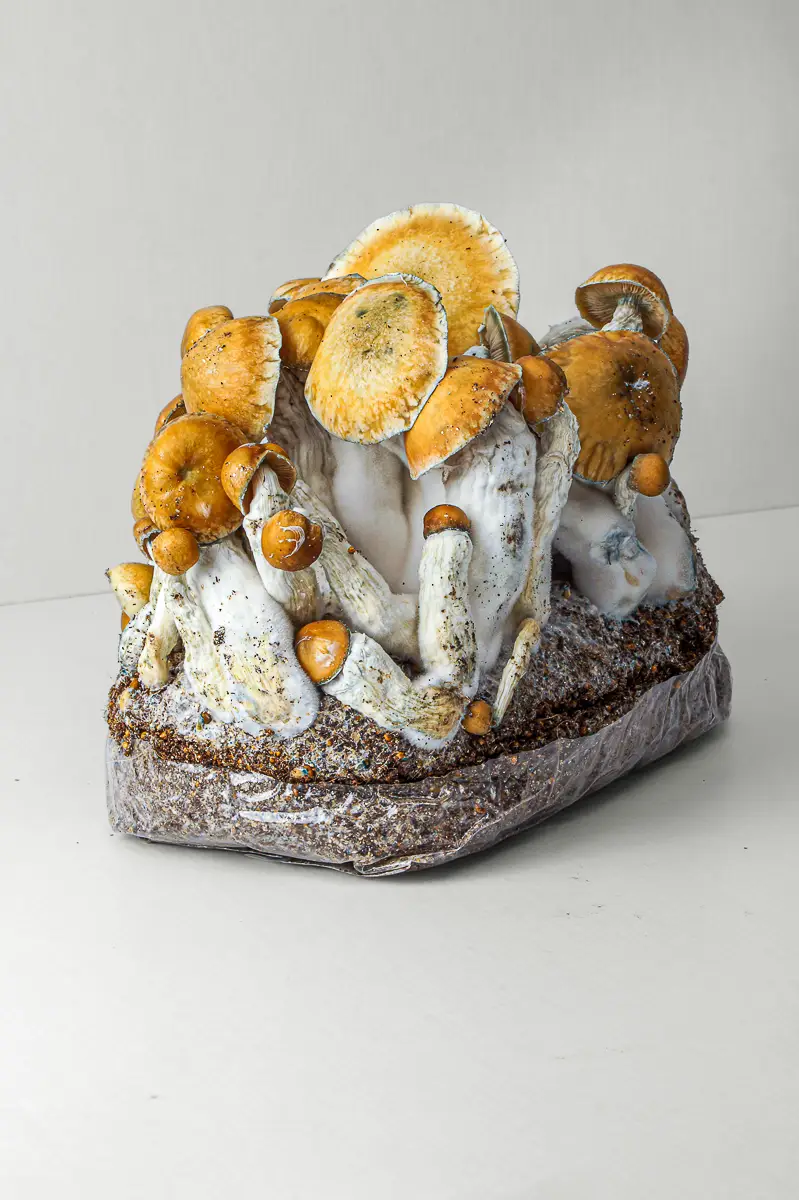
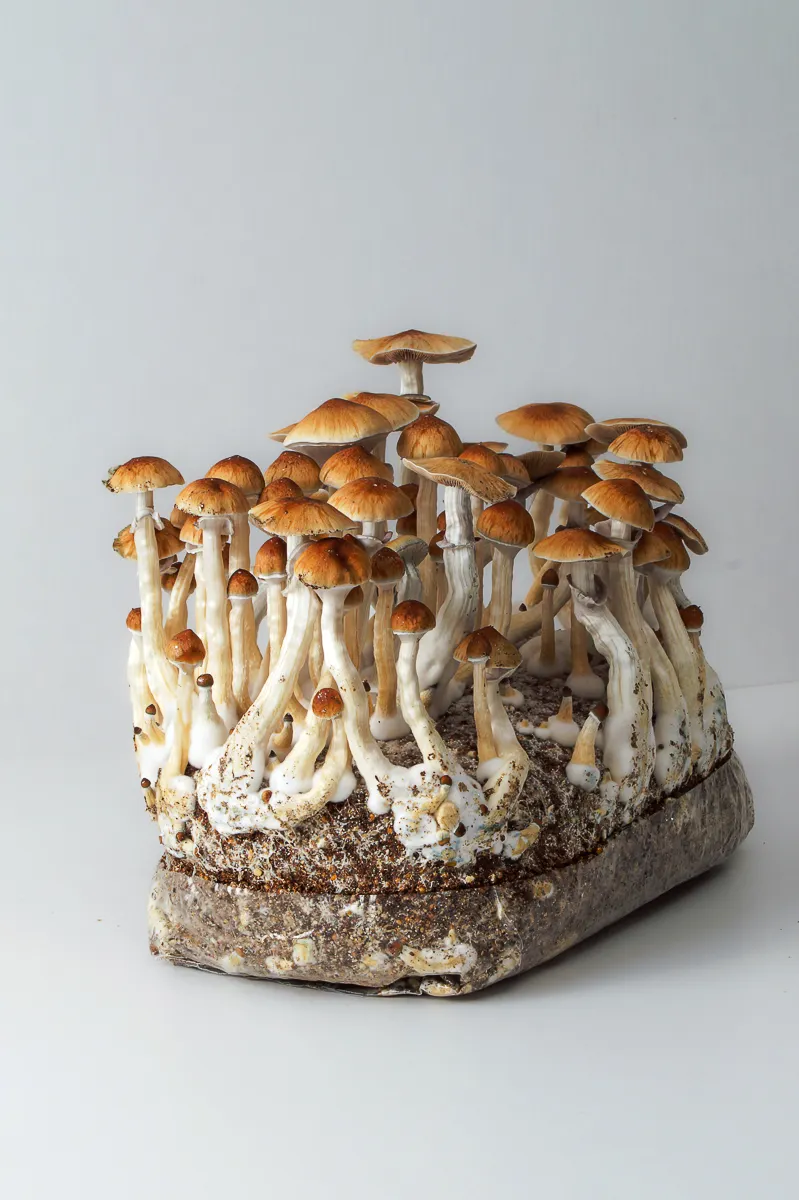
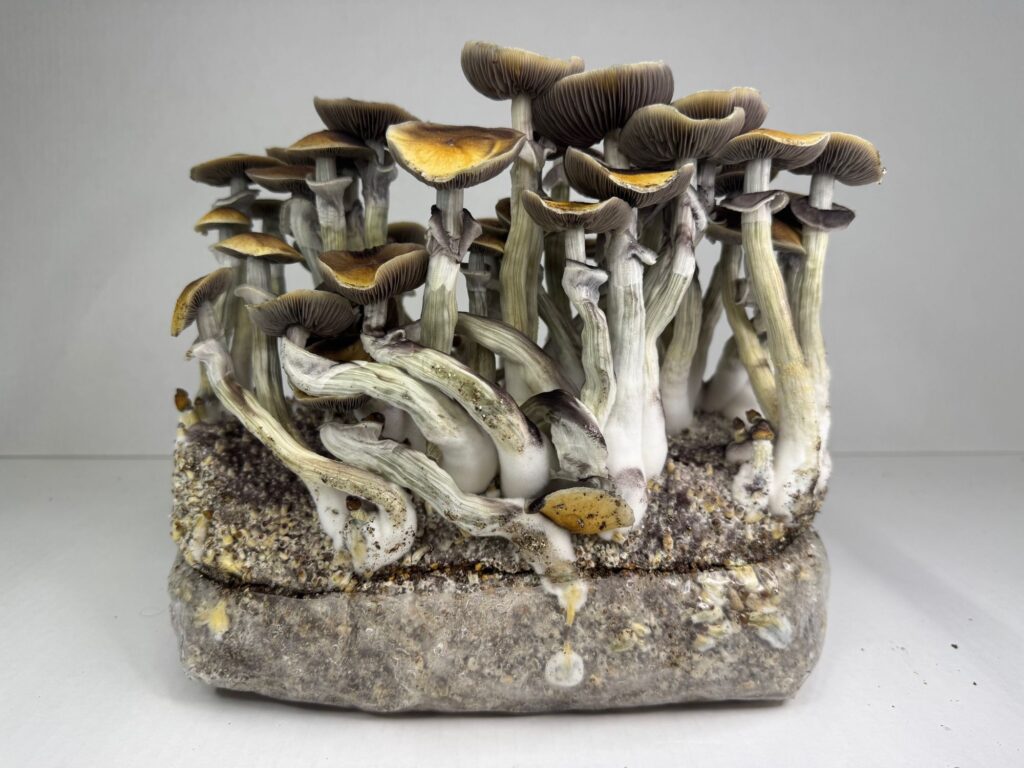
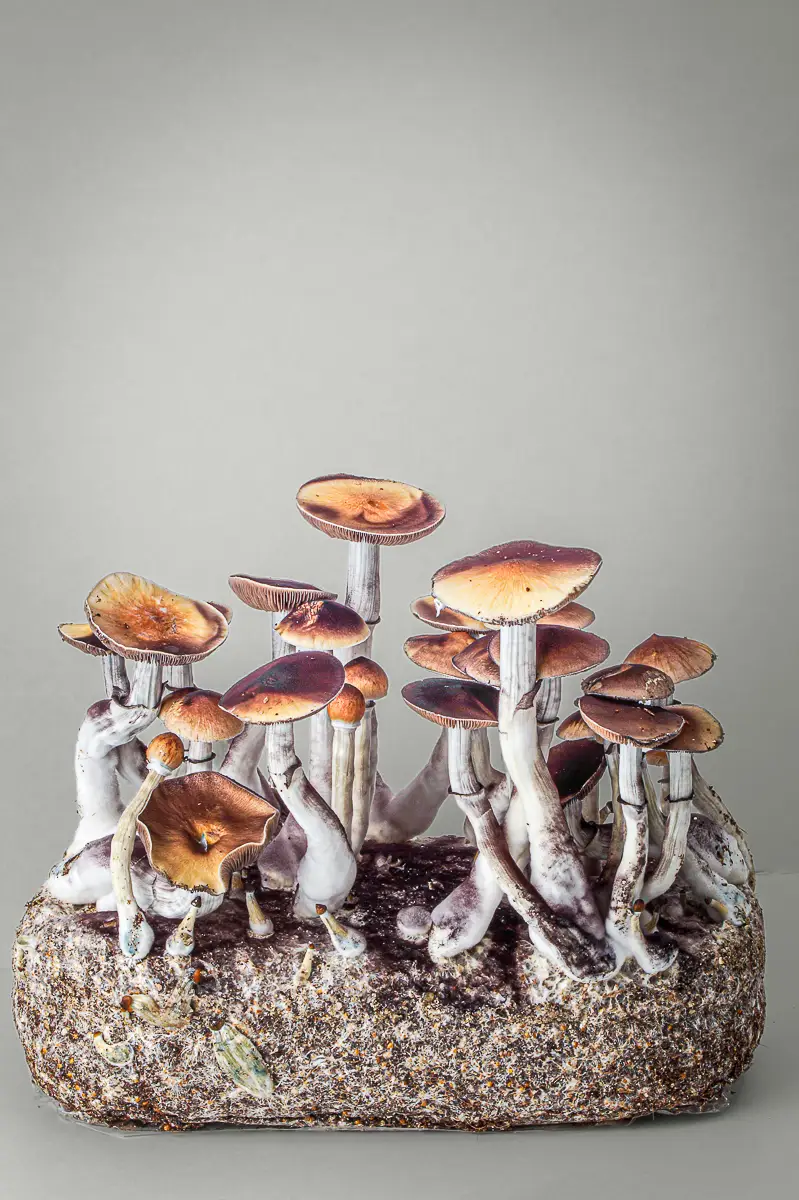
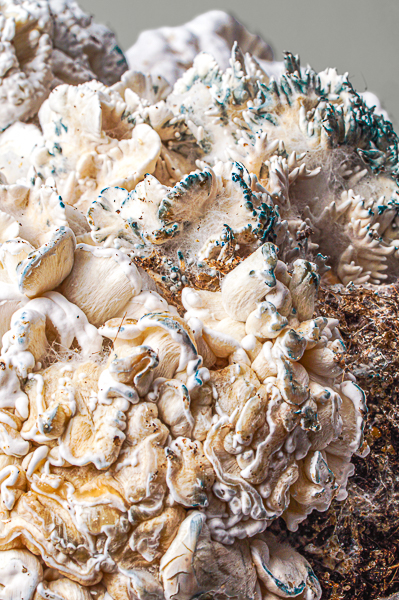
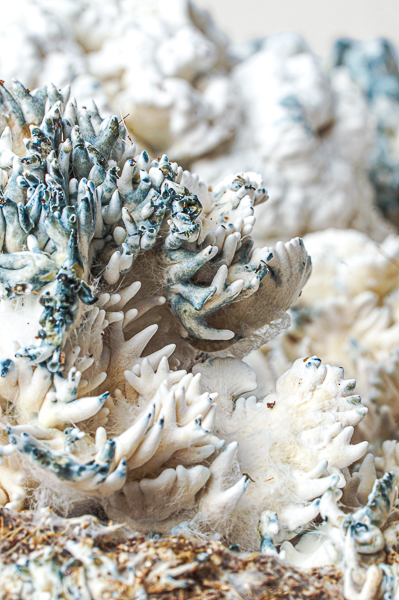
Instead of conventional fruiting bodies with stems and caps, the Enigma grow kit forms compact, irregular structures with a branching, coral-like appearance. Its morphology represents a marked departure from the standard cubensis form.
The line
About Enigma (Tidal Wave 2)
The Tidal Wave line was created by crossing B+ with Penis Envy. Enigma emerged as a mutation that changed the way fruiting bodies form in comparison with classic Psilocybe cubensis varieties. The line attracted wider attention within the mycological community during the 2021 Psilocybin Cup. Its unusual phenotype is generally associated with Tidal Wave 2, although the source material focuses more on the resulting morphology than on a detailed breeder history.
Morphology
Structure and appearance of Enigma
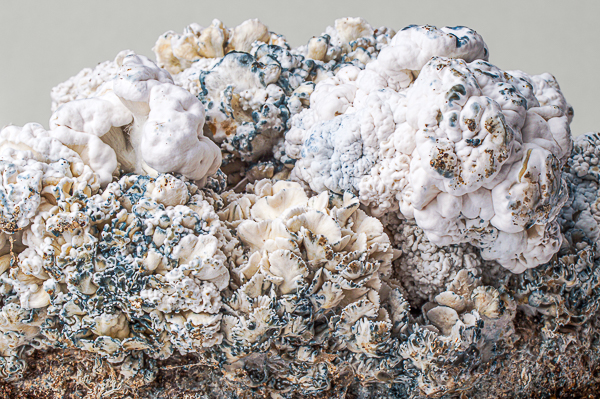
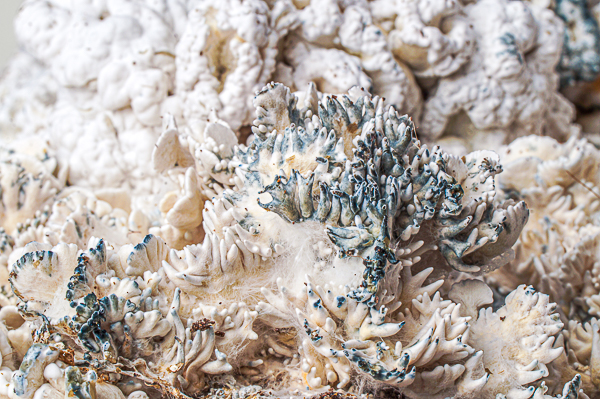
Enigma develops as a dense, branching mass with numerous folds and irregular growths. Its form resembles coral or a compact cluster more than a conventional mushroom. In most cases, it does not produce typical spores. The structures grow slowly while developing considerable weight and tissue density. When pressed or damaged, the tissue may bruise to a deep turquoise or metallic blue as the compounds it contains oxidise.
Development
Development profile of Enigma
The line does not display the usual maturation signs associated with a breaking veil or opening cap. The clearest indicator is a change in tissue texture. During the early stages, the structure remains very hard and compact and is sometimes compared with a cauliflower. Over time, it becomes softer, occasionally likened to foam, and yields more readily to pressure. Its gradual development and texture-based maturity indicators make it fundamentally different from classically formed cubensis varieties.
In short
Why choose Enigma?
The Enigma grow kit presents one of the most visually distinctive mutations in the Tidal Wave family. Its dense coral-like structures, slow development, unusual tissue texture and pronounced blue bruising provide a clear contrast with conventional Psilocybe cubensis morphology.