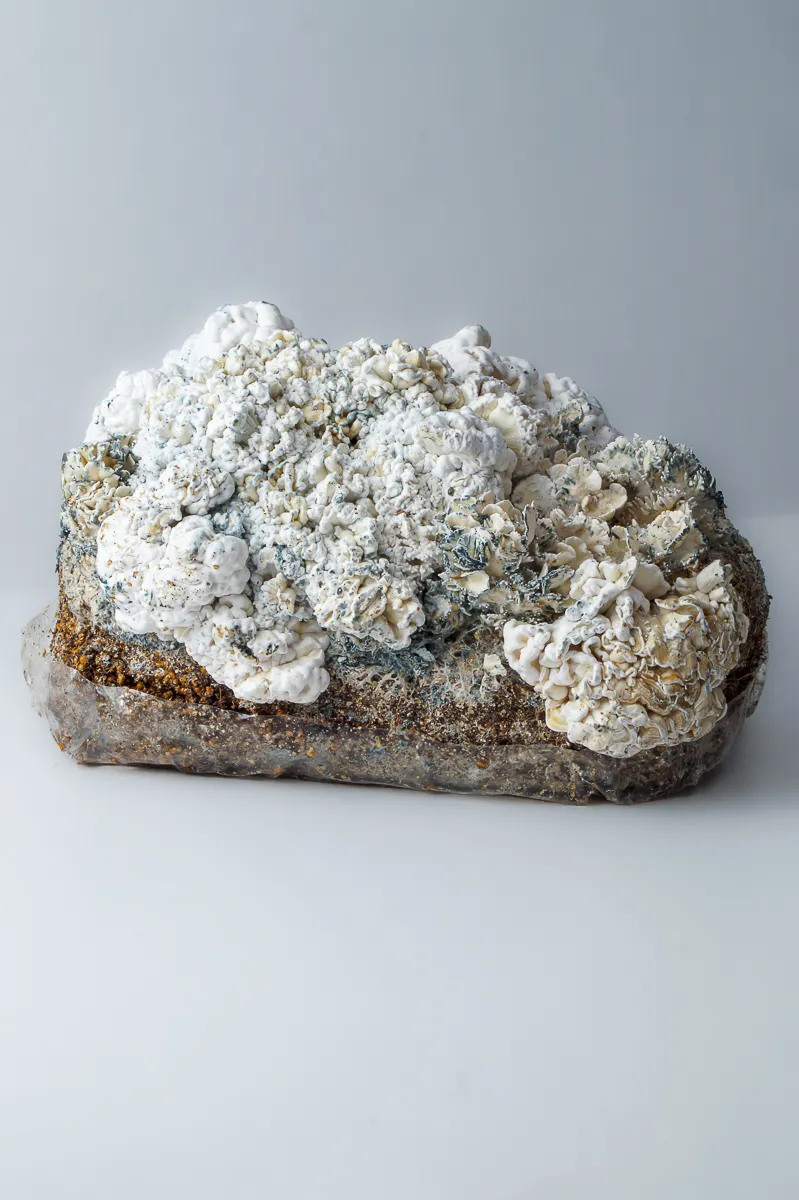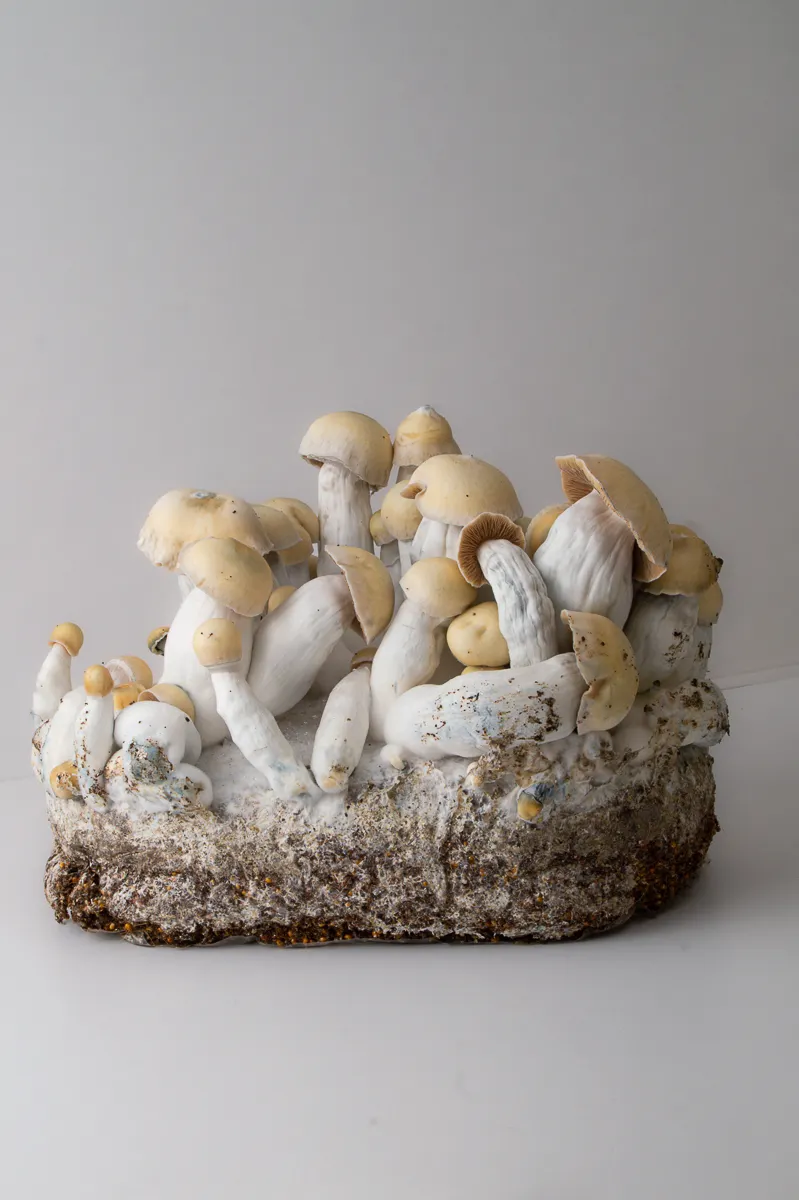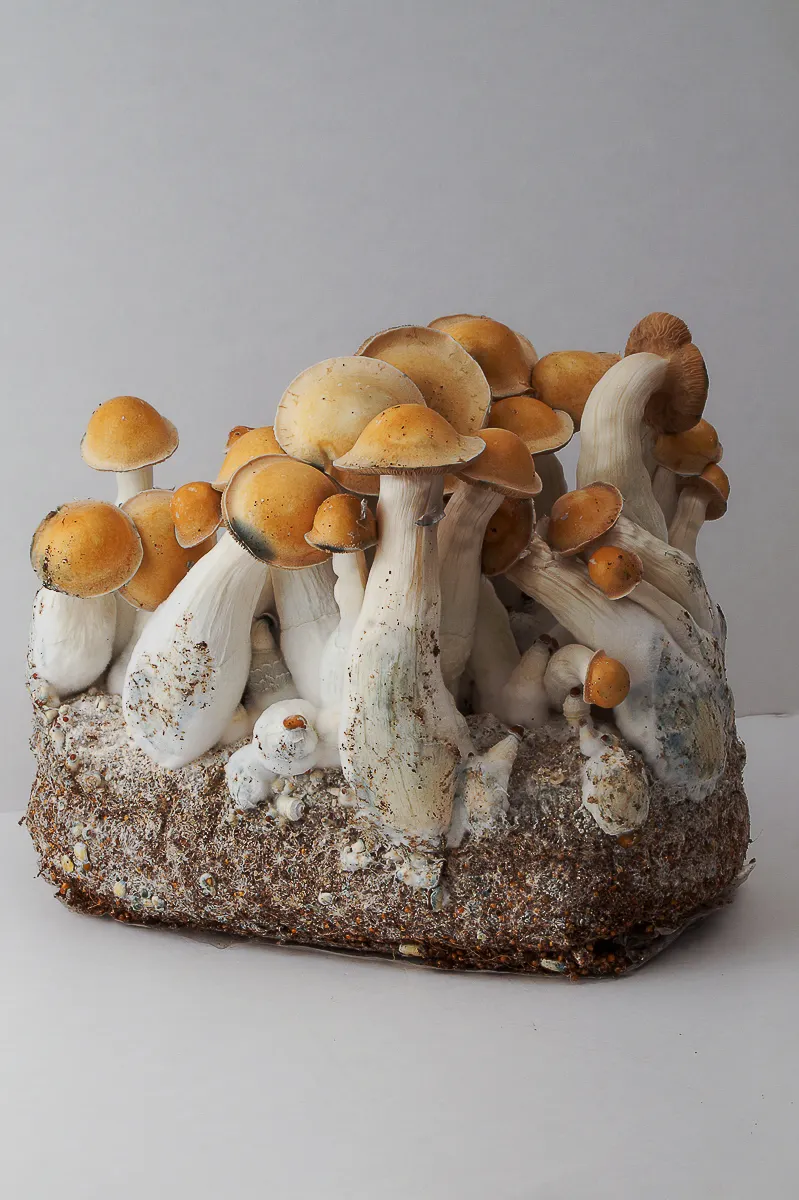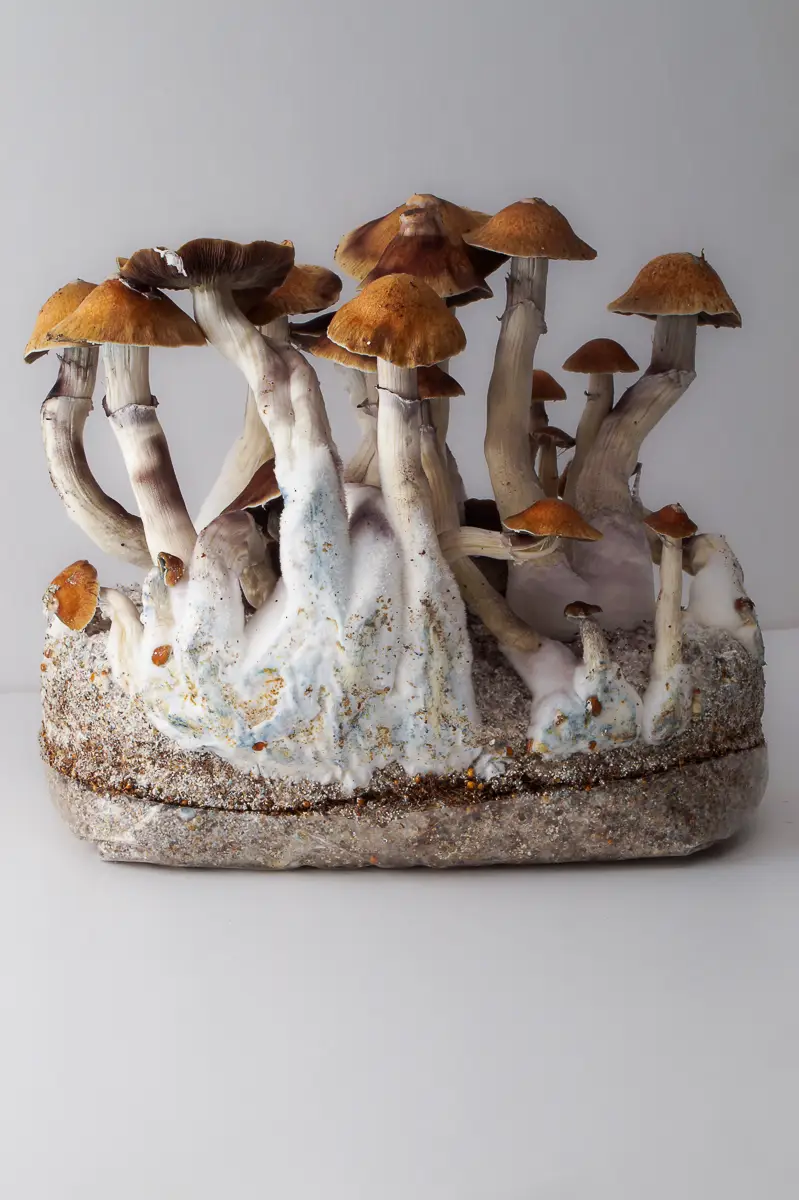

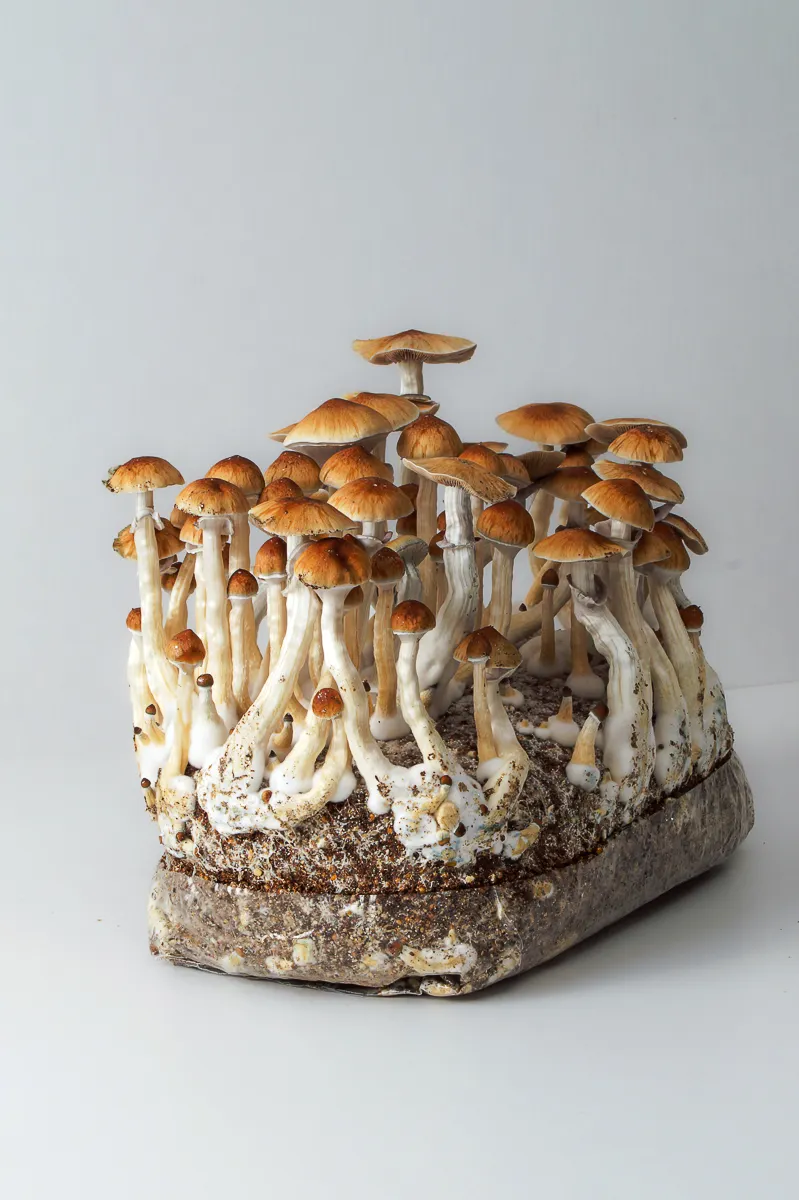

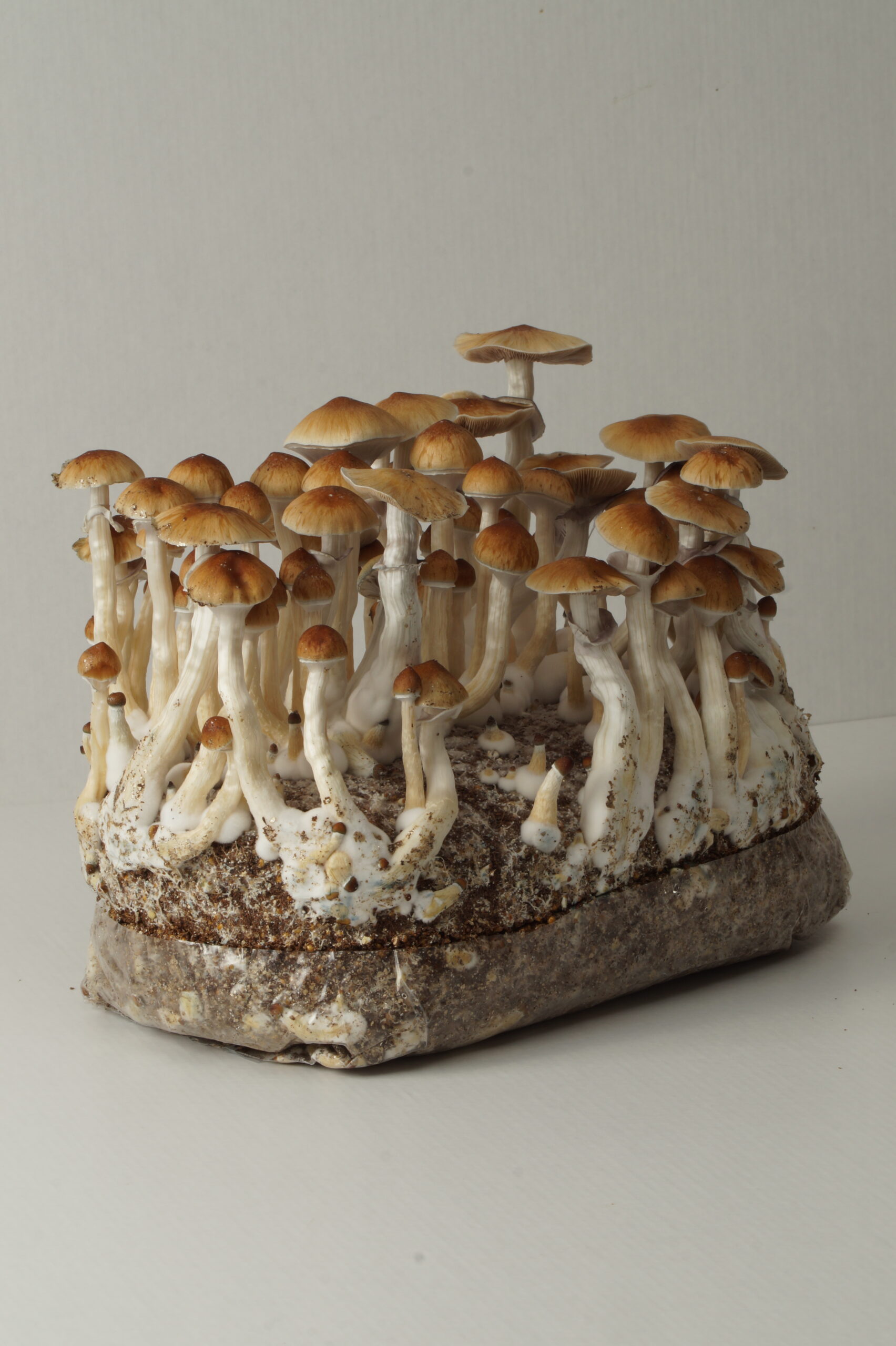


McKennaii is a Psilocybe cubensis variety named after Terence McKenna, the philosopher, writer and populariser of knowledge about psilocybin mushrooms.
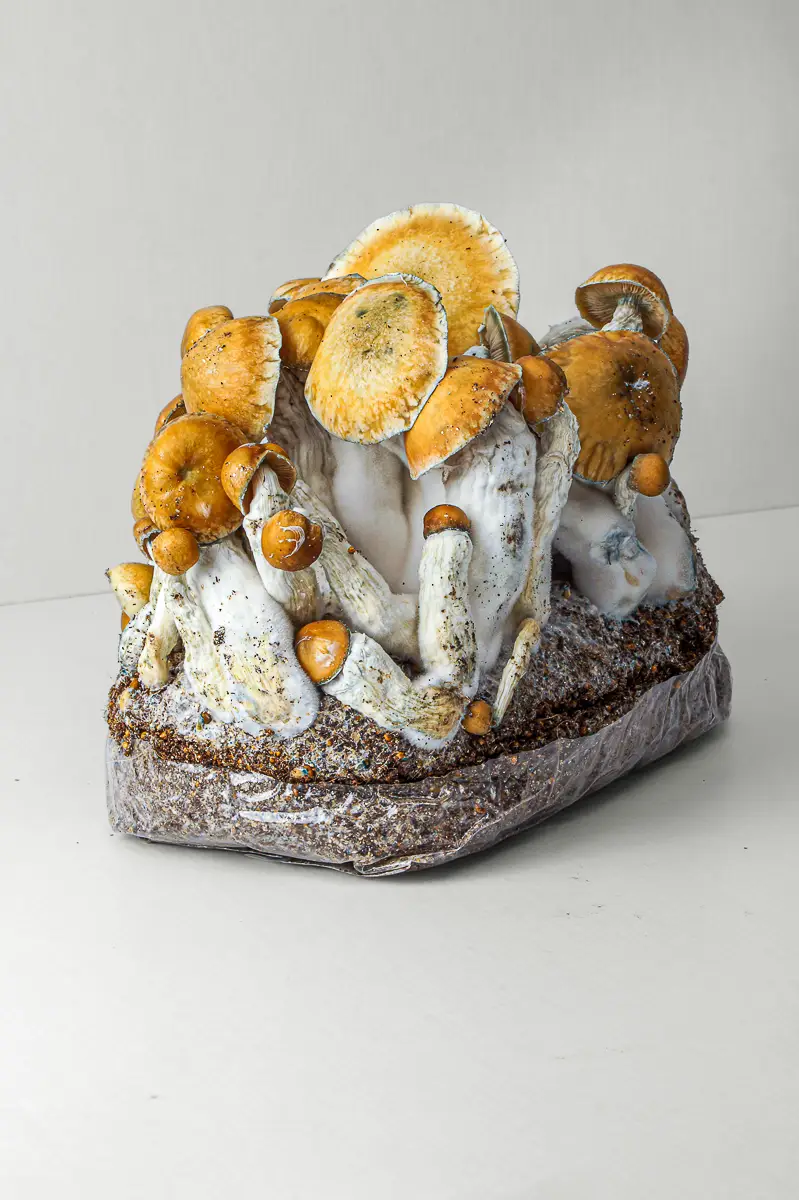
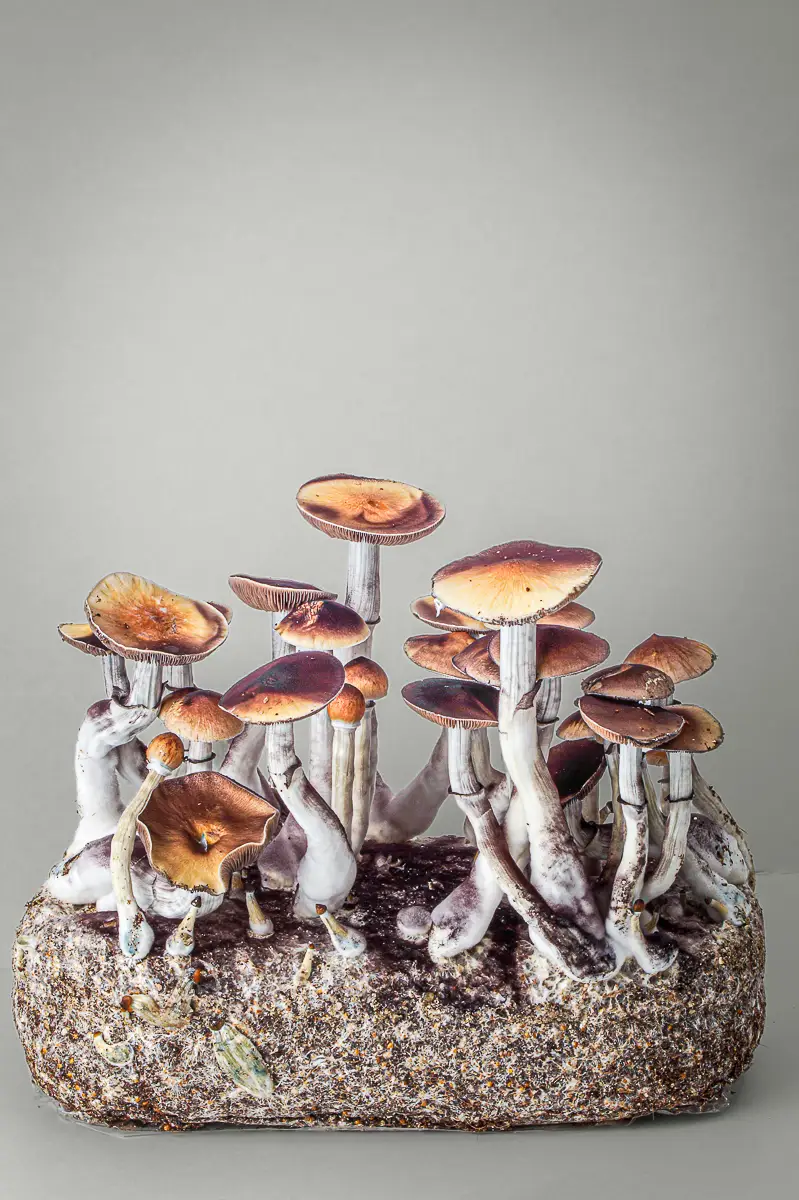
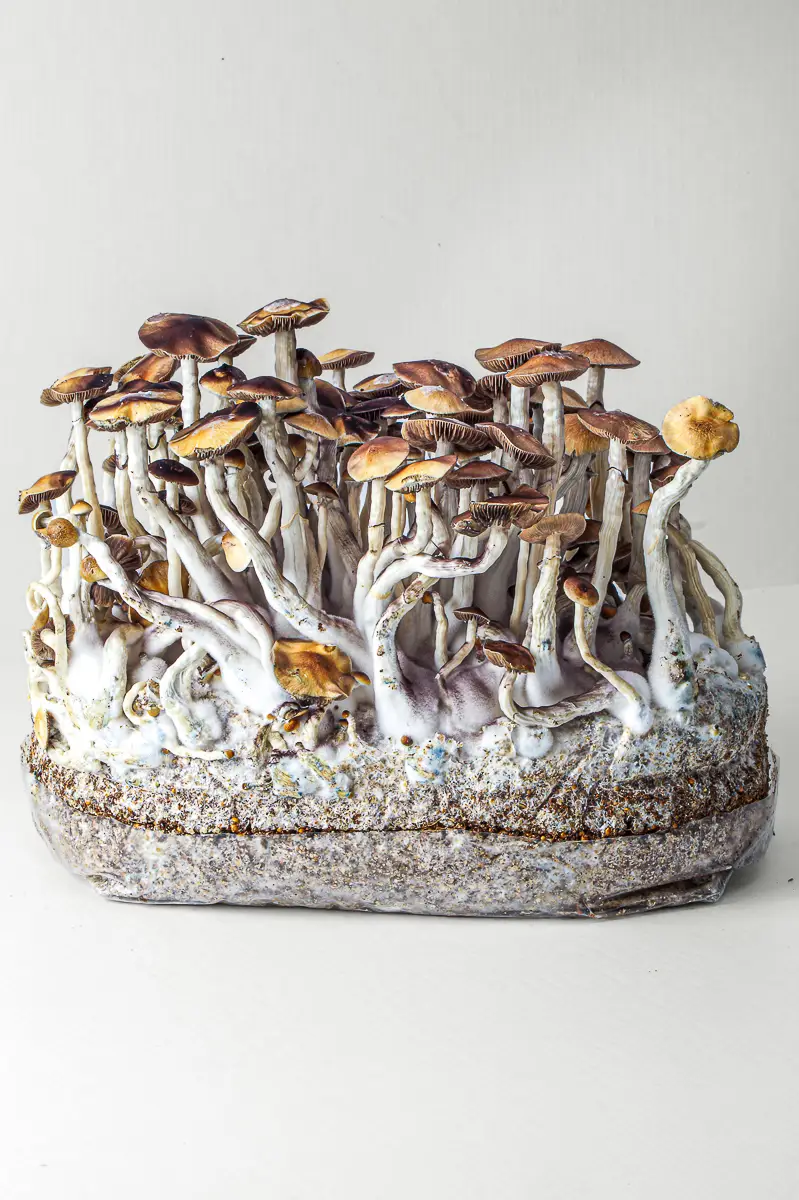
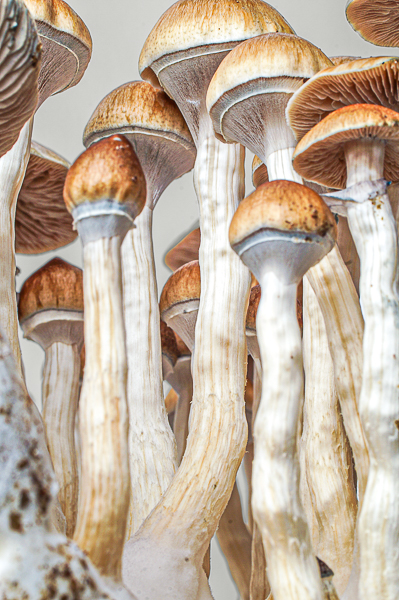
The McKennaii grow kit is associated with abundant fruiting, dense clusters and slender golden-brown fruiting bodies.
The line
About McKennaii
The exact origin of the variety has not been conclusively documented. According to some sources, the line was developed in the Netherlands as a tribute to Terence McKenna, who played an important role in the wider cultural discussion of psilocybin mushrooms during the late 20th century. McKenna and his brother Dennis also helped spread knowledge about home cultivation and co-authored an influential guide on the subject. The variety’s name therefore functions primarily as a symbolic reference to his contribution to the field.
Morphology
Structure and appearance of McKennaii
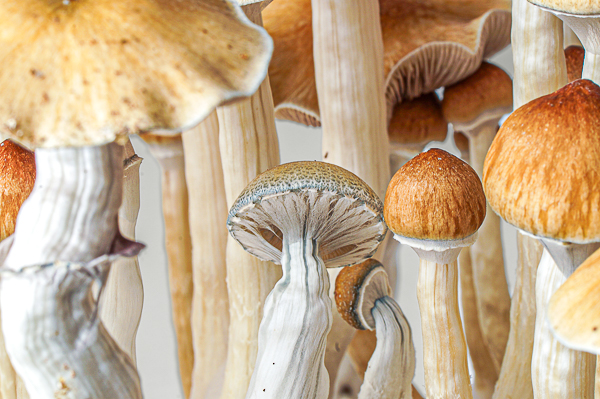
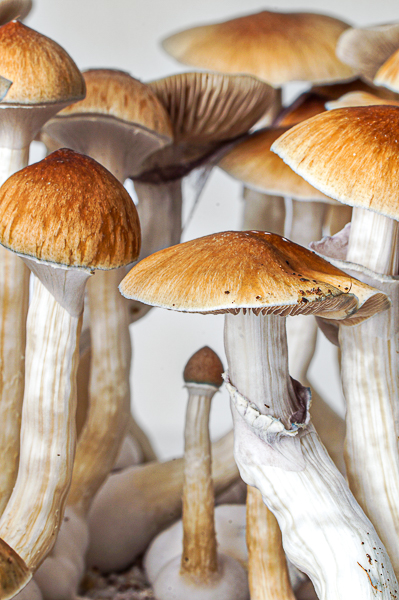
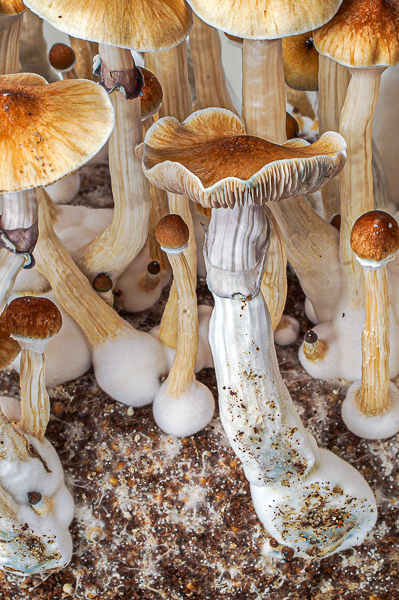
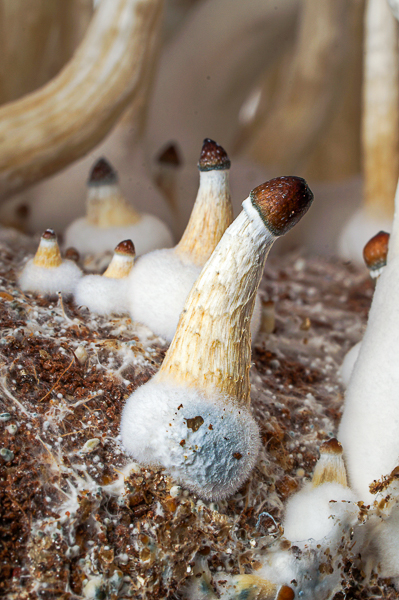
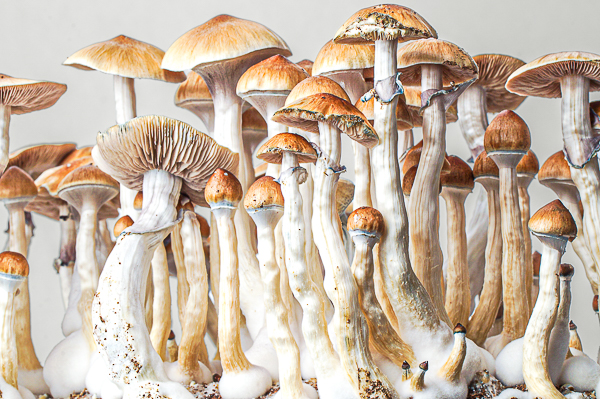
The fruiting bodies develop slender, pale stems and golden-brown caps with a distinctly darker centre and a lighter ochre edge. They often appear in dense clusters, and the line is associated with the abundant release of dark-purple spores. The caps remain relatively small and flatter than those of some heavier cubensis lines, while the long stems preserve a more classical silhouette. In terms of potency, the source material describes McKennaii as one of the milder Psilocybe cubensis varieties.

Development
Development profile of McKennaii
Maturity is easiest to recognise when the veil beneath the cap breaks. The caps then open gradually, the fruiting bodies reach their full size and spore release begins. The source material associates development with approximately 21–25°C and notes that the line is cultivated in specialised, certified laboratory settings. Its overall morphology remains regular and readily comparable with other classic cubensis varieties.
In short
Why choose McKennaii?
The McKennaii grow kit combines a well-known Psilocybe cubensis name with slender fruiting bodies, golden-brown caps and a tendency to form dense clusters. It offers a clear historical and visual contrast with albino, Penis Envy-related and mutation-based genetics.