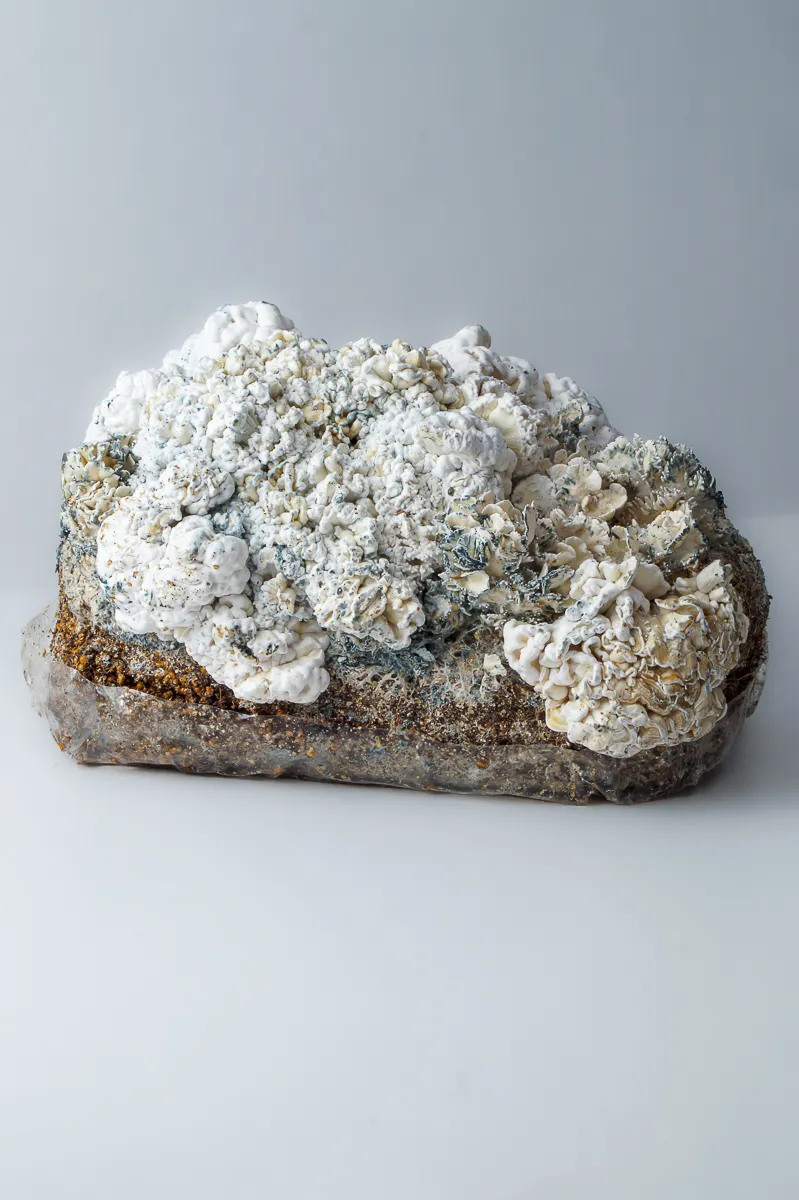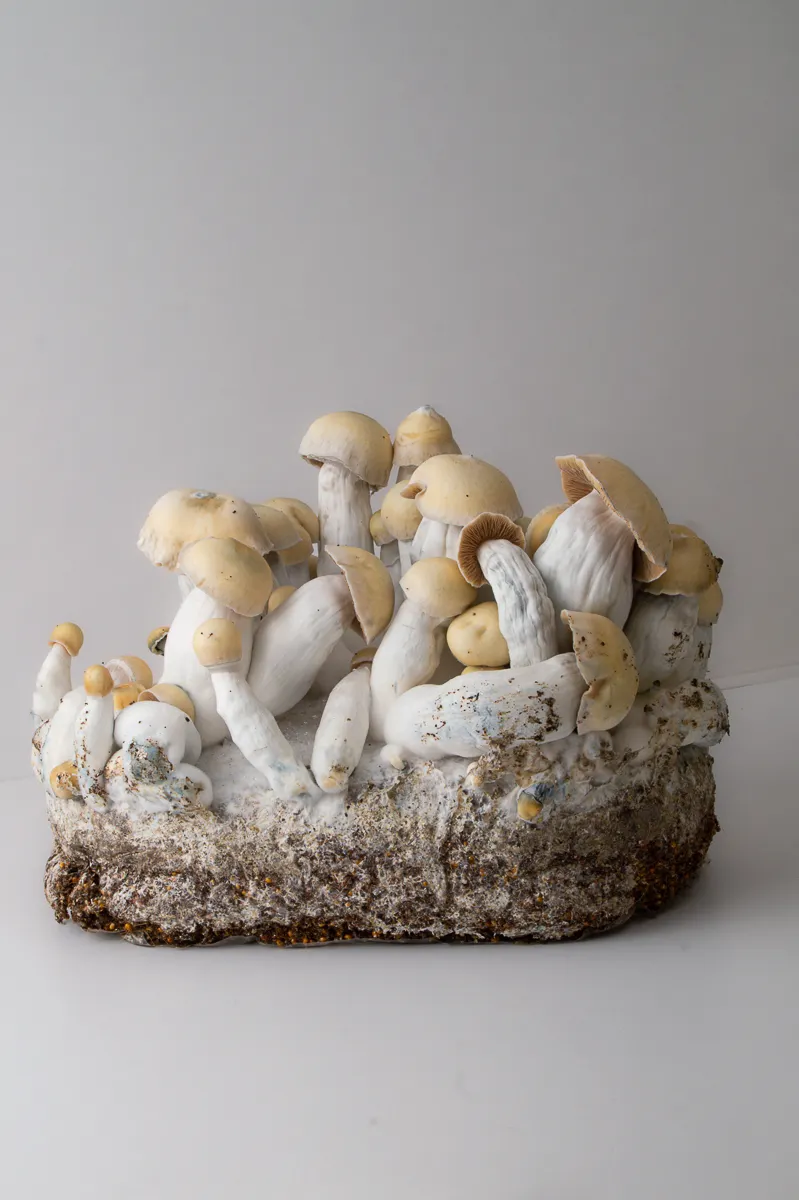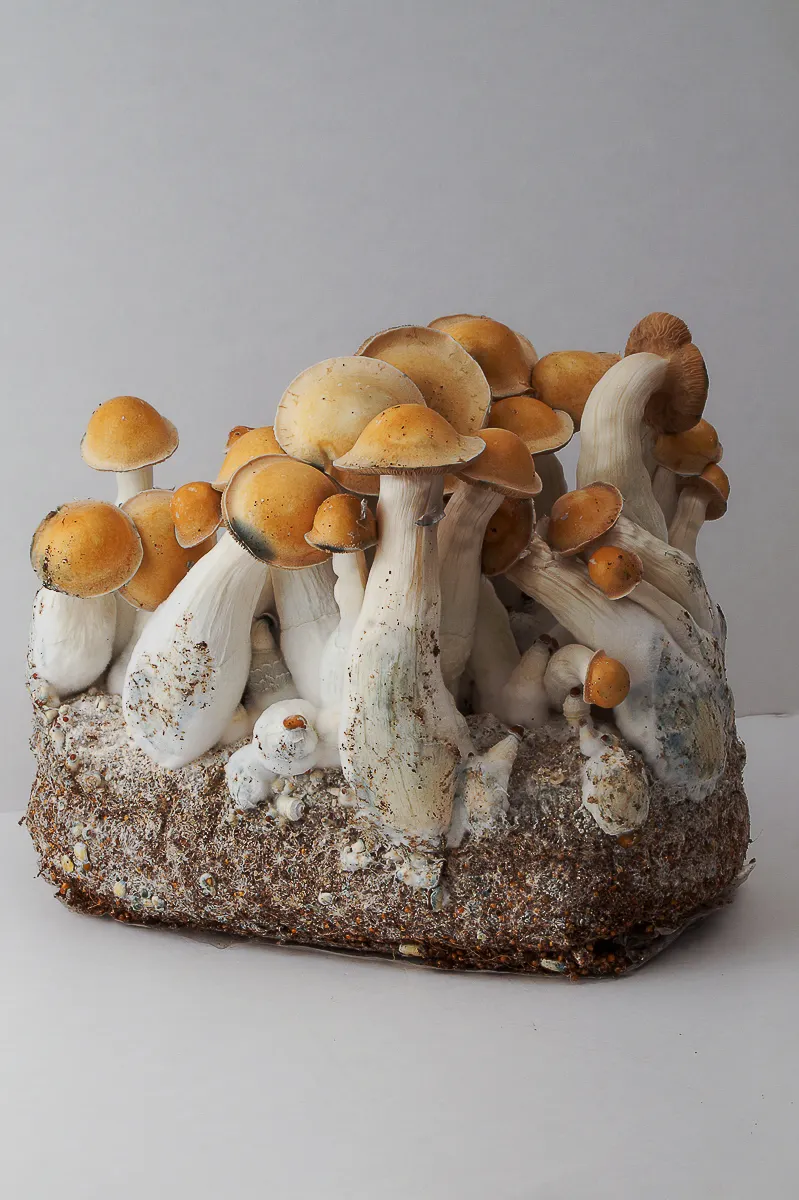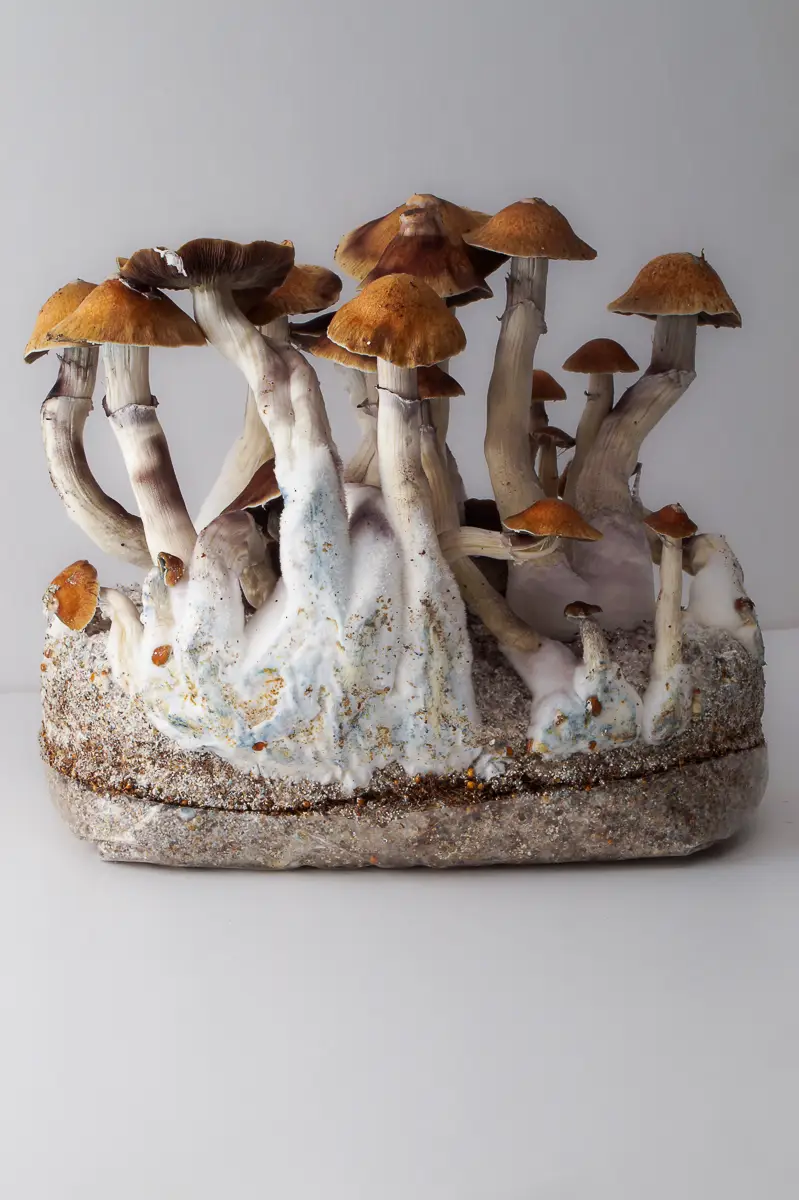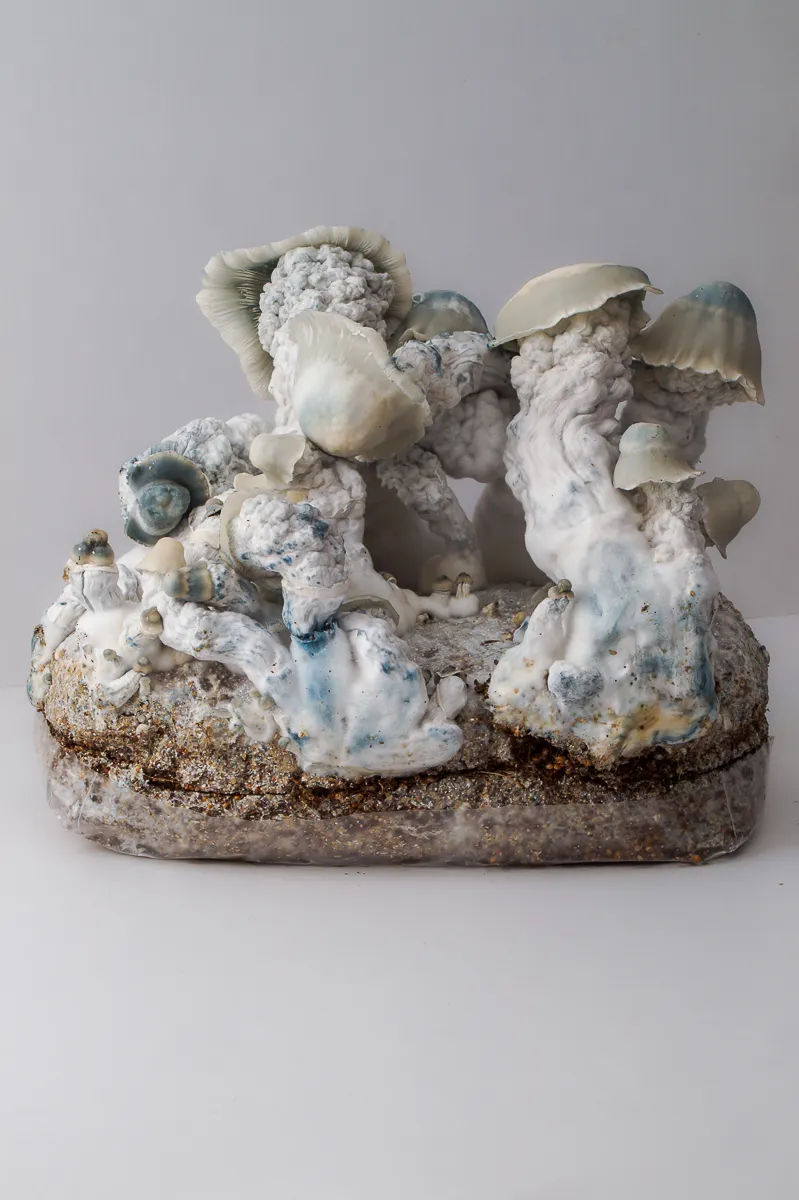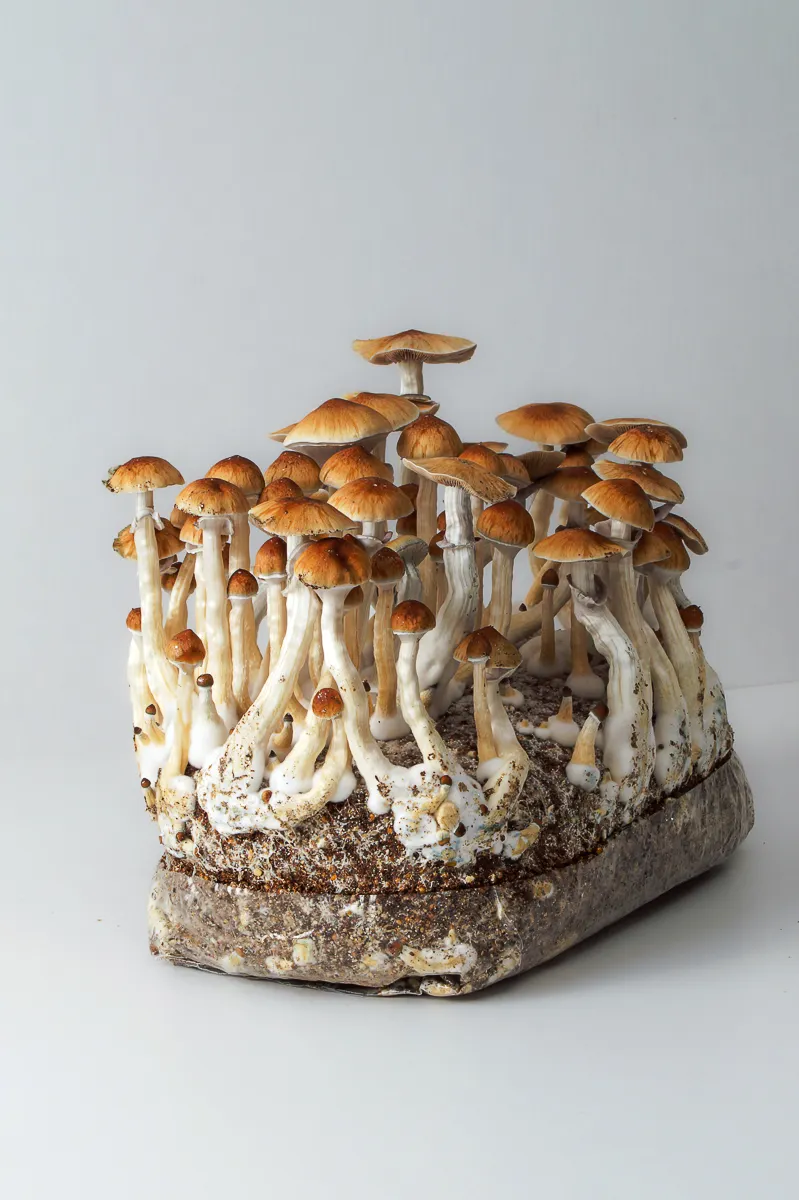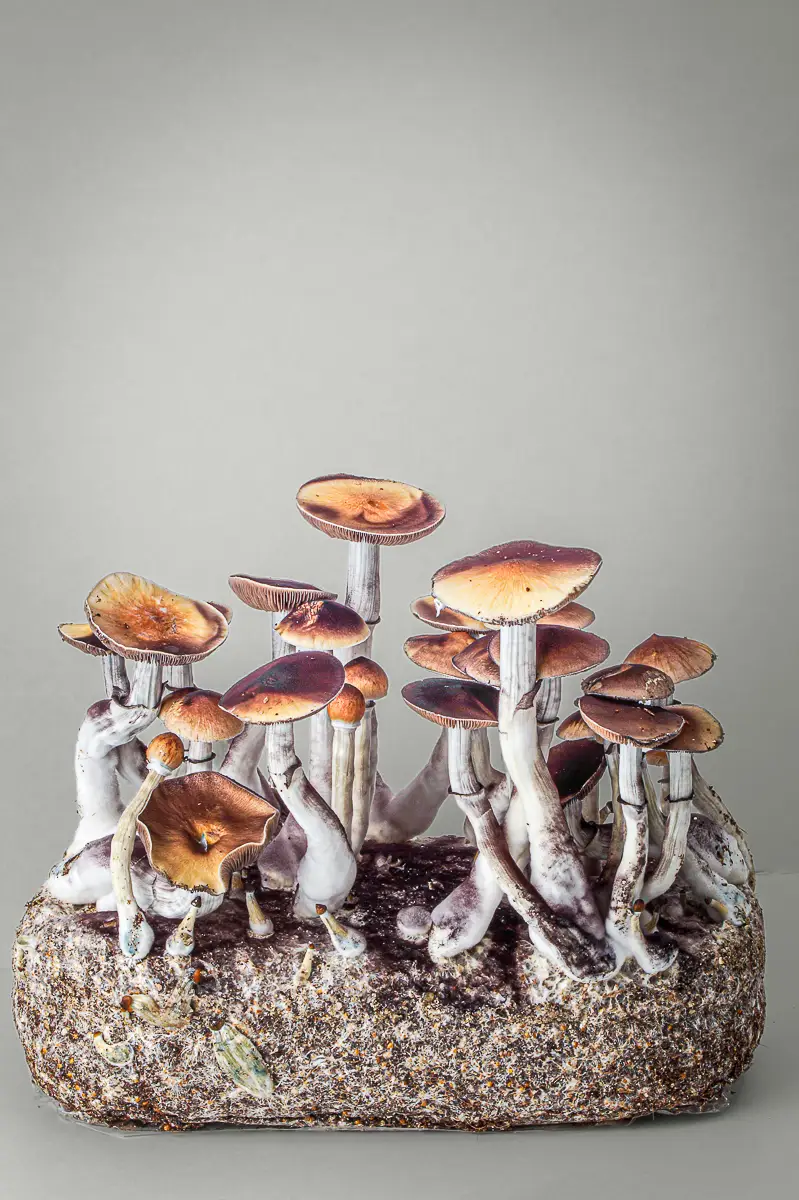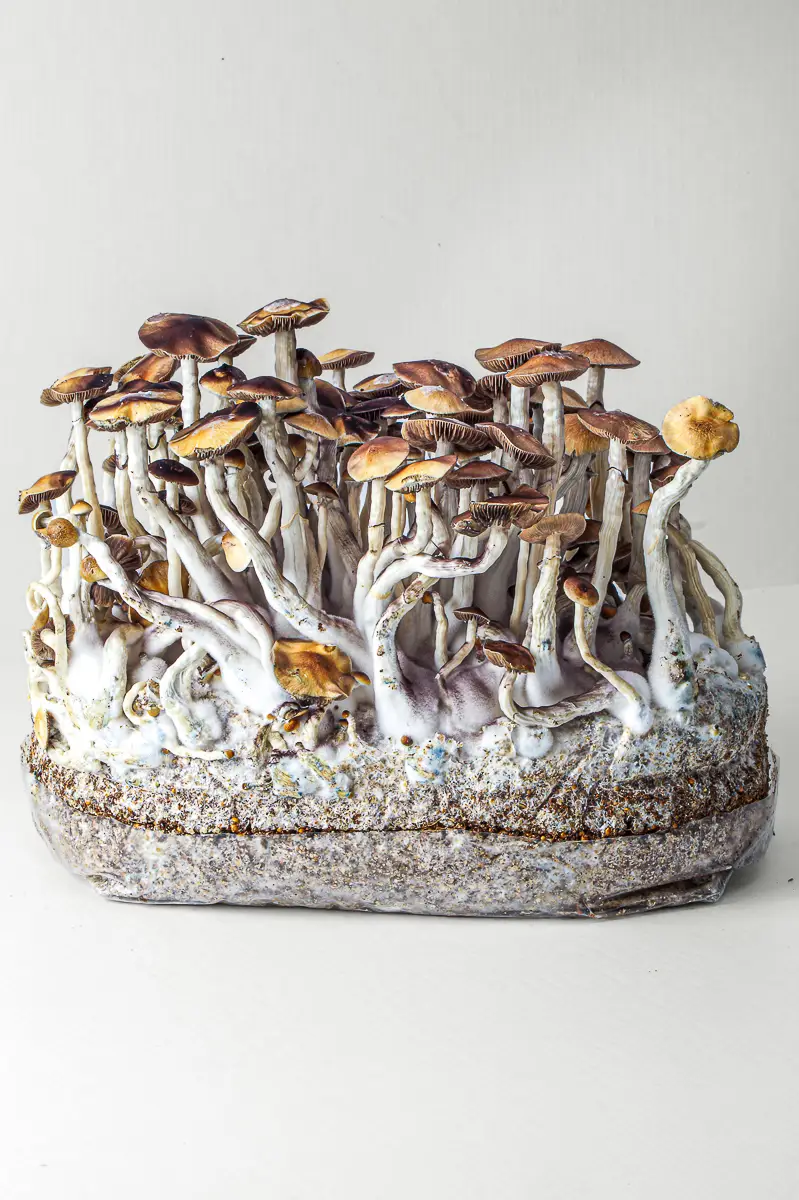

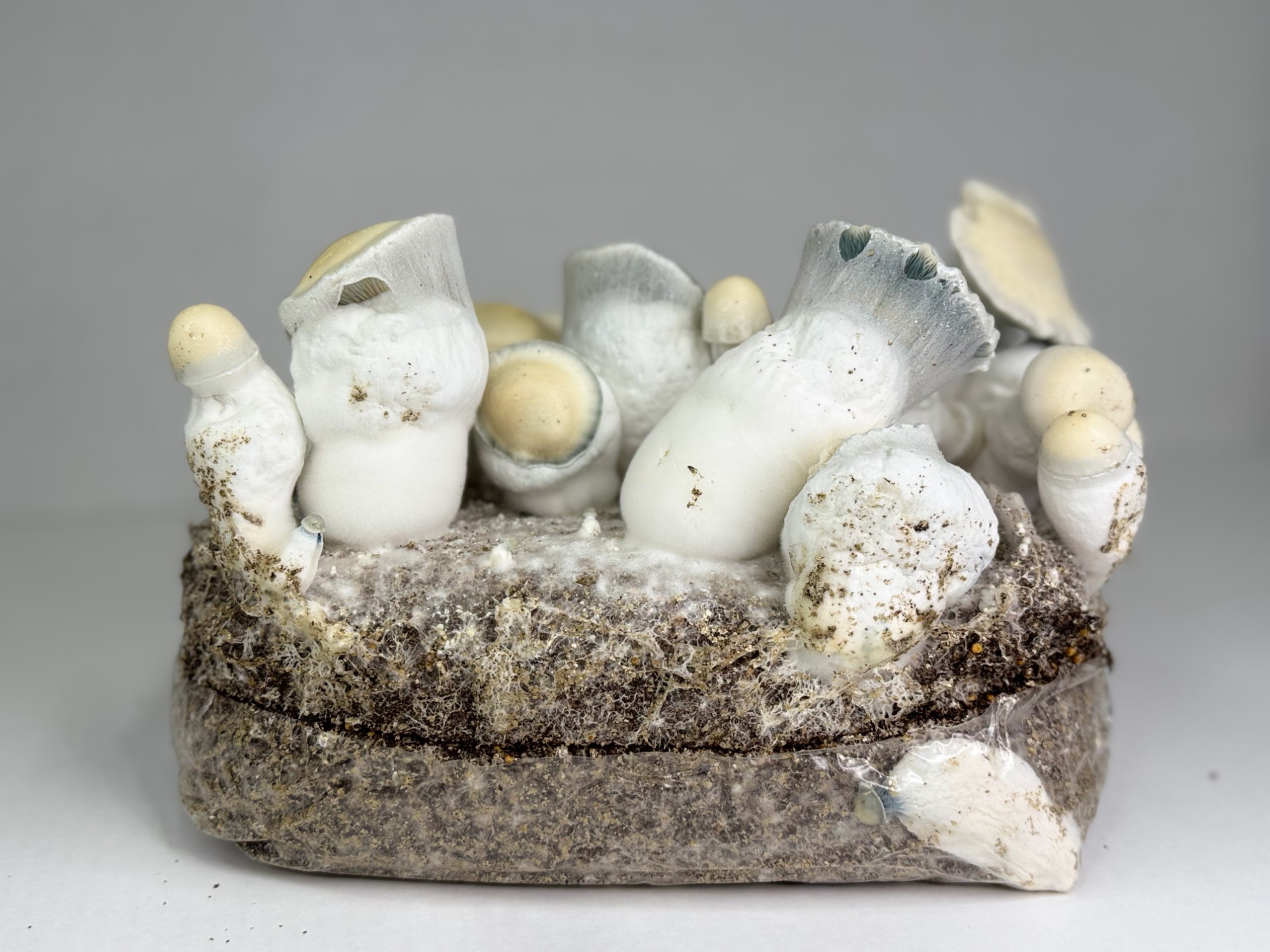



Jack Rabbit is a fully albino Psilocybe cubensis variety derived from the Roger Rabbit line.
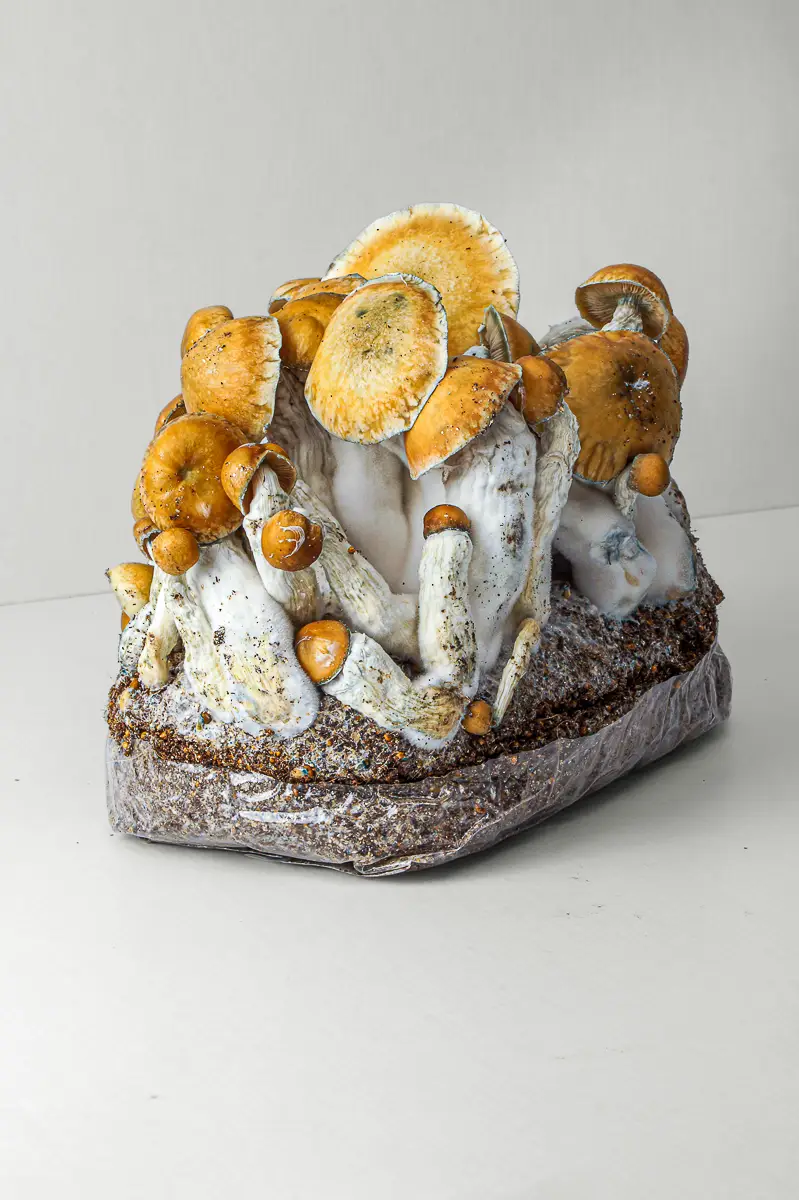
The Jack Rabbit grow kit is distinguished by its lack of pigmentation, compact clusters and a developmental profile that differs from many classic cubensis varieties.
The line
About Jack Rabbit
Jack Rabbit was created by Chris Aaron using Roger Rabbit genetics. The aim was to establish a stable albino line while retaining selected characteristics of its parent. Repeated phenotype selection helped stabilise the absence of pigmentation and other recognisable traits, including the relatively dynamic development associated with Roger Rabbit. The result is a line with a clearly defined albino phenotype and irregular fruiting-body forms.
Morphology
Structure and appearance of Jack Rabbit
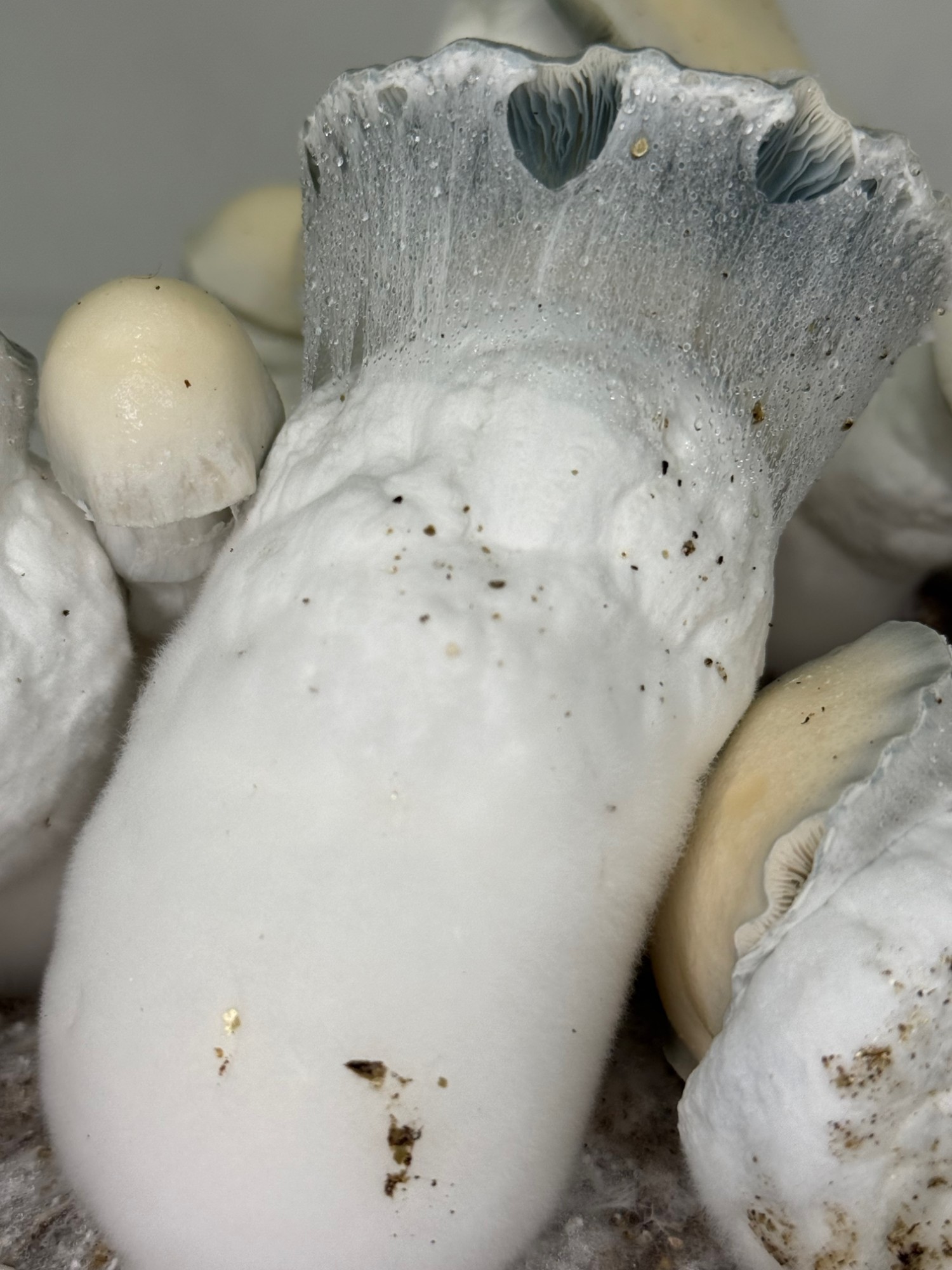
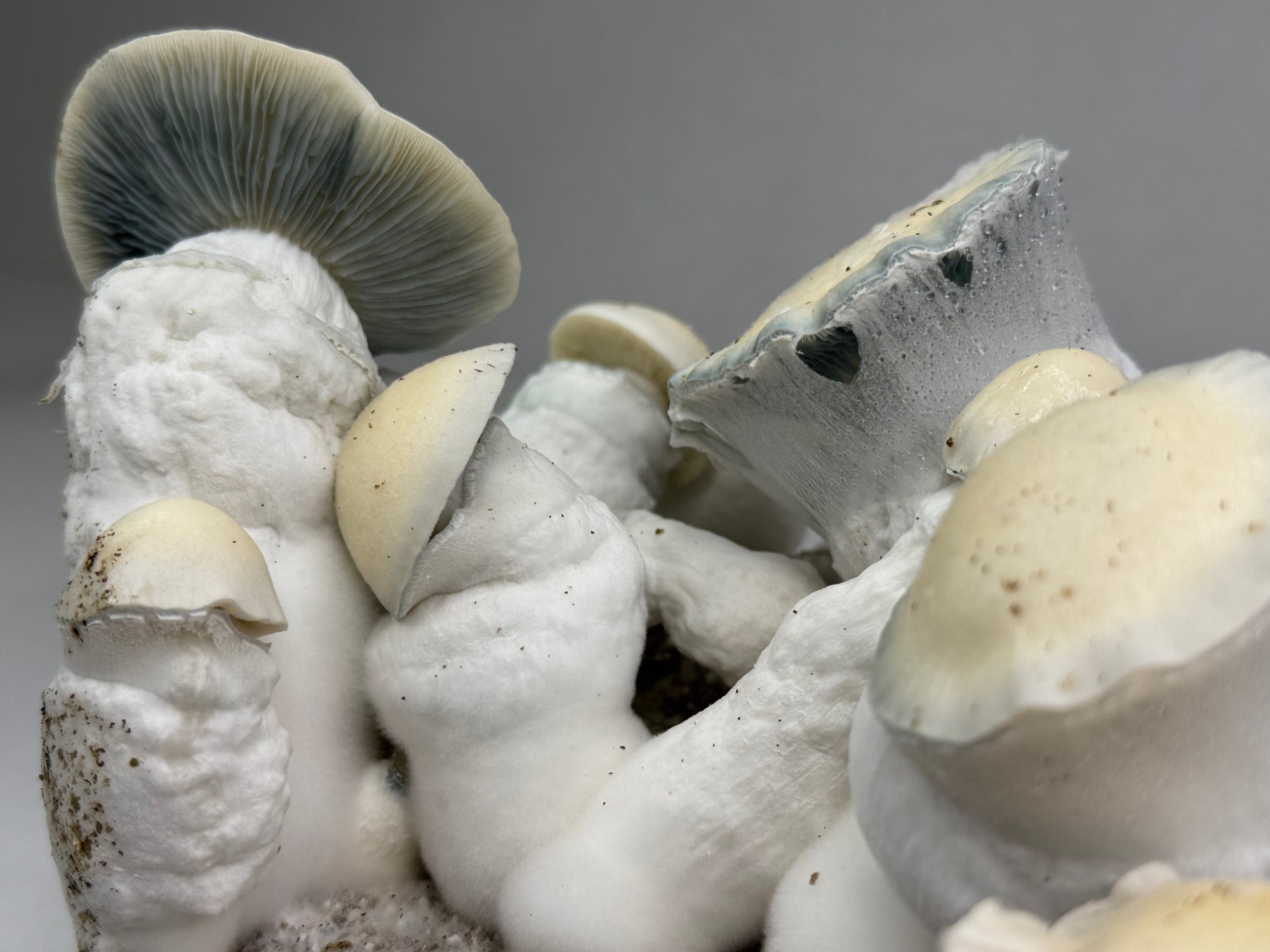
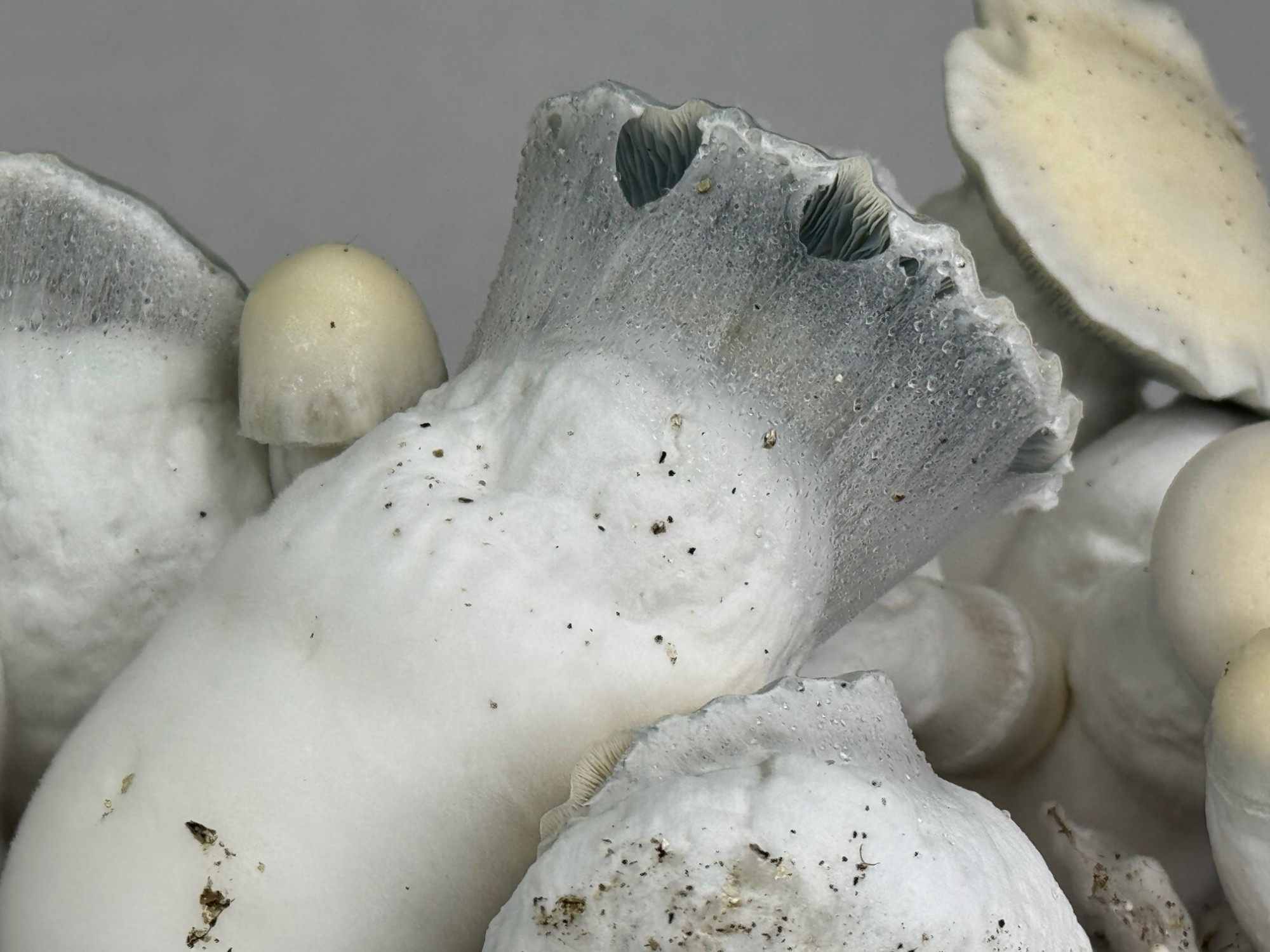
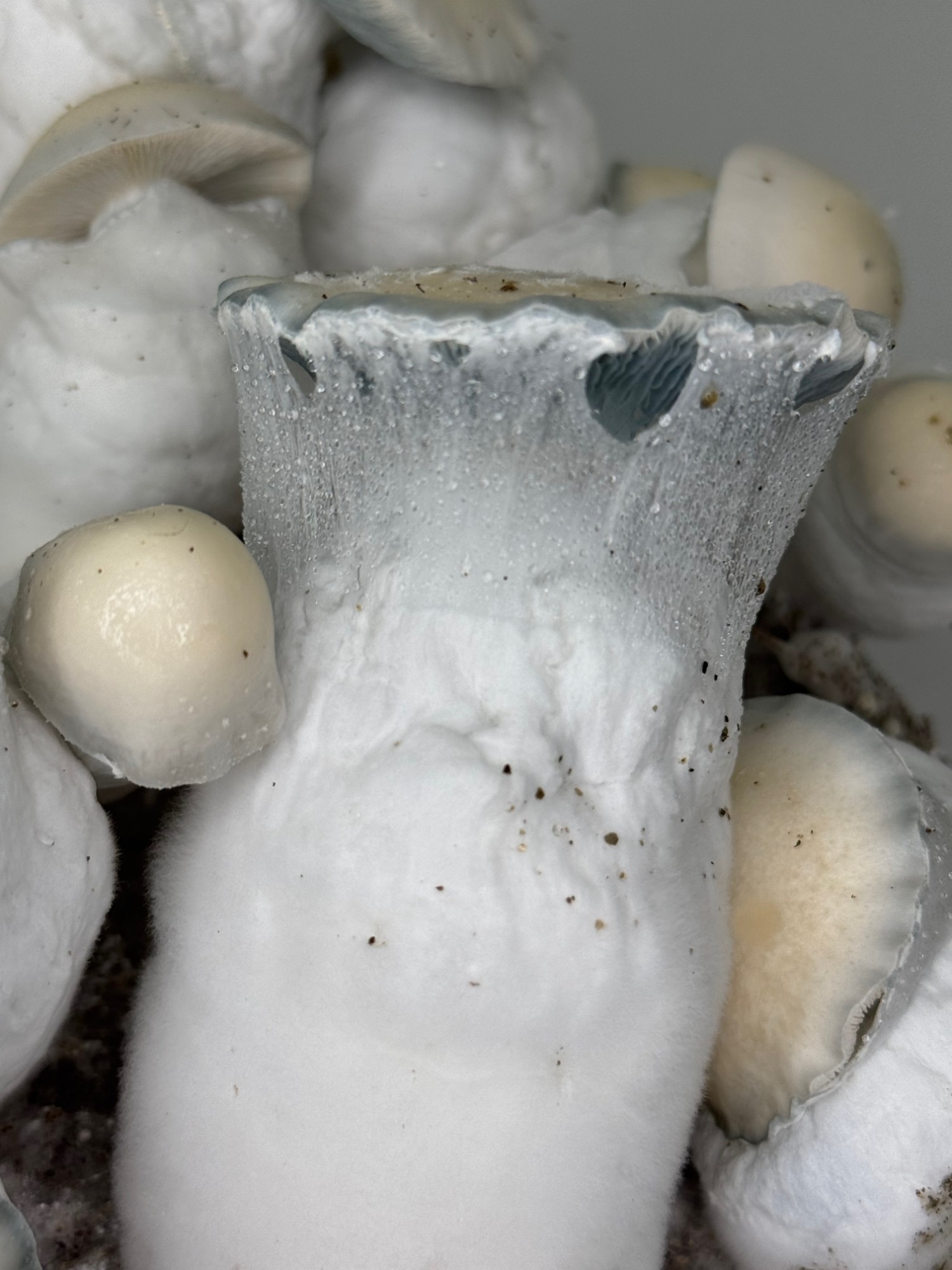
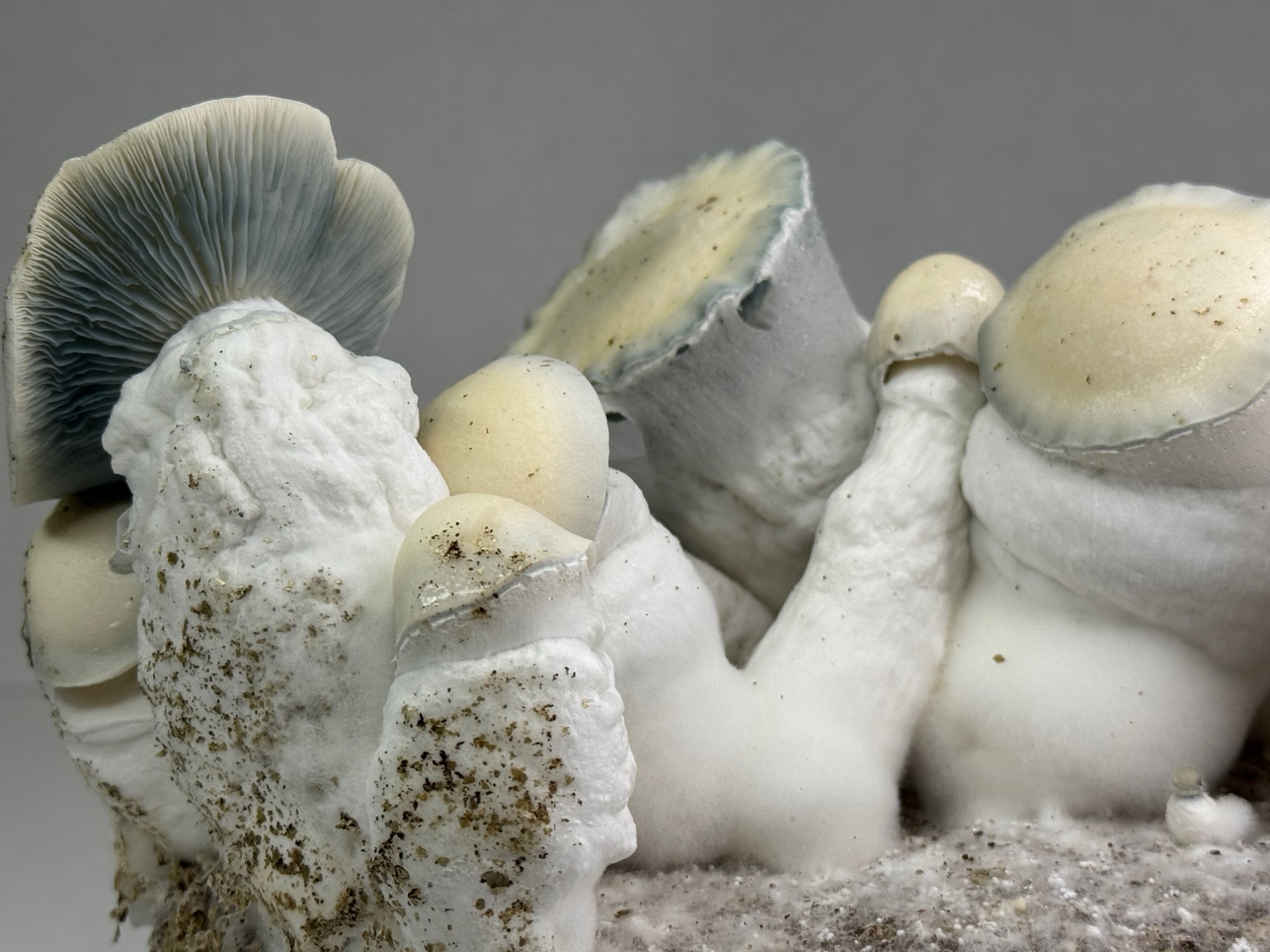
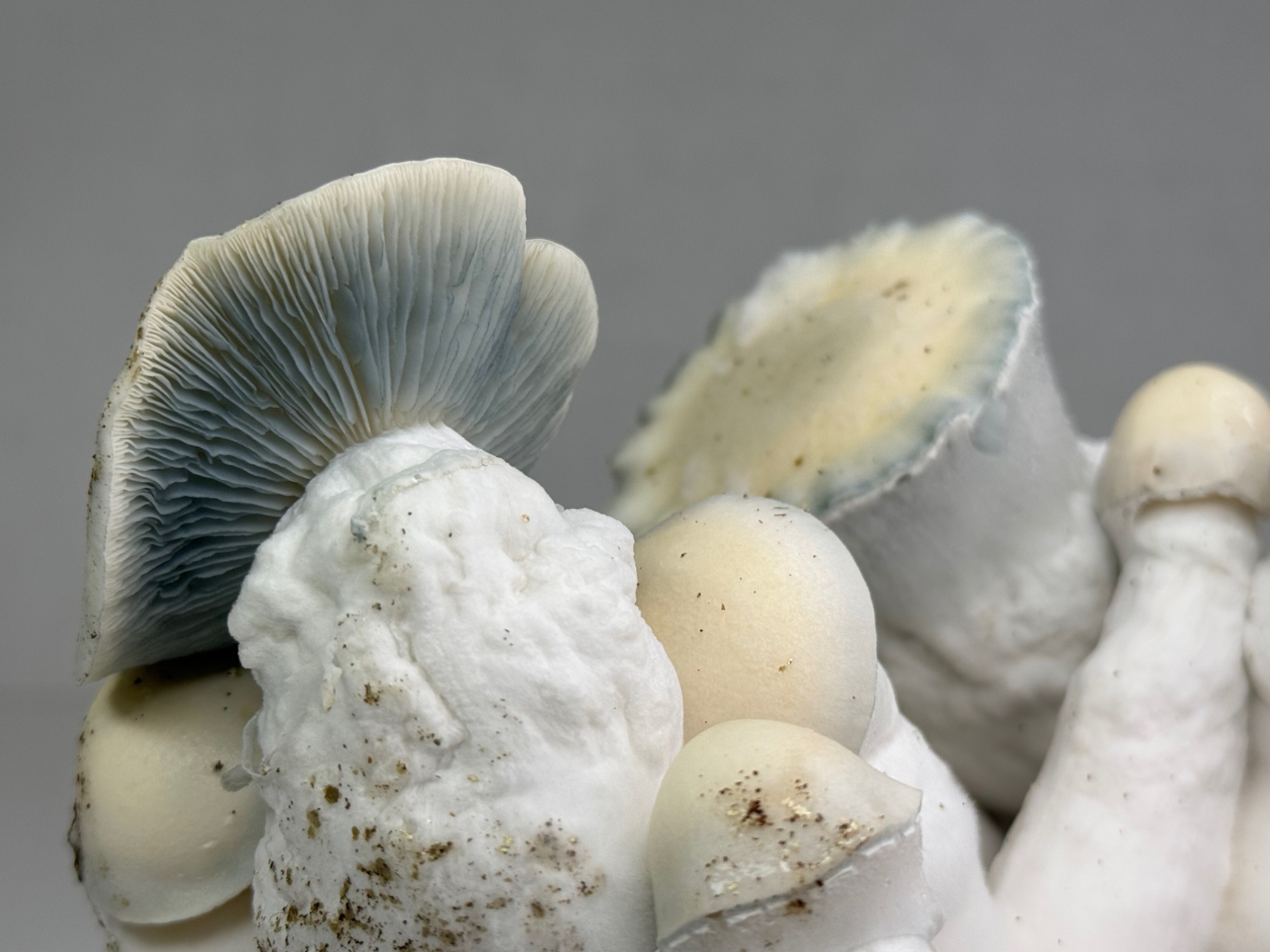
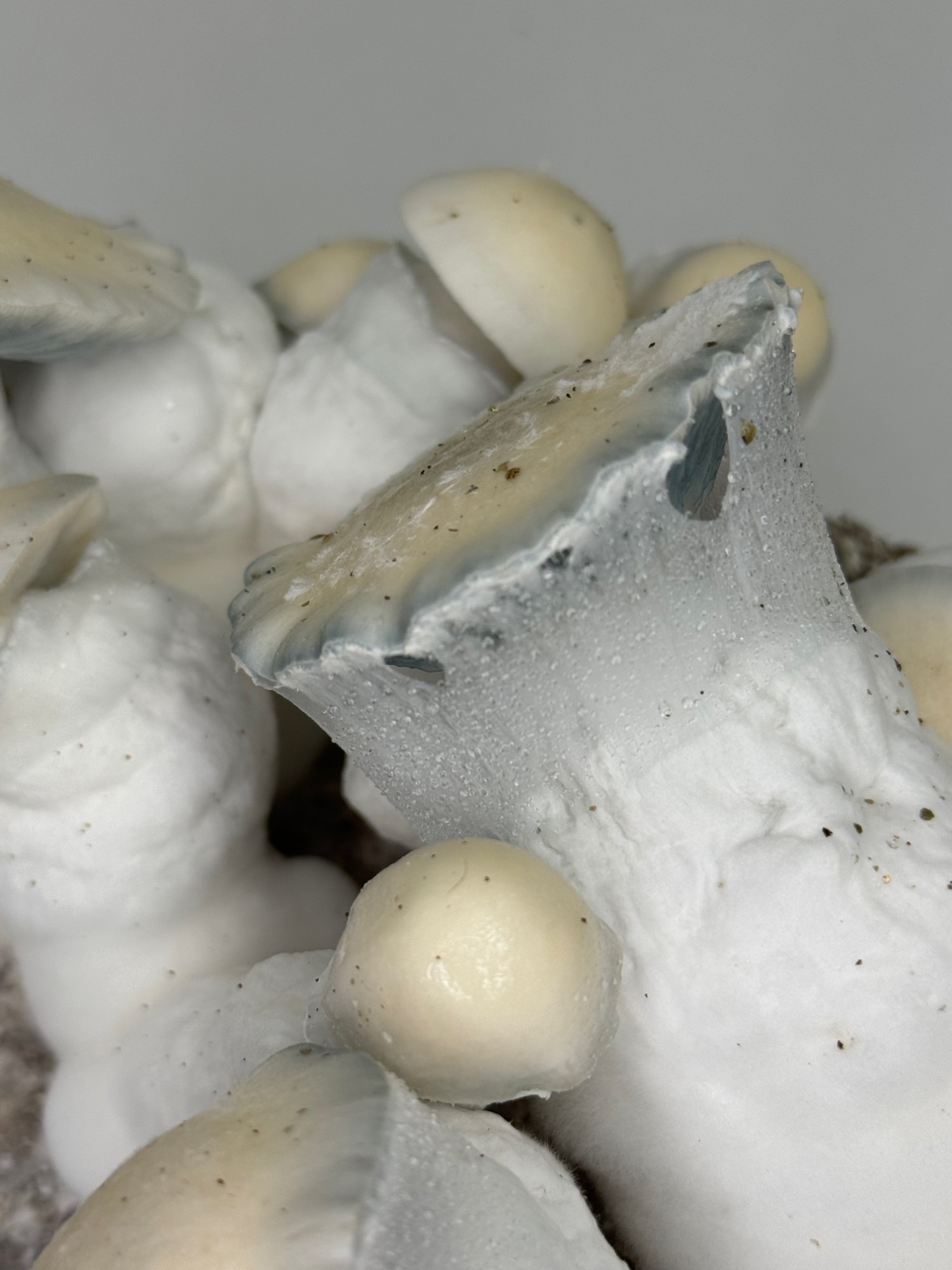
The fruiting bodies develop substantial white stems and small cream-coloured caps. They often appear in compact clusters, with frequent deformations and irregular shapes during development. The pale colouration remains one of the line’s most recognisable features, while the cap edges may begin to curl upwards as maturity approaches. Jack Rabbit can form spores, but they remain colourless and do not create the dark deposits associated with many classic Psilocybe cubensis varieties.
Development
Development profile of Jack Rabbit
Maturity is assessed mainly through changes in texture rather than visible spore release. Young fruiting bodies remain hard and compact, then gradually become softer and more springy. The upward movement of the cap edges provides an additional visual indicator. The source material describes the line as colonising rapidly and associates development with approximately 21–25°C. These characteristics contrast with albino varieties that develop more slowly or retain a heavier, more compact structure.
In short
Why choose Jack Rabbit?
The Jack Rabbit grow kit presents a fully albino Psilocybe cubensis line with substantial white stems, cream-coloured caps and a tendency to form compact, irregular clusters. Its colourless spores and texture-based maturity indicators provide a clear point of comparison with both classic and other albino cubensis genetics.