

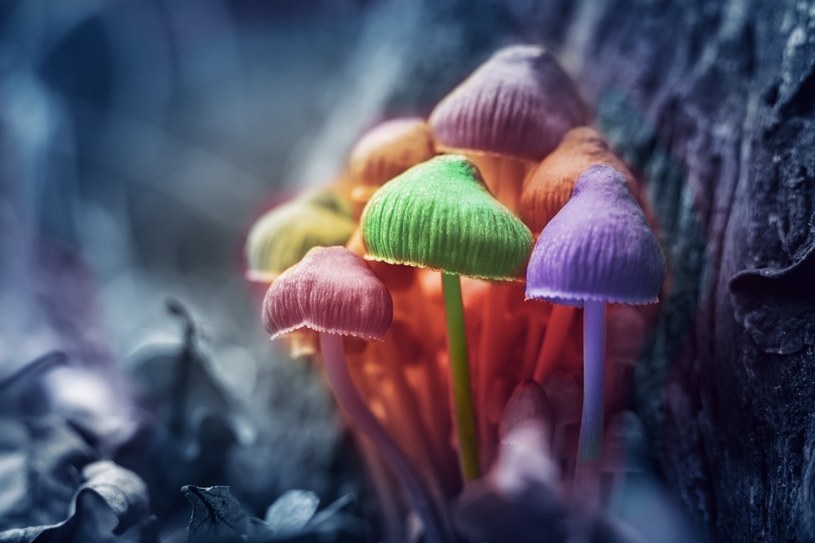

Many compounds can be found in the natural world that affect human health. Many of them are the subject of myths that either unfairly favor or—quite the opposite—demonize certain substances. This is the case with psilocybin, among others. It’s an organic chemical compound produced by mushrooms from the Psilocybe group (with Psilocybe cubensis, or the Cuban bald eagle, being the largest “producer” of this substance). More and more research is currently being conducted on it. But what are the facts and myths? Learn about them now!
Psilocybin is addictive quickly and strongly – a MYTH
I’ll start with one of the most common and harmful myths. Namely, psilocybin’s high addictive potential. It has been pointed out that, from a biochemical perspective, this compound is significantly less addictive than caffeine, and caffeine hasn’t been banned or age-restricted! Scientists delving into the secrets of psilocybin claim it has minimal addictive potential. However, tolerance to its effects may increase.
Psilocybin can help treat various mental ailments – FACT
This is a truly fascinating topic and the reason why psilocybin has been under the microscope by many research centers. One of the primary areas of its research is its ability to combat depression. It has been suggested that this compound may be a fantastic and highly effective alternative to psychotropic medications belonging to the so-called selective serotonin reuptake inhibitors (SSRIs). On the one hand, it has long-term effects, and just one dose effectively reduces depression. On the other, research suggests that depression can be effectively reversed thanks to this substance!
But that’s not all – it has been suggested that psilocybin-based medications may also address the needs of people who have experienced traumatic events. Post-traumatic stress disorder affects soldiers and members of other services, as well as participants in serious accidents or other events that leave a lasting mark on the psyche. Although tests have so far only been conducted on animals, they have shown that preparations based on this substance stimulated the development of new nerve cells and the connections between them, as well as the regeneration of the hippocampus.
Not enough? Let’s add to this that teams working with psilocybin see its potential as a treatment for anxiety and obsessive-compulsive disorders. Of course, this is a treatment that supports proper work with a psychotherapist. Previous tests have shown that in patients struggling with symptoms of anxiety and other disorders, the combination of both activities significantly reduced the occurrence of negative episodes.
Psilocybin causes schizophrenia – MYTH
This myth arose in the 1960s, when psilocybin mushrooms were just being discovered, or rather rediscovered, as they had been used centuries ago by shamans, druids, and warriors who wanted to connect with the gods or gain superhuman power to help them overcome their enemies. So where does the belief that psilocybin can cause schizophrenia come from? That period coincided with a surge in the popularity of drugs in general, to which many governments responded by declaring war on intoxicating or psychedelic substances. Their opponents, therefore, exploiting the fact that psilocybin can potentially induce psychotic states in about 2% of cases, propagated the myth that it causes schizophrenia. Meanwhile, contemporary psychiatric research indicates that this is most likely a false correlation.
This compound stimulates creativity – FACT
This “extension of reality” through its influence on creativity has been appreciated by many artists. Yes – psilocybin is certainly a substance that can stimulate imagination and creativity. It’s no wonder the 1960s and 1970s saw so many cultural revolutions—in painting, music, and beyond. It was a period of intense “testing” of the potential of psilocybin mushrooms. Artists themselves often emphasized that they opened their minds.
It’s important, however, that not only they, but also scientists, took this topic more seriously. Although there isn’t much official data on this, similar tests were conducted in the 1960s and 2018, indicating that people exposed to psilocybin were better at finding solutions to various problems.
Psilocybin may be effective in combating addictions – FACT
To close the topic of facts and myths, and to disprove the claim that psilocybin is addictive, it’s worth mentioning that this compound is being considered a potential treatment for… addictions! This substance is seen as having great potential in combating alcoholism. One of the pioneers in using it in this way is Dr. Michael Bogenschutz, a psychiatrist who has already conducted some tests, yielding promising results. Research conducted in Alabama in 2018 indicates that psilocybin may also be effective in combating drug addiction, including cocaine!
Psilocybin – is it rightly demonized?
Without a doubt, psilocybin, as a psychedelic, is a substance that requires knowledge, experience, and caution. Therefore, only licensed facilities conduct research on it. Let me remind you that mushroom cultivation, as well as their possession, consumption, and sale, are strictly prohibited in most countries, and only select research facilities are permitted to conduct research on them. This doesn’t change the fact that even the FDA (United States Food and Drug Administration) is considering introducing this compound as a drug. Therefore, it may soon turn out that preparations obtained from psilocybin mushrooms will be available in pharmacies.