

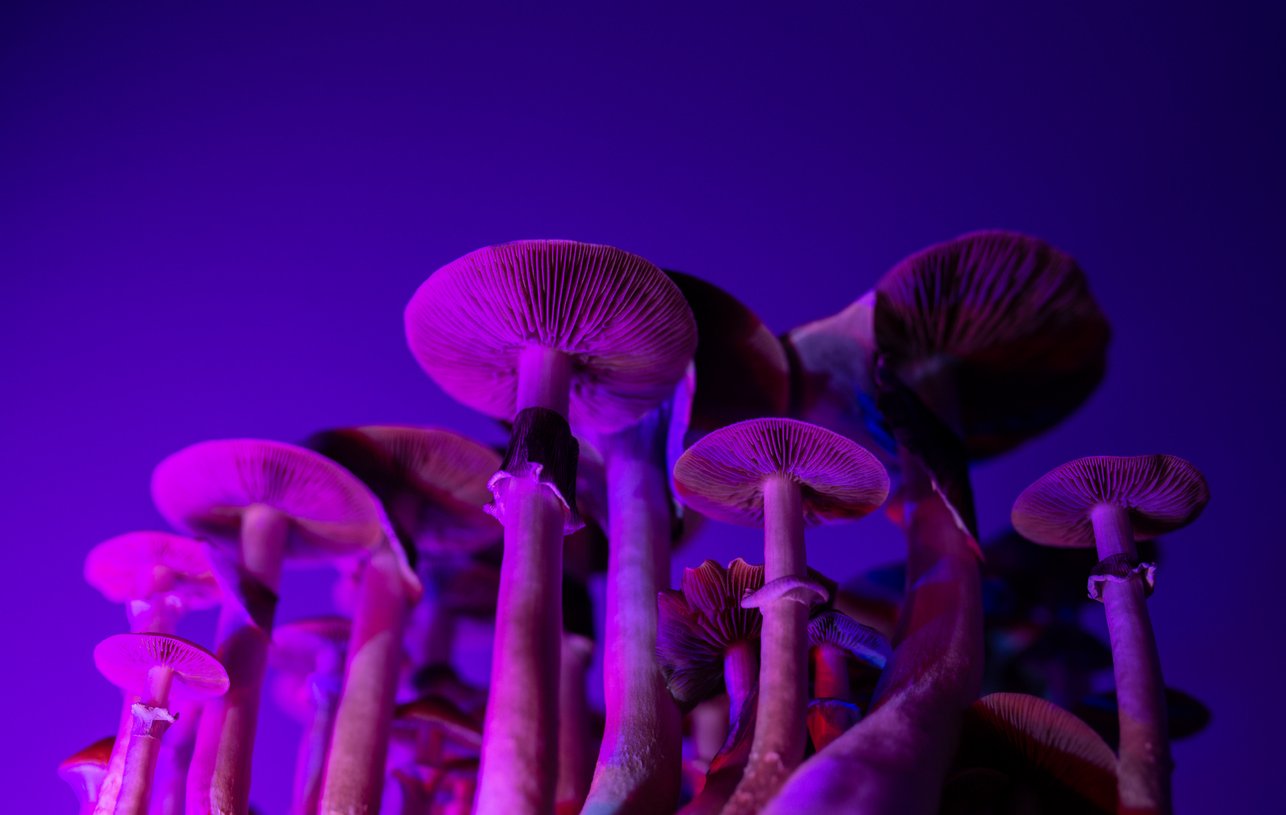

Psilocybin Microdosing – Everything You Need to Know
Psilocybin, although known for years, is now gaining popularity again as a medicinal and recreational drug. Although still banned in many countries, it is enjoying increasing interest from various groups. It’s worth knowing that the effects may vary depending on the dose taken. What is psilocybin microdosing? What are the benefits? How much is a microdose? If you’re looking for information on this topic, you’ll find it in this article. I encourage you to read it.
Microdosing – What Does It Mean?
It’s worth explaining what microdosing is. Psilocybin is a psychoactive substance, but it doesn’t necessarily have to cause the most severe effects. The amount of the compound taken plays a significant role in the results and the experience experienced by the user. To put it simply, microdosing psilocybin or any other preparation (not only psychedelic/psychoactive ones, but also drugs) means using a dose no larger (and possibly smaller) than 1/10 of the standard amount needed to produce the maximum effect.
In the case of psychedelic drugs such as psilocybin, microdosing is intended to gently influence perception and provide a number of other benefits characteristic of this alkaloid. In other words, by taking this amount, you won’t see unicorns, trees talking to people, or Nessie, but you will expand your awareness and creativity somewhat.
Who developed microdosing?
The term was most likely coined by Albert Hoffman, the creator of LSD. He claimed that in small amounts, his opus vitae could produce unexpectedly good results. However, it was psychologist Dr. James Fadiman who most strongly introduced microdosing to the public consciousness. He operated under exceptionally unfavorable conditions, as he researched and wrote about hallucinogenic mushrooms in the 1960s and 1970s – at a time when the war on drugs was in full swing and the UN adopted the Convention on Psychotropic Substances, which, broadly speaking, banned psychoactive substances.
He was the first to develop the so-called protocol (which you will learn more about below), a method for taking this psychedelic. And what does psilocybin microdosing look like? Check it out!
How much is a microdose?
Above, you learned that it’s a maximum of 1/10 of the amount of the substance needed to achieve the maximum spectrum of effects. In practice, however, it’s more complex. Individual factors, including the user’s weight, are important. Additionally, the distribution of psilocybin itself in preparations is uneven, so the first few days of use should be carefully and carefully monitored.
However, it is indicated that these values are approximately 0.1-0.5 g – and I’m talking about the weight of dried mushrooms containing psilocybin. Microdosing requires trial and error. Therefore, everyone should generally start with the lower indicated value and – depending on the results – increase or decrease it by 0.05 g. A precise scale (e.g., a jewelry scale) will be useful for this. If no effect is seen, then the dose is increased. However, if signs of psychedelic effects appear (e.g., minor hallucinations), you should return to the previous dose.
How to Microdose – A Few Words About Protocols
A protocol is a method of taking a given drug, usually developed by professional researchers. One of the most popular (and oldest) is the one developed by James Fadim. He suggests taking breaks every specified number of days, as well as introducing cycles of psilocybin use. What does this look like?
On the first day, you take an individually calculated microdose, followed by a break for the next two days. On the fourth day, the dose is taken again, and this continues cyclically for 4-8 weeks. Then, a break is taken for about 2-4 weeks to prevent tolerance to the substance from developing.
For the record, it’s important to mention that this isn’t the only way to microdose. Psilocybin can be taken in microdoses according to a 2-7-days-a-week schedule, the Microdosing Institute Protocol, or the Stamets Protocol. Ultimately, it’s all about following your intuition, which is often the best indicator. Microdosing offers numerous benefits, especially if psilocybin microdosing is carefully planned. It has been shown to help treat depression, both milder and severe (including treatment-resistant) forms. Microdosing is also used for PTSD and other mental health conditions. This amount also improves mood, concentration, and creativity.
What are the risks?
There are some older studies indicating that this compound may worsen certain mental illnesses (including genetically determined ones). Therefore, there is a potential risk of psychosis. It is worth mentioning that Fediman also mentioned the risk of psychological addiction. Therefore, as a rule, psilocybin should be taken in controlled conditions, for example, as a supportive element of proper therapy.
Microdosing – the many benefits of a banned compound
Psilocybin mushrooms, although still censored, are being treated increasingly leniently by law. The liberalizing policies of so-called first-world countries are a good sign, especially for people struggling with various personality disorders. This is partly due to microdosing, which does not cause hallucinations but helps to look at certain problems differently and broaden one’s perspective on reality. However, as with any medication, caution and common sense should be exercised when using this compound.