


Due to discoveries made about psilocybin mushrooms, including their effectiveness in treating depression, disorders, and addictions, these species growing in the wild are becoming increasingly popular. Mycology enthusiasts, fascinated by how they grow, often try to find their own fruiting bodies growing in forests, clearings, and meadows. In Poland, the representative psilocybin mushroom is the Psilocybe semilanceata. Some also seek it out for its hallucinogenic, or rather, perception-altering, properties. What do the fruiting bodies of this species look like? Where can they be found? Are they hazardous to health? These and many other issues will be addressed in the following article. Read it now!
Psittacus lanceolata – how to recognize it and what does it look like?
It is widely believed that Psittacus lanceolata is the only mushroom in Poland that causes hallucinations or affects perception by affecting, among other things, the prefrontal cortex. This is half-true, as the fly agaric also has some hallucinogenic properties. However, this pleasant-looking mushroom, often seen in children’s drawings, is easy to recognize… which is quite different from the heroine of this article. What are the characteristic features of the fruiting bodies of the lanceolate Pseudomonas lanceolata?
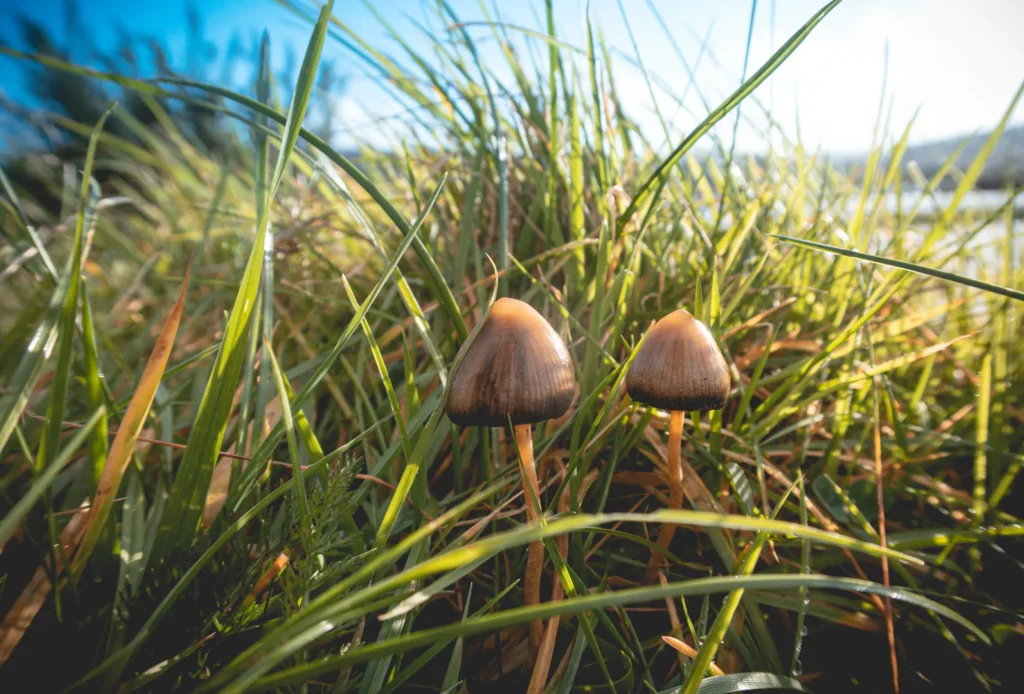
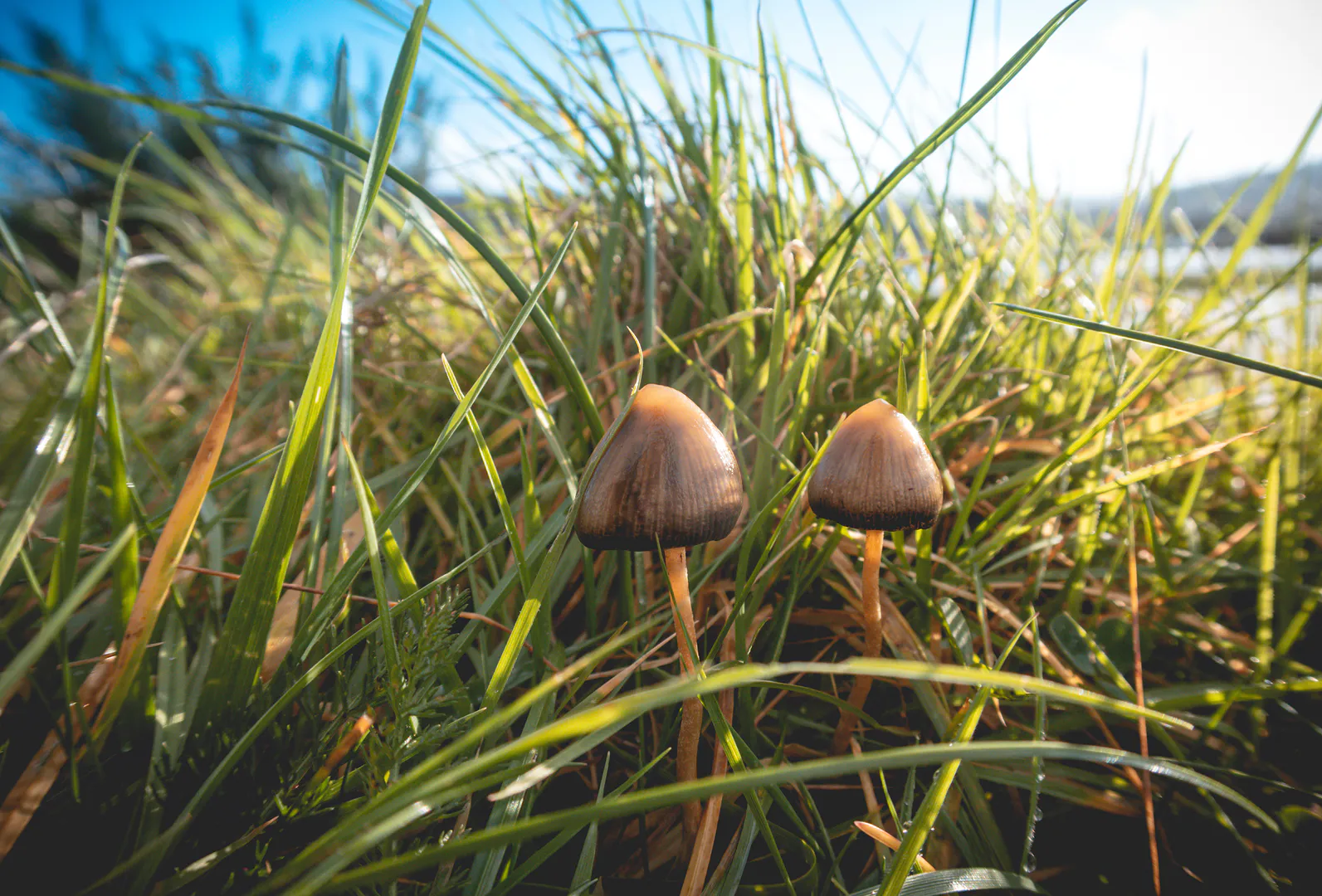
It has a very long, narrow stem. It is hard and flexible, and hollow inside. It reaches a length of 3 to 10 cm, and in some cases even 15 cm. The diameter of the stem is only 0.5 to 2 mm. At its top is the cap. It has a conical shape with a sharp apex. Its diameter usually ranges from 0.5 to 2.5 cm, and the color can be olive, brown, or dark olive with bluish-green spots around the circumference. It has a smooth, moist, slippery, and slightly sticky surface. It’s worth knowing that the older the fruiting body, the more the conical shape changes to a bell-shaped shape.
It’s also worth looking under the cap itself, at the gills. They are quite wide and grow narrowly to the stem. In younger specimens, they are light brown, but darken to tobacco brown over time. The blades themselves are lighter. Their number usually ranges from 15 to 27.
The Scalloped Scallop has distinctive features, but they may be vague to a beginner mycologist. However, it has been suggested that it has something that strongly distinguishes it from other species, including those with which it is often confused. Its fruiting bodies stain fingers blue when picked. This color suggests that psilocybin, so intriguing to many, is contained within.
When does Psilocybe lanceolata grow?
Psilocybe lanceolata mycelium, like other mushrooms commonly found in Poland, prefers warm and relatively humid months. Therefore, it appears that the largest fruiting bodies occur in August, September, and October. This is when they can be found singly or in groups.
How to find Psilocybe lanceolata?
Psilocybes, including Psilocybe lanceolata, are quite common worldwide. This particular species occurs in North America, Europe, Australia, and New Zealand, as well as some South American countries. On the Old Continent, it can be found in almost every country except some Mediterranean countries. The typical biome for these mushrooms is primarily meadows and mountain pastures (where they are found in Poland, among other places). Additionally, they often grow in pastures, roadsides, orchards, and on the edges of forests.
What type of substrate do their fruiting bodies occur on? They usually grow directly in grass and mosses. They also appreciate moist conditions, especially where they have the right nutrients for growth, including animal droppings. Therefore, they are often found in areas where cows and sheep graze.
Is the Scalloped Psilocybe poisonous?
Mushroom atlases indicate that the Scalloped Psilocybe is poisonous. Most, however, report that this poison is… psilocybin, a compound that has attracted the interest of many researchers. In practice, it can produce a wide variety of effects, depending on the dose and form taken, and also on the predispositions of the person deciding to take it.
On the one hand, it causes states of euphoria, stimulates creativity, and helps with relaxation, but on the other, it induces psychotic states, derealization, anxiety, and a range of somatic effects, including vomiting, diarrhea, and changes in heart rate. Therefore, when used in folk medicine, it was once strictly dosed. Just like today, although psilocybin is still in the testing phase.
A much greater threat is the fact that it can be confused with other poisonous mushrooms, including those of the Conocybe genus (including Conocybe lactea, which contains phallotoxins, also found in the death cap mushroom, the most poisonous species in Poland). For this reason, licensed researchers obtain these mushrooms from legal, verified sources.
Is Psilocybe cubensis legal?
It’s hard to deny the legality of mushrooms growing in nature! After all, no one will eradicate them. However, due to their psilocybin content, they certainly cannot be possessed, cultivated, consumed, or (much less!) traded. This compound is a psychoactive substance that has been officially banned in Poland and many other countries. However, the spores and growkits of another popular mushroom species rich in this substance – Psilocybe cubensis, or Cuban Psilocybe. That’s why many researchers – professional and amateur – buy them to observe their colonization.
Psilocybe semilanceata – FAQ
What is Psilocybe semilanceata?
Psilocybe semilanceata is a species of psilocybin mushroom known for its psychoactive properties. It is one of many species containing psilocybin compounds that induce altered consciousness and hallucinations.
What does the Scythe look like?
The Scythe has a distinctive appearance. Its cap is conical or bell-shaped, orange or brown, and has white spots on its surface. The stem is thin and flexible, often curved, and lighter in color than the cap. A characteristic feature of the Scythe of the Shore is the presence of low rings on the stem.
Where does the Scythe of the Shore of the Shore grow?
The Scythe of the Shore … It can be found in temperate climates.
What psychoactive substances does Psilocybe speleothem (Psidium lanceolata) contain?
Psilocybe speleothem (Psidium lanceolata) contains psychoactive compounds, primarily psilocybin and psilocin. These substances produce hallucinogenic effects, such as altered perception of reality, creativity, and euphoria.
What are the effects of consuming Psilocybe lanceolata?
The effects of consuming Psilocybe lanceolata can vary from person to person and depend on the dose, preparation, and state of mind. They can include a sense of heightened sensory sensitivity, increased creativity, changes in color and sound perception, and hallucinations. These effects are usually short-lived, lasting up to a few hours.
What are the risks and dangers of Pseudomonas lanceolata?
Consuming Pseudomonas lanceolata carries the risk of unpleasant experiences and potential dangers. Uncontrolled and inappropriate use can lead to anxiety, disorientation, and even trauma. Long-term use of psychoactive substances can also lead to health problems and addiction.
Are there any methods for safely consuming Psilocybe lanceolata?
If someone decides to consume Psilocybe lanceolata or other psilocybin mushrooms, caution and preparation are recommended. It’s important to be in a supportive environment, with people you can trust, and have support if needed. Dosage is crucial, as too much can lead to unpleasant effects. It’s not for everyone, and people with a history of mental health problems or a family history of them should avoid consuming it.
Where can I find additional information about Psilocybe speleothematosus and its use?
Those interested in Psilocybe speleothematosus should seek out reliable sources of information, such as scientific research, organizations specializing in psychedelics, and therapists specializing in psilocybin therapy. If you’re looking for reliable scientific information, you can also contact me. It’s always good to be well-informed and exercise caution.