

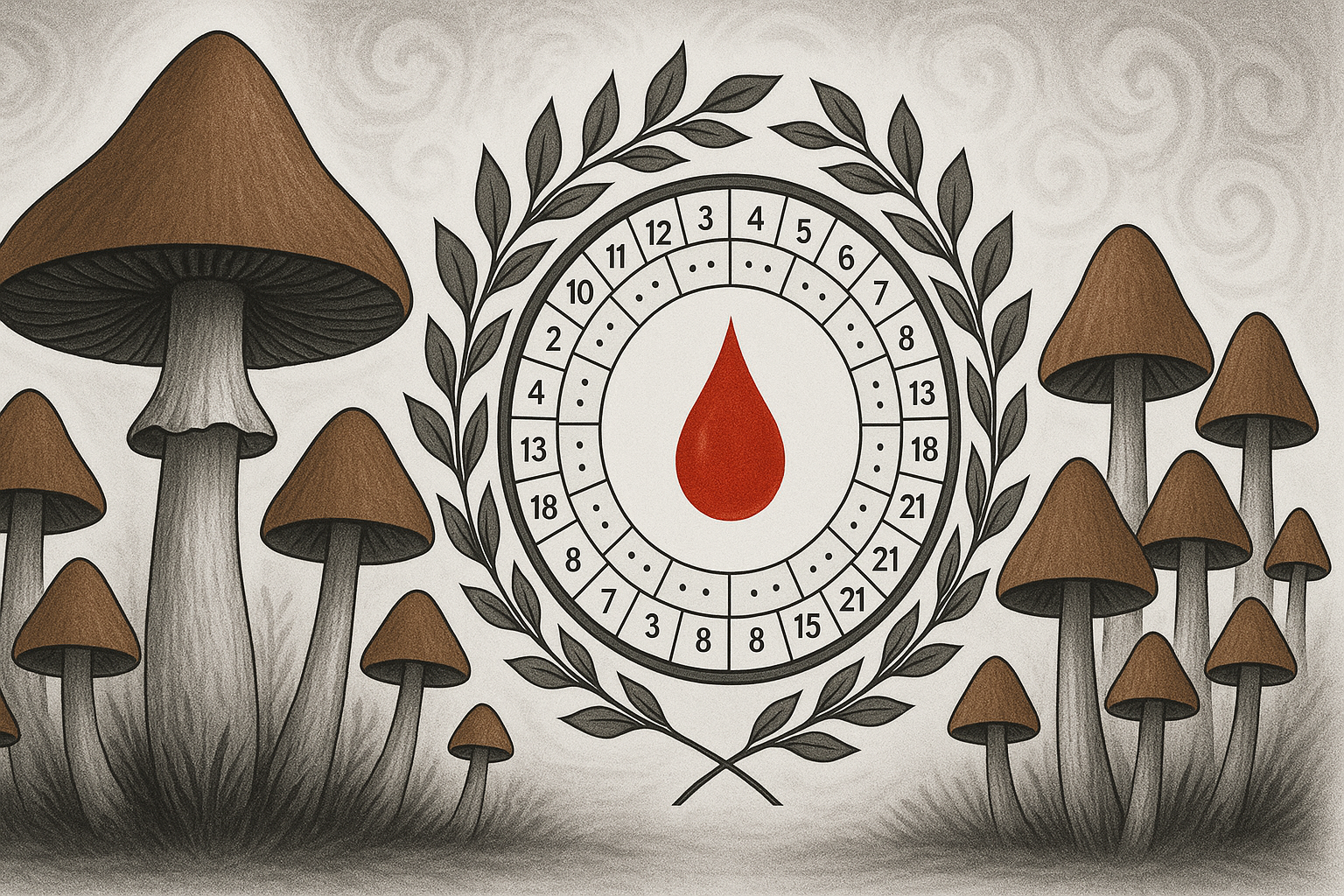

Psychedelics have long been considered therapeutic agents. They have found such uses in both primitive cultures and in the modern era. Although the war on drugs significantly hampered research into their potentially beneficial effects, the topic is currently experiencing a renaissance. Recent discoveries include an interesting correlation between psilocybin and the menstrual cycle. I write more about this topic in this article. I encourage you to read it.
Studies that show the effect of psilocybin on the menstrual cycle
Pioneering research in this area is being conducted at one of the centers where psychedelic substance testing is conducted with considerable intensity, namely at Johns Hopkins University. Although the research sample in this case was unrepresentative, consisting of only three women aged 27-34, it yielded interesting conclusions.
Namely, a significant correlation was observed between psilocybin (converted to psilocin), serotonin, and estrogen. Estrogen increases the number and sensitivity of 5-HT2A receptors. On the one hand, this can cause stronger “trips,” and on the other, psilocin has been shown to affect two important axes that influence the menstrual cycle:
- HPG – hypothalamus-pituitary-ovaries,
- HPA – hypothalamus-pituitary-adrenal glands.
The stress signals it delivers can stimulate the body to increase the production of sex hormones. The effects can be twofold – either a shift in menstruation or cycle stabilization.
Therefore, it is hypothesized that in women with regular cycles, taking psilocybin may accelerate menstruation. However, in women suffering from irregular cycles, their cycles stabilized. This is also important for people struggling with polycystic ovary syndrome and premenstrual dysphoric disorder (a more intense, pathological version of PMS).
In addition, there are some reports from people who use psychedelics “on their own” (anecdotal evidence). On forums dedicated to them, you can find accounts from women reporting, among other things:
- early onset of menstruation (especially when taking psilocybin mid-cycle),
- regulation of menstrual irregularities after a long period and stabilization of sex hormones,
- return of menstruation after a long period of absence (amenorrhea).
The reports therefore align with what the research itself reports.
And what does folk medicine say about psilocybin?
The correlation between “psychedelics and women’s health” is much older than the research indicates—at least the research related to medicine. Anthropologists and cultural studies scholars may have learned about the effects of these substances on menstruation much earlier, for example, from the accounts of South American Indians. Harmaline (a psychedelic obtained from wild rue) was used to improve fertility. The ancient Greeks also used various psychedelics for the same purposes. Does folk wisdom, then, outpace scientific knowledge?
Further research is needed
One thing is certain – anecdotal evidence and reports from the history of various civilizations and primitive cultures are still not enough, but they provide important clues for researchers. They themselves have a lot of work to prove or disprove the claims about the effects of psilocybin and other psychedelics on health, including the menstrual cycle. Until then, all that remains is to follow the information on this topic.