

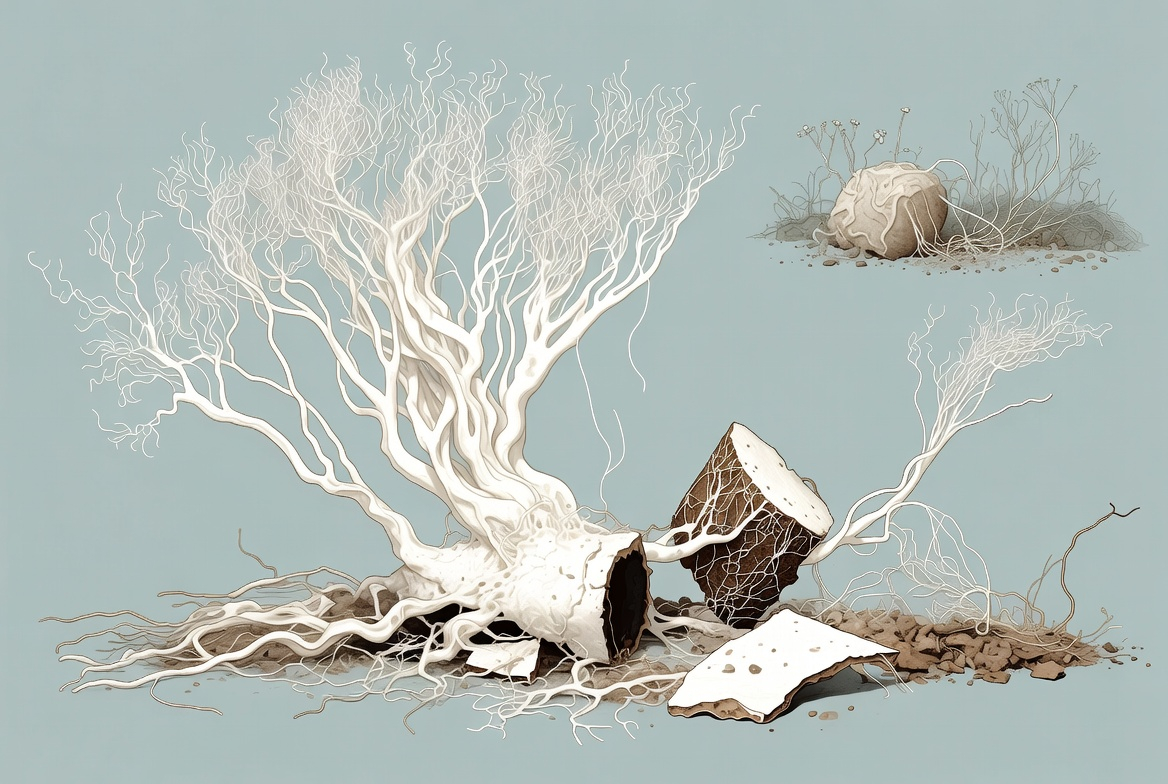

In nature, fungi face various threats. Bacteria, parasites, other species from their kingdom, climate change… All these and many other factors can influence how they cope in a given environment. Compared to them, specimens grown in grow kits, on the one hand, have excellent living conditions, but on the other, they are much less hardy. And yet… they all demonstrate incredible adaptive and regenerative abilities. In this article, we’ll explore these mechanisms together. Read on!
How strong is mycelium?
Mushrooms don’t have an immune system in the way we think of animals. However, they have developed certain evolutionary mechanisms that aid them in protecting themselves from potential attackers. These include, for example, the ability to produce various types of secondary metabolites, including:
- enzymes,
- antibiotics.
The former, on the one hand, serve to digest food, feeding the mycelium, but also act as a chemical shield, protecting it from potential contamination. Antibiotics, on the other hand (which we also obtain from various mushroom species), help inhibit the growth of bacteria and other fungi. With their help, the mycelium, almost literally, sterilizes its surroundings.
In growkits, things are a bit different. In boxes, the mycelium is fully developed, compact, and has taken up all the available space. It reigns supreme. This can protect it from potential external threats, including even molds (i.e., if the right conditions are provided). However, there’s one big “BUT” to mention.
“Growkits” are monocultures. The fungus lives in them on its own, without the support of the organisms with which it naturally lives in symbiosis. If it becomes weakened (e.g., due to a temperature change) or a strong pathogen appears, there is a risk of contamination. Furthermore, a single grow kit naturally has limited resources, meaning the substrate has a finite amount of nutrients.
What can harm mycelium?
Mycelium can be damaged by unfavorable conditions. Too high or too low a temperature inhibits its development, but if prolonged, it can lead to its death. Both a lack of water and an excess of water can also be harmful. Growkits should be slightly humid to avoid drowning the fungus.
There are also certain chemical factors, including chlorine from tap water (harmful to the mycelium) and excess CO2, which causes the fungus to enter the vegetative phase. On the other hand, mycelium can be attacked by other organisms. These include molds, bacteria, and even small insects that feed and reproduce on them. It’s worth noting that the worse the weather conditions, the greater the risk of infection.
Does mycelium regenerate?
Now that we know how fungi cope with various threats, it’s worth discussing their regenerative capabilities. In short, yes, mycelium regeneration is possible. What’s more, this mechanism could arouse envy in other organisms. This stems from the inherent “modularity” of fungi.
So how does mycelium regenerate, for example, after mechanical damage? Some functional mushrooms exhibit interesting properties in this area. For example, the mycelium of Lion’s Mane Mushroom appears very delicate and can indeed be easily damaged. But… it has developed the ability to reanastomose. Even if the hyphae have been severed, they can reattach, thickening the damaged structure at the site.
What about chemical damage, such as when the pH of the substrate changes? Certain adaptogenic mushrooms, including the “mushroom of immortality” – Reishi, have developed a mechanism that involves the production of massive amounts of triterpenes and powerful enzymes that break down potentially harmful chemicals. They then “concrete” them, thus protecting the mycelium from the effects of these substances. In the case of this species, they manifest as yellowish or brown discolorations.
Cordyceps are a true predator in terms of colonization and protection against potential biological threats. In nature, the Cordyceps miliicus attacks selected insect species, using them for reproduction. However, if – for example – its mycelium is attacked by bacteria, the fungus begins to mass-produce cordycepin – a powerful antibiotic and nucleoside analogue. It works by eliminating the threat (by inhibiting DNA replication) and regenerating the affected areas. This is fantastically visible in cultivated specimens whose grow kits have been infected with mild infections.
In the context of functional fungi, this is important because many of the substances they produce are also used by humans. They’re called adaptogens for a reason – they help adapt to unfavorable conditions. Furthermore, according to traditional Chinese medicine, they’re a panacea for many serious ailments.
How can you support mycelium in a growkit?
Sometimes it’s worth trusting the process – especially when it’s growkit full auto. Just set it up in the right place and leave it alone. The magic happens on its own, as these packages regulate ventilation and temperature, and reduce the risk of contamination. If you have a grow kit other than an automatic one, remember not to spray water directly onto the mycelium, but rather onto the walls of the container, for example. Also, ensure regular ventilation, for example, by fanning the grow kit. But most importantly, ensure the right temperature and light shade. Then the mycelium should thrive.