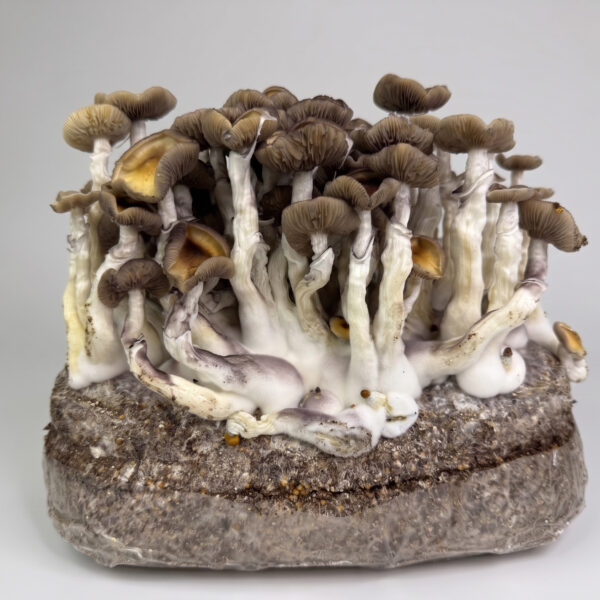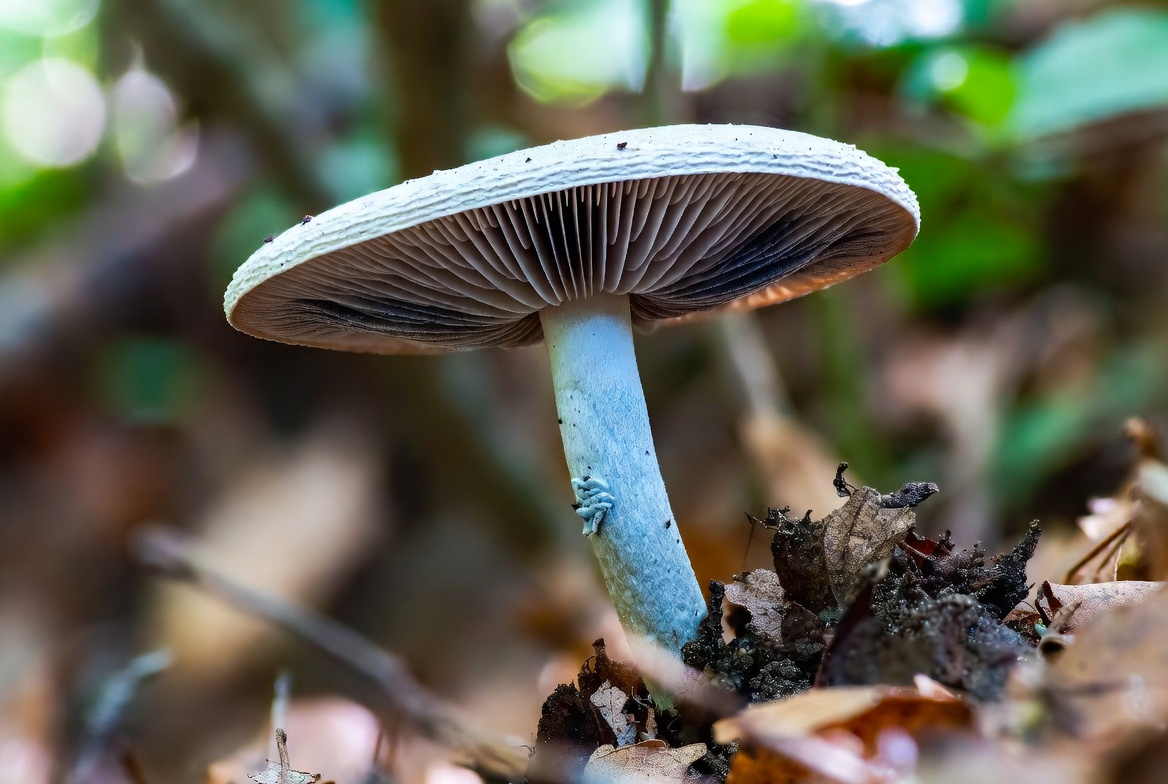

Home cultivation of mushrooms, such as functional mushrooms (such as Reishi) and edible mushrooms (including those found in Polish forests), as well as cultivating mycelium for research, requires caution. Changes in the appearance of the mycelium may suggest that a process is taking place within the organism, potentially indicating that the material is “deteriorating.” Colors and the blooms that sometimes accompany them are particularly important. For example, what does the blue color of the mycelium mean? Or gray? I answer these and other questions below. I encourage you to read it.
What is mycelium and what is it made of?
Mycelium is the vegetative part of a mushroom, which serves as both a branched nervous system and a digestive system. It is composed of hyphae that intertwine and can extend for hectares, creating a large, complex organism. These tiny “threads” are surrounded by cell walls made of chitin, and so-called septa participate in nutrient conduction.
However, these are microscopic features. From the human eye, mycelium has a more delicate structure. It may resemble:
- cotton wool,
- fluff,
- spiderweb,
- suede leather flakes.
Appearance The color of mycelium depends primarily on the type and species of mushroom. These characteristics can also determine the color of mycelium.
What color is mycelium?
However, the vast majority of mycelium of various mushrooms are white or whitish. Why? The explanation is simple and logical. On the one hand, fungi do not photosynthesize, so they do not need chlorophyll. On the other hand, it is also a purely “economic” activity. Producing the pigment costs energy that could be used elsewhere, for example, to develop defense mechanisms against parasites.
Let’s take a closer look at the different types of these organisms and their mycelium. In nature, it can be colored:
- white or cream – especially in the case of mushrooms (including button mushrooms, oyster mushrooms, and boletus),
- yellow or orange – some slime molds (not fungi per se, but building similar structures) use the pigment for protection against UV radiation or protection from predators,
- black or brown – characteristic of, among other things, for honey fungi, which form rhizomorphs, which are a much harder, stringy structure more resistant to negative factors.
In the case of mushrooms of the Psilocybe cubensis species, whose mycelium you can examine at home, its color is typically snow-white. It also usually takes two forms – either white “rootlets” or soft, white flocs. Later in this article, I’ll draw on them in more detail to explain potential changes in the appearance of the mycelium.
Can mycelium change color naturally?
If you see a difference and wonder if the mycelium color change is normal, know that it usually isn’t. It’s usually a warning sign that something is wrong with the mycelium. Under certain conditions, it can turn blue, bluish, or teal. If it’s just a color change, it most likely means they were exposed to some stress – either drying out, a temperature change, or were damaged in some way.
Other times, however, yellowish or amber discolorations (often with fluid) may appear on the mycelium. These are so-called secondary metabolites, resulting from bacterial attack or temperature stress.
Coating or fluff on mycelium – what does it mean?
When “fluff” appears on mycelium, we can generally observe two types of processes. If a white coating appears on the mycelium, it often means it’s entering the next stage of development, seeking more nutrients (in which case it resembles cotton wool). However, if it forms strings or strands, it indicates very aggressive colonization of the substrate. When small, hard balls appear in the coating, the thallus begins to develop fruiting bodies (which requires “killing” the Psilocybe cubensis mycelium).
However, a white coating sometimes means trouble. If it’s exceptionally thick, takes on the shape of a shell or cottage cheese, and grows rapidly, it’s mold. At this point, the mycelium is most likely ready to be thrown away, as parasite spores may be circulating around the packaging.
Okay. So, what does a gray coating on the mycelium mean? Unfortunately, it also usually indicates a mold attack, also known as cobweb mold. It then takes the form of a thin, gray cobweb, floating slightly above the surface of the mycelium itself. It is characterized by rapid growth and tiny black dots – spores. It usually occurs when the humidity in the growbox is too high and the ventilation is poor. A warning sign, before such a coating appears, is the graying of the mycelium as a whole. This is a sign that it’s suffocating and requires more oxygen.
Mycelium Colors – Summary
A color change alone doesn’t always mean you need to throw away the mycelium. It’s also very important to assess the smell (a musty or damp basement smell usually means the mycelium has been contaminated; a mushroom or forest smell means it’s still healthy). Furthermore, if you notice color changes or a coating, it’s worth observing how quickly these changes develop. If they grow drastically within 24 hours, the only option is to throw away the contaminated grow kit.