

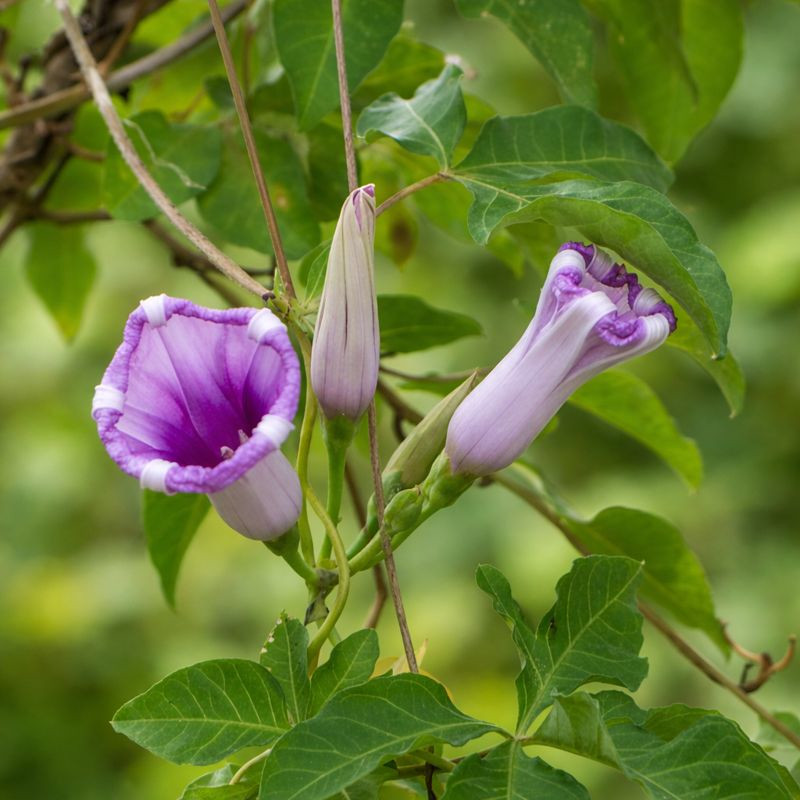

When it comes to psychedelic substances, the most frequently mentioned compounds are LSD, psilocybin, mescaline, and a number of others. However, LSA, also known as ergine, is enjoying increasing popularity among those who practice taking such substances. What is this compound? Where is it found? Is it legal in Poland? I answer these and other questions in this article. Read it to learn more about this substance.
What is ergine and what are its properties?
Lysergic acid amide, or LSA, is an ergoline alkaloid with psychedelic properties. The reactions after consuming this compound are somewhat similar to those of LSD, although they are less intense. It’s worth noting that it is an organic chemical compound that occurs naturally in nature.
The similarity to LSD is no coincidence. Albert Hofmann studied this compound. It’s easy to conclude that LSA may have been the driving force behind research on psychoactive substances. This is likely why lysergic acid diethylamide is chemically similar to lysergic acid amide. However, the effects of these two substances are different. Ergine can cause more depressive states, causing feelings of heaviness and fatigue. For these reasons, after consuming this substance, users typically lie down to experience a state of bliss and “dreams.”
In indigenous cultures, ergine was used in various religious and medicinal rituals. It was particularly popular in Mexico, where Morning Glory seeds (or bindweed) were sacred. It’s not without reason that they were often found with images of the deity Xochipilli, the Prince of Flowers, the god of corn and growing plants, but also of ecstasy, delight, and love.
Ergine also found its place in Ayurveda, the ancient Indian medicine practiced by many to this day. It is considered a remedy for neurological ailments and rheumatic problems. Some cultures also used morning glory seeds as an anti-aging agent.
It’s worth knowing that consuming even the doses described by practitioners doesn’t guarantee psychedelic effects, which is due to the varying concentrations of the substance. However, these experiences result from their effect on the same receptors as those affected by, for example, psilocybin (it is a serotonin (5-HT2A) receptor agonist). It should be added that sedative and sleep-inducing effects are much more common after ingestion. On the other hand, taking them may be associated with gastrointestinal symptoms (including nausea and vomiting), tachycardia and increased blood pressure, numbness in the limbs, weakness, or muscle tremors.
Where is ergine found?
We already know the properties of this substance. But where is it found? The most popular source of ergine is Morning Glory seeds (in Polish, morning glory). Next is Hawaiian morning glory, more commonly known among practitioners as Hawaiian Baby Woodrose.
It’s worth knowing that LSA isn’t found exclusively in morning glory seeds, although that’s the most widely known source. Selected fungi, such as ergot (which are, in fact, spores of red ergot), also produce this acid. However, due to the other alkaloids present in this parasite, uncontrolled consumption in ancient times sometimes resulted in an effect known as “St. Anthony’s fire,” i.e., painful spasms of peripheral vessels and resulting gangrene of the limbs.
How rich are morning glory seeds in this compound? It all depends on the species, but also on individual sensitivity to the substance’s effects. In the case of Morning Glory, the threshold for action is usually around 1.5 grams of seeds, or about 40 seeds. Serious effects, however, occur after exceeding 10 grams (or about 400 seeds). They are often consumed in tea or other crushed form.
In the case of Hawaiian morning glory, it is indicated that just a few seeds are enough to produce any effects. However, consuming 12 or more capsules can lead to severe symptoms.
Ergine Research – What Are the Prospects?
Current research on ergine is rather limited. However, it also has applications in modern medicine. It is used in some places, for example, to treat migraines and cluster headaches, Parkinson’s disease, and to stop vaginal bleeding.
However, it is more often described in the context of “legal highs,” i.e., taking ergine from Morning Glory or Hawaiian morning glory seeds to induce psychedelic effects. Due to its effect on serotonin and dopamine receptors, some emphasize its potential use in personalized medicine, especially in the context of mental disorders.
Is ergine banned in Poland?
Ergine, unlike other psychedelic substances, is not listed in the annexes to the Act on Counteracting Drug Addiction. However, its legality is debatable. Although some plants that produce this compound can be purchased regularly, for example, in garden centers, Hawaiian morning glory, Rivea corymbosa, and several other species have been banned in Poland (and others are being successively added to group I-N of the list of narcotic drugs). It’s worth remembering that the seeds used for cultivation are additionally “treated” with chemicals, so consuming them may be hazardous to your health.