


Mushrooms produce hundreds of different compounds with diverse properties. These include purely health-promoting substances as well as substances that alter perception of reality. This includes the well-known psilocybin, but there are many others. However, the recently discovered alkaloid aeruginascin is increasingly being mentioned in the context of “magic mushrooms.” What is this substance? What are its properties? Where does it occur naturally? I’ll provide answers to these and other questions below. Please read on!
What is aeruginascin and what does it do?
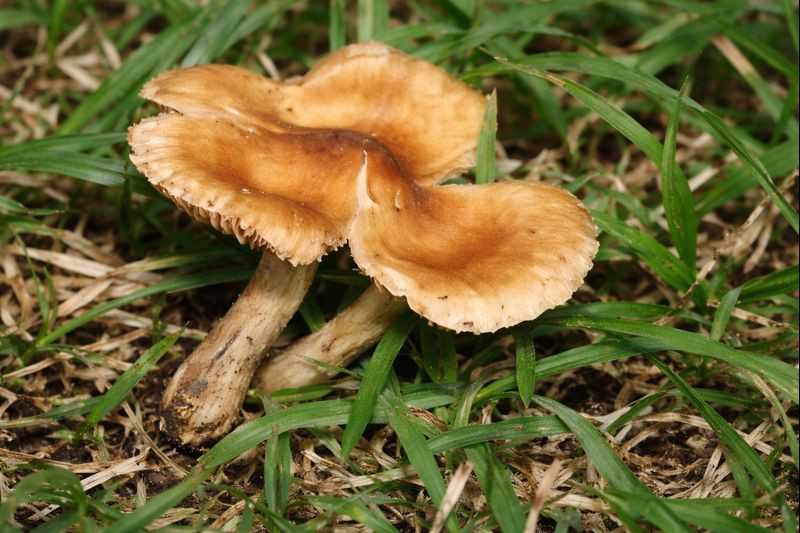
4-phosphoryloxy-N,N,N-trimethylindolamine (4-PO-TMT) – this is the chemical name for aeruginascin – a compound found in mushrooms such as Inocybe aeruginascens, a species that grows – for example – in Hungary and where it was discovered in 1965. Its extraction took place in 1989, which is a relatively recent discovery compared to other alkaloids with psychedelic properties. In addition, it can also be found in the mushroom Pholiotina cyanopus, as well as in Psilocybe cubensis, although in much lower concentrations.
Chemically, this substance is a prodrug, an analogue of psilocybin with an additional trimethylamine group. Interestingly, it structurally resembles the toxin secreted by the skin of some amphibians – bufotenin. In the body, it metabolizes into its active form, 4-hydroxy-N,N,N-trimethyltryptamine, which has the ability to bind to 5-HT2A serotonin receptors. This is where its psychoactive properties and impact on perception, mood, and cognitive functions come from. However, it does not react with 5-HT3, which significantly impacts how it induces hallucinations. It also penetrates the blood-brain barrier less effectively. It should be added that aeruginascin has a lower affinity for the 5-HT2B receptor than psilocin, making it a safer substance due to the fact that activation of this receptor results in fibrosis of heart valves with long-term use.
This suggests that aeruginascin, as a psychedelic, has a different hallucinatory profile. They are slightly weaker, but also more euphoric, than those of psilocybin. It may also have a positive effect on mood. Some suggest that this compound synergizes with other psychedelic substances present in mushrooms, producing the so-called entourage effect. This modifies the overall experience after consuming them.
The Effect of Aeruginascin on Perception
Let’s take a closer look at the psychedelic properties of this substance. As I’ve already shown above, it affects perception slightly differently than psilocybin. The key is a slightly different interaction with serotonin receptors than the compound characteristic of Psilocybe species. As a result, aeruginascin potentially doesn’t cause the so-called bad trips, and the hallucinations themselves are not as severe.
However, euphoric effects, i.e., a clear mood lift, are observed after consuming mushrooms containing this compound. Aeruginascin is also said to impair spatial orientation much less, making the person who consumed it more aware of their surroundings. This, in turn, could have a significant impact on how it is perceived and used in the future.
Uses of aeruginascin
For this reason, scientists studying this compound see it as an alternative to psilocybin-based drugs. This is due to the fact that psilocin (a metabolite of an alkaloid found in Psilocybe mushrooms) has potentially more side effects than psychedelic effects. Although it is not physically addictive and the effects subside within a few hours, the fact that aeruginascin could be used as a milder treatment for mental disorders, potentially bypassing the unpleasant effects of psychedelics, seems promising. However, it’s still important to remember that this compound requires further research.
Possible Side Effects of Aeruginascin
Does this mean that this substance is a miracle cure for depression, PTSD, or other ailments? Unfortunately, it can cause some negative effects. The greatest risk comes from its similarity to bufotenine. This compound is found on the skin of some frogs and toads (mainly of the Bufo genus). Side effects caused by the substance aeruginascin may include:
- psychedelic effects (although in a milder form than psilocybin),
- disorientation and problems with logical reasoning,
- short-term increase in blood pressure and heart rate,
- Transient muscle paralysis or weakness (due to its similarity to bufotenine).
It’s also important to remember that some of the effects of psychedelics are highly dependent on individual predispositions. Therefore, anxiety or gastrointestinal symptoms may always appear.
Aeruginascin – Summary
Psychedelics, especially those derived from mushrooms, are attracting increasing scientific interest. And the more we know about them and their impact on our functioning, the more interesting the research results and potential prospects for their use. Aeruginascin fits perfectly into this trend, especially due to its milder effects on mental, emotional, and cognitive states. Is it a gamechanger in drug research for various mental health conditions and disorders? We’ll find out in the future.