

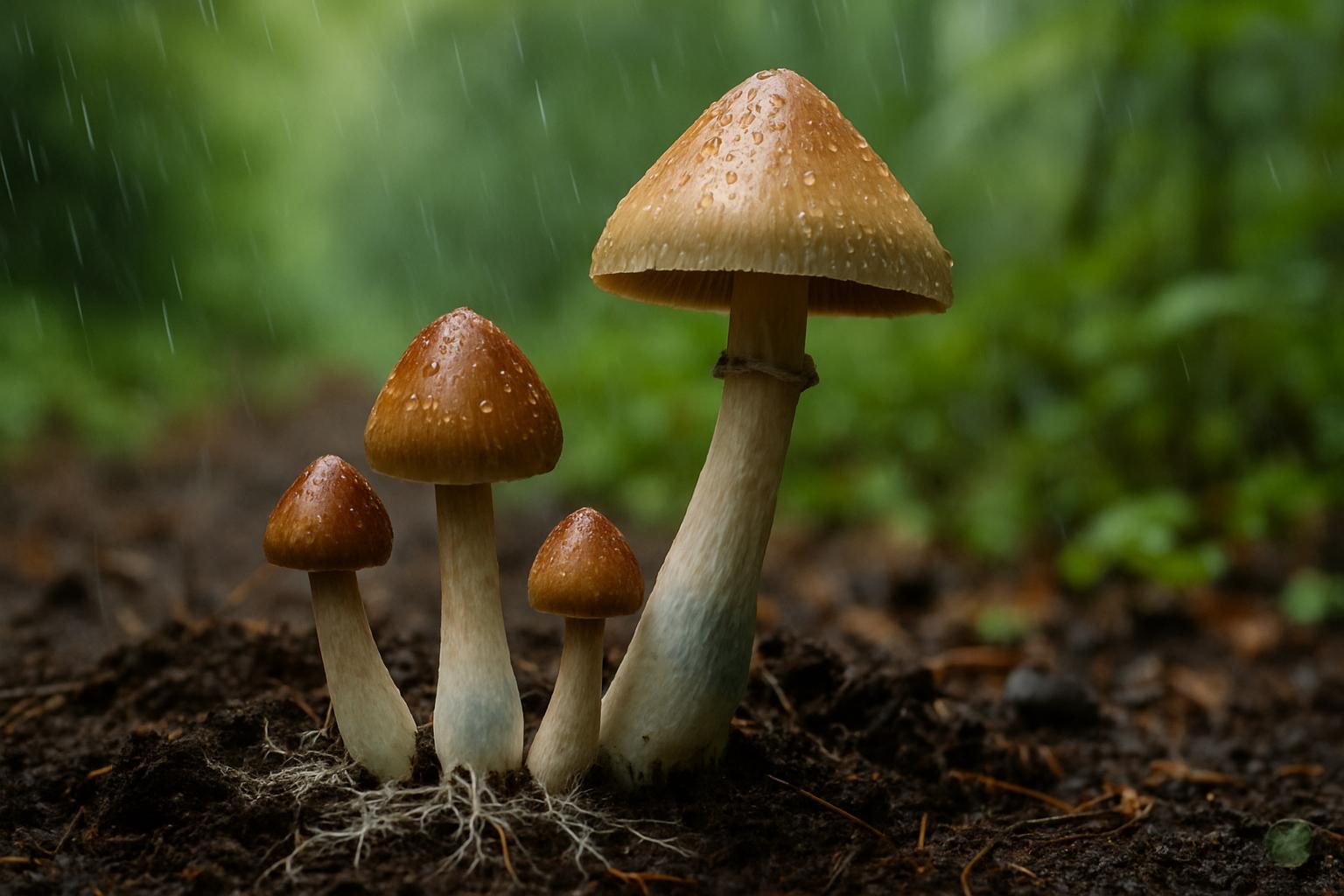

There’s no shortage of nature enthusiasts among both younger and older generations. Microscopic observations, among other things, are very popular. It’s no coincidence that even toy stores offer devices that allow you to observe microbes, but also the early stages of fungal development. In this field, psilocybin mycelium is an exceptionally intriguing research material. Depending on the species, and even individual strains, the “roots” can behave completely unpredictably, offering a wide range of possibilities for experimentation. However, to maintain this product in proper condition, it’s worth knowing how environmental conditions affect the development of mycelium. Learn more about them now!
Observing Psilocybin Mycelium – A Growing Trend Among Mycology Fans
Mycology is enjoying growing interest from fans of microscopic observations. Liquid cultures of various mushrooms are available in stores – some intended for inoculation and possible research, while others are strictly for observing these organisms on a glass slide. This is precisely the case with psilocybin mycelium.
The mushrooms themselves contain psilocybin – a psychedelic substance, classified as a hard drug. However, the mycelium and spores do not contain any banned compounds. However, observing its behavior under a microscope and on a glass slide is a unique experience. Especially since depending on the variety and the conditions provided, mycelium can behave differently.
This makes it an intriguing research resource for any mushroom enthusiast. What’s more, you’ll find both grow kits and liquid cultures in the Mykolaborian store. This gives you the opportunity to observe even exotic species of these mushrooms.
What factors positively influence the growth of psilocybin mycelium?
One of the most important factors affecting mycelium growth is the substrate (nutrient). In nature, mushrooms of this genus decompose dead organic matter. However, various types of grains, such as corn, are often used to inoculate and cultivate the mycelium of these species. These grains are a high-quality source containing carbohydrates, nitrogen, and high caloric value, as well as agar with a controlled composition and a lower risk of infection.
Another issue is temperature. The proper thermal conditions for the development of Psilocybe mycelium are those between 21°-25° Celsius. This is because these mushrooms mostly originate from tropical countries and prefer warmth. Some even prefer higher temperatures. Moisture is also important – the mycelium of psilocybin mushrooms likes moist, but not completely wet, soil.
Psilocybin mycelium requires a specific pH. Many mushrooms prefer more acidic soil. However, in the case of Psilocybe cubensis, for example, the preference depends on the age of the mycelium. In the initial stage, the optimal range is from 6.0 (slightly acidic) to 7.5 (slightly alkaline). In later stages of development, these mushrooms often deacidify the soil, and the average pH increases from 7.0 to even 8.5. In licensed labs, higher alkalinity is often stimulated by adding things like lime or gypsum.
Proper ventilation is also crucial. During intensive growth, the mycelium absorbs oxygen from the air and exchanges it for CO2. Too high a concentration of this gas can inhibit the growth of mycelium, and even deform and suffocate it. Therefore, proper ventilation is important, which also helps maintain sufficient humidity and an appropriate temperature.
Factors that may harm the growth of psilocybin mycelium
The above shows how appropriate conditions can positively impact the growth of Psilocybe mycelium. However, the same factors, but with different values, can lead to illness or even death.
And so – an improperly prepared substrate (i.e., poorly selected, insufficiently rich in the right nutrients, or improperly pasteurized) can cause psilocybin mycelium to fail to start at all or, sooner or later, to develop some kind of illness. Similarly, an incorrect pH – a medium that is too acidic – can, for example:
- reduce the availability of nutrients,
- inhibit enzyme activity,
- cause cellular stress,
- stimulate the development of microbial competition,
- weaken growth.
Too low or too high a temperature, even in developing mycelium, can effectively inhibit and damage it. On the other hand, too dry a substrate does not provide the right conditions for development – too wet, on the other hand, causes the potential proliferation of parasitic fungi and microbes, or rotting.
Potential sources of contamination should also be mentioned. Mycelium is sensitive to various chemical and biological factors. Therefore, every observer should keep their research materials away from animals or houseplants, which are primary sources of contamination.
Ready-made full auto grow kits to meet the needs of microscopic observation enthusiasts
Now that you know how various environmental factors affect mycelium development, I have good news for you. By choosingfull auto grow kits from Mykolaborian, you don’t have to worry about the vast majority of them. The package you receive just needs to be placed in a location away from sources of potential infection, relatively airy and warm, but also providing shade. This makes observing psilocybin mushrooms in their earliest stages of development much easier and accessible, even for amateurs!