

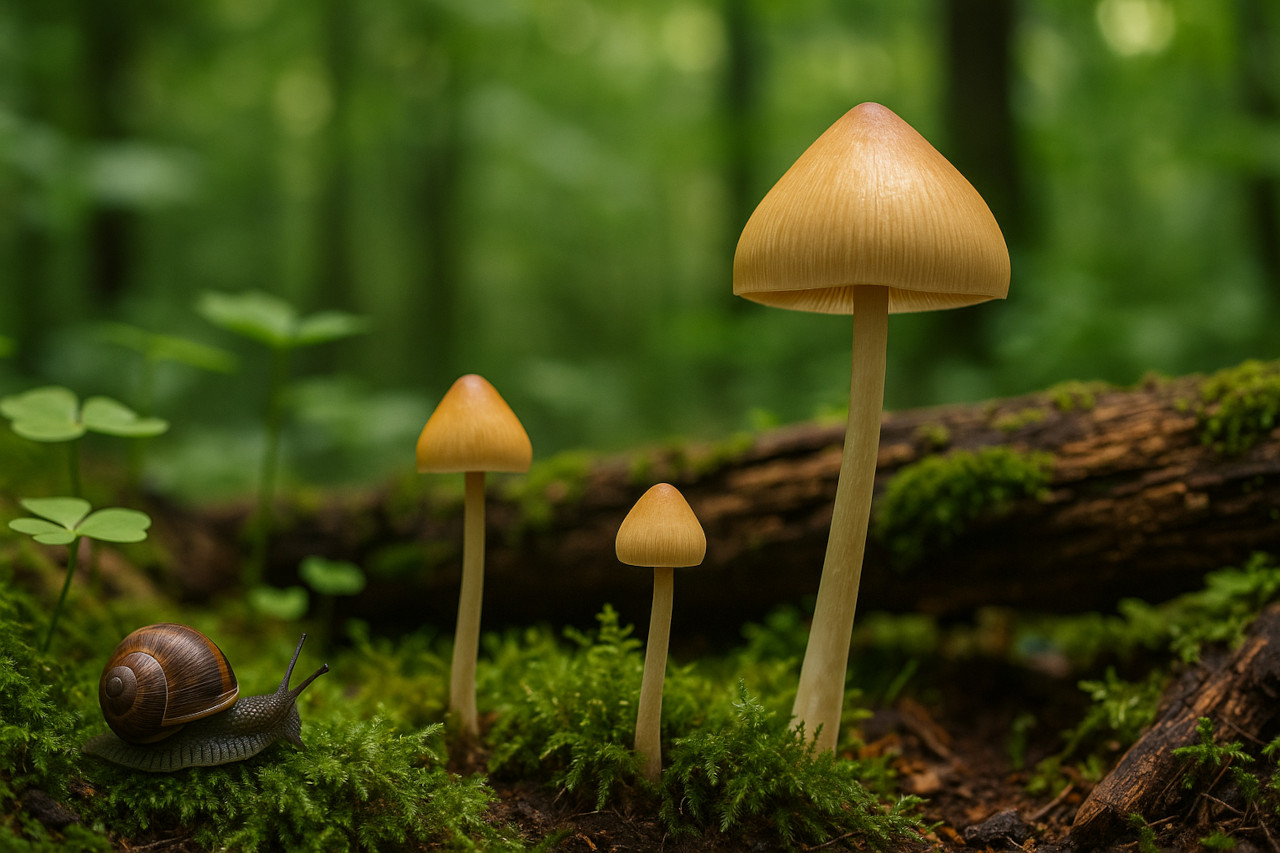

Nature provides various stimulants and other substances with a wide range of effects. These include alkaloids produced by mushrooms, which influence the state of consciousness. The role of psilocybin in the ecosystem is particularly intriguing. There is still no consensus in the scientific community as to why mushrooms began producing this compound. In this article, we will explore this issue together. I encourage you to read it!
The Importance of Psilocybin for Mushrooms and the Ecosystem
There are many theories about the role of this compound, but the most popular ones include the idea that it protects against parasites and that it is environmentally induced. In practice, many of these theories overlap. The key question, however, is not what psilocybin actually does in nature, but why mushrooms began producing it in the first place.
The Psilocybin as an Anti-Parasite Weapon Theory
Probably the most popular theory in the scientific community about why mushrooms began producing psilocybin is that it’s a defense mechanism against parasites. Under such conditions, this substance would supposedly protect fruiting bodies from being preyed upon by insect larvae or small animals, which, in theory, would help them disperse spores more effectively.
The chemical structure of psilocybin is crucial for its confirmation. It structurally resembles serotonin and tryptamine. Therefore, it interacts with animal receptors responsible for, among other things, the perception of reality and the reception of stimuli. Potentially, such an action would repel them, or poison and paralyze them, colloquially speaking, by causing them to “trip.”
Interaction of animals (including insects) with psilocybin
Some models show that psilocybin not only changes animals’ behavior (e.g., deters them from consuming the fruiting body), but also provides information that it has a toxic effect on them by inducing oxidative stress. Since psilocybin mushrooms grow in environments where there are a multitude of different animal species feeding on a wide range of organisms from the fungi kingdom, these species have simply developed this defense mechanism.
Interestingly, there are also opposing theses. Some indicate that psilocybin may modify the actions of cicadas infected with another fungus – Massospora – to more effectively disperse their spores. Insects attacked by this organism are “forced” to seek out psilocybin-rich mushrooms. As a result, both species are spreading.
A similar theory applies to Psilocybe’s interactions with mammals, especially small rodents. After eating psilocybin-containing fruiting bodies, they are said to be not only disoriented but also experience gastrointestinal symptoms (diarrhea and vomiting). Importantly, the longer time after eating the mushrooms, therefore in different locations, could potentially serve to disperse spores without being destroyed by stomach acids.
The habitat niche and environmental pressure hypothesis
Another theory suggests that psilocybin’s function in nature is to support metabolism in the environment by facilitating the colonization of fungi in new locations. Fungi, by inhabiting woody matter, other plant waste, or manure, are potentially vulnerable to competition and attacks from other organisms (which brings us to the previous point).
The key to supporting this theory is the time when psilocybin mushrooms began to appear. The first species evolved around 65-70 million years ago. On the one hand, this was a period when the Earth was covered in lush forests, including very humid ones, and on the other, this period preceded the great extinction (especially that of the dinosaurs). As a consequence of these events, a large amount of dead matter appeared to decompose. In turn, smaller surviving animals (including mammals and insects) and fungi competed for this dead matter. Slime molds, including snails, posed a particular threat to them.
Therefore, the development of psilocybin in some species may have provided an evolutionary advantage over others. Those that did not develop it lost out in competition for habitats and in clashes with predators feeding on their fruiting bodies. Moreover, with the emergence of megafauna, fungi that previously fed primarily on plant debris could begin to colonize other environments, including the excrement of large animals.
Parascientific and Philosophical Theories Regarding Psilocybin
Above, I presented scientific explanations for why mushrooms produce psilocybin. But what are some less scientific theories? Terrence McKenna argued that psilocybin mushrooms could potentially be the result of natural “genetic engineering.” He linked this thesis to the theory of the “stoned ape,” a human ancestor who, by consuming such fruiting bodies, was said to have developed higher traits characteristic of the human species. Some mycologists specializing in Psilocybe species believe that they may be the result of external intervention. Among the more “mundane” hypotheses, psilocybin is a side effect of mushroom metabolism.
Research into the importance of psilocybin is still ongoing
In reality, we still know very little about the functions of psilocybin in nature. This is primarily due to the fact that most research on it takes place in laboratory conditions. It is difficult to observe, for example, the interactions of animals and Psilocybe mushrooms in the wild. Therefore, research is still ongoing, and what it yields may even challenge current knowledge about this alkaloid.