

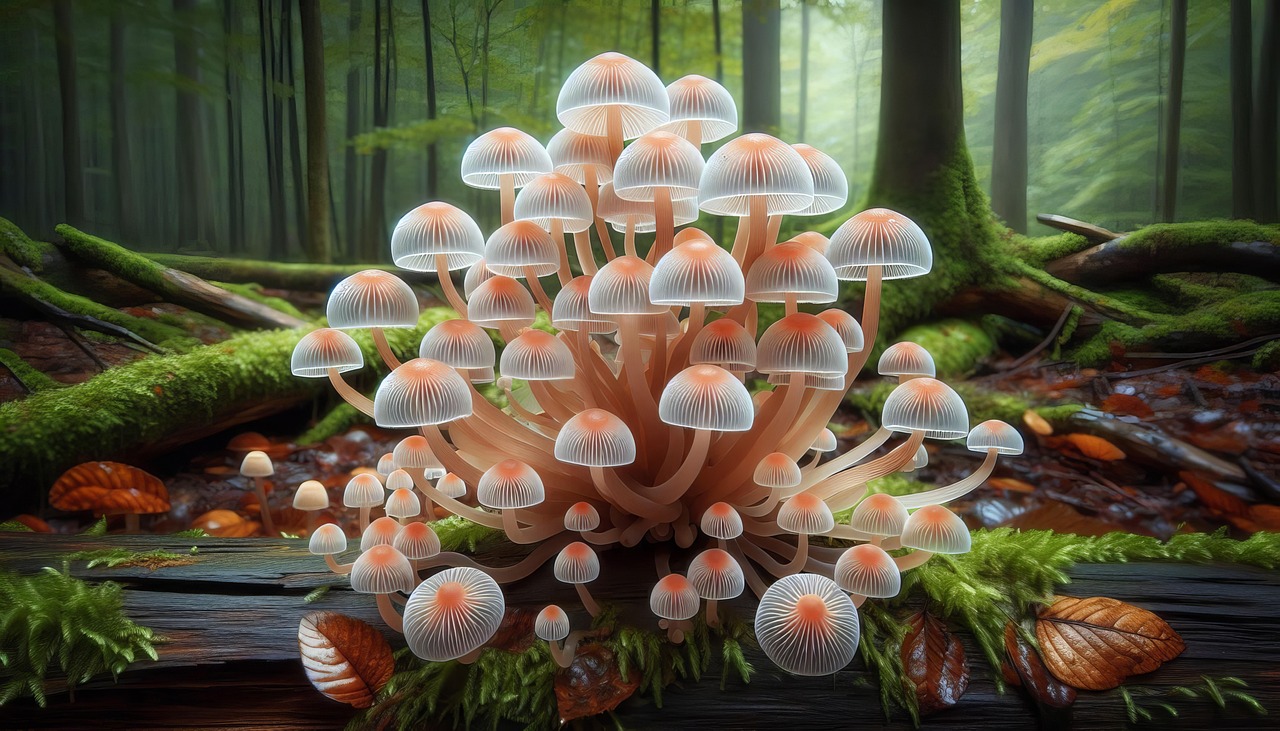

Most of the time, forests, meadows, and other ecosystems seem peaceful. We associate chaos in these places only with the moments when predators come out to feed. Yet, every biome is a dynamic environment, where there’s a constant struggle for survival. This is no different for fungi, including those of the Psilocybe genus. These organisms compete fiercely, but they also cooperate with others—sometimes indirectly—for example, by providing them with better access to nutrients. Want to learn more? Read this article!
What is the natural habitat of Psilocybe mushrooms?
Mushrooms of the Psilocybe genus comprise a wide range of species found at various latitudes and in various climate zones. They can be found in the still relatively cool ecosystem of Poland, as well as in the equatorial forests and warm wetlands of North America.
It’s worth knowing that the natural habitat of psilocybin mushrooms for most specimens has one common denominator: animal feces. For this reason, for example, various varieties of Psilocybe can be found in pastures and animal feces. They are particularly fond of the feces of farm animals, including cows and horses, as they are rich in cellulose and other plant residues.
Many species do not grow strictly in feces, but rather in the soil they feed on. They often grow in tall grasses, for example, on the edges of pastures. There are also mushrooms of the genus Psilocybe that feed on plant organic matter. They grow, for example, on fallen tree trunks and branches.
Most species of this genus prefer moist and warm environments. Optimal temperatures for them are around 20-25° Celsius. They also grow better in partial shade. All of them, however, appreciate moist conditions, which is why most of them are found primarily in the tropics.
Symbiosis with other organisms – how do Psilocybe mushrooms affect the environment?
Psilocybin mushrooms, unlike the well-known and widely collected forest mushrooms (boletes, boletes, etc.), do not form mycorrhizas with specific trees. Nevertheless, they still have a significant impact on the natural environment and live in a certain symbiosis with selected organisms. This is due to their saprotrophic nature.
Well, Psilocybe species decompose dead organic matter, participating in the turnover of matter and the recycling of nutrients in the natural environment. As I mentioned, many of them rely primarily on feces and plant waste for nourishment. This is where mycelium develops, and fruiting bodies grow in their immediate surroundings.
So what does the symbiosis of Psilocybe mushrooms with other organisms look like? In the case of animals, one could say they clear their pastures. In return, animals sometimes eat individual fruiting bodies and spread their spores further… in their feces. This is known as a mutualistic relationship.
On the other hand, they play a crucial role in providing plants with nutrients. By breaking down animal excrement and organic waste, they return minerals, among other things, to the soil. These, in turn, are taken up, for example, by the grasses in which the mushrooms grow.
The interactions between Psilocybe mushrooms and bacteria are also interesting. In their case, they engage in what is known as metabolic cooperation. This means that both the fungi and the microorganisms break down specific components of organic waste. The former break down cellulose, lignin, and other polysaccharides. Bacteria, on the other hand, break down proteins, fats, and urea. This allows more nutrients to be delivered to the soil and mycelium. What’s more, it has been proven that some bacteria (including Pseudomonas and Bacillus) have a protective effect on the mycelium, protecting it from pathogens and supporting its growth.
But…
Natural enemies of Psilocybe mushrooms – what threatens them and what do they compete with?
It’s worth knowing that Psilocybe mushrooms have not only allies in nature, but also “enemies.” How does Psilocybe compete with other organisms in the ecosystem? First of all, the same bacteria that may have a beneficial effect on them can also have certain undesirable effects on the mycelium, including producing antibiotics that inhibit mycelium growth. Sometimes they also colonize suitable substrates more quickly, absorbing important nutrients. On the other hand, there are also other saprotrophic fungi, including Penicillium and Aspergillus. They can effectively outcompete and “devour” Psilocybe food.
We can’t forget about parasites, including insects and snails, for example – they especially eat young fruiting bodies before they release spores. The same goes for rodents and birds.
The defense mechanism of Psilocybe mushrooms is the psilocybin they produce. This is thought to affect the nervous systems of insects and other animals, discouraging them from consuming the fruiting bodies. They also utilize other metabolites that can be potentially toxic. Moreover, they exhibit a rapid life cycle, which helps release spores even before parasites attack. Furthermore, they utilize the aforementioned symbiosis with selected bacterial strains.
Psilocybe mycelium life under a microscope – you can observe it too!
The world of mushrooms is fascinating, especially such advanced organisms as those of the Psilocybe genus. How they function in nature, supporting the natural circulation of matter, but also defending themselves against potential parasites… This is a topic of much discussion and debate. It’s worth knowing that you, too, can observe the growth of the mycelium of these species in your own home. You can find grow kits designed for this purpose at Mykolaborian. Check them out!