


Mushrooms are becoming increasingly popular among both professional and amateur mycologists. Observing mycelium, whose behavior can be highly unpredictable yet incredibly inspiring, has become very popular. Among the species whose “roots” are studied are mushrooms from the genus Psilocybe, which has various varieties. The most popular strains of P. cubensis include a variety named after Terence McKenna. Mushrooms, or rather growkit McKennaii, are an incredible source of research material. To learn more about its popularity, read this article.
McKennaii Grow Kit – Everything You Need to Know About It
Every grow kit offered by Mykolaborian contains Psilocybe cubensis mycelium, used exclusively for observing the first stages of development of these organisms. The same is true for this strain. The Full Auto McKennaii Grow Kit is for anyone who wants to observe mycelium life under a microscope or on a glass slide. It’s a fascinating world that every biology enthusiast, especially mycology, will appreciate.
What are the McKennaii Grow Kit instructions? Operating the Full Auto “grow kit” is simple. All you need to do is place the package in the appropriate location. We’re talking about a dark, but warm, and well-ventilated room, away from sources of contamination (i.e., animals and flowers) to avoid possible biological contamination. That’s all – no maintenance, no misting, no “airing” the contents yourself. You just need to be careful when collecting material for observation and ensure fruiting doesn’t occur.
The mycelium develops very dynamically. It colonizes most rapidly in temperatures around 21°-25° Celsius.
What’s worth knowing about McKennaii mushrooms?
As an amateur mycologist, you gain the ability to observe mycelium. Nevertheless, it’s good to have a more complete picture of these unique organisms. So what do the fruiting bodies of the McKennaii strain look like?
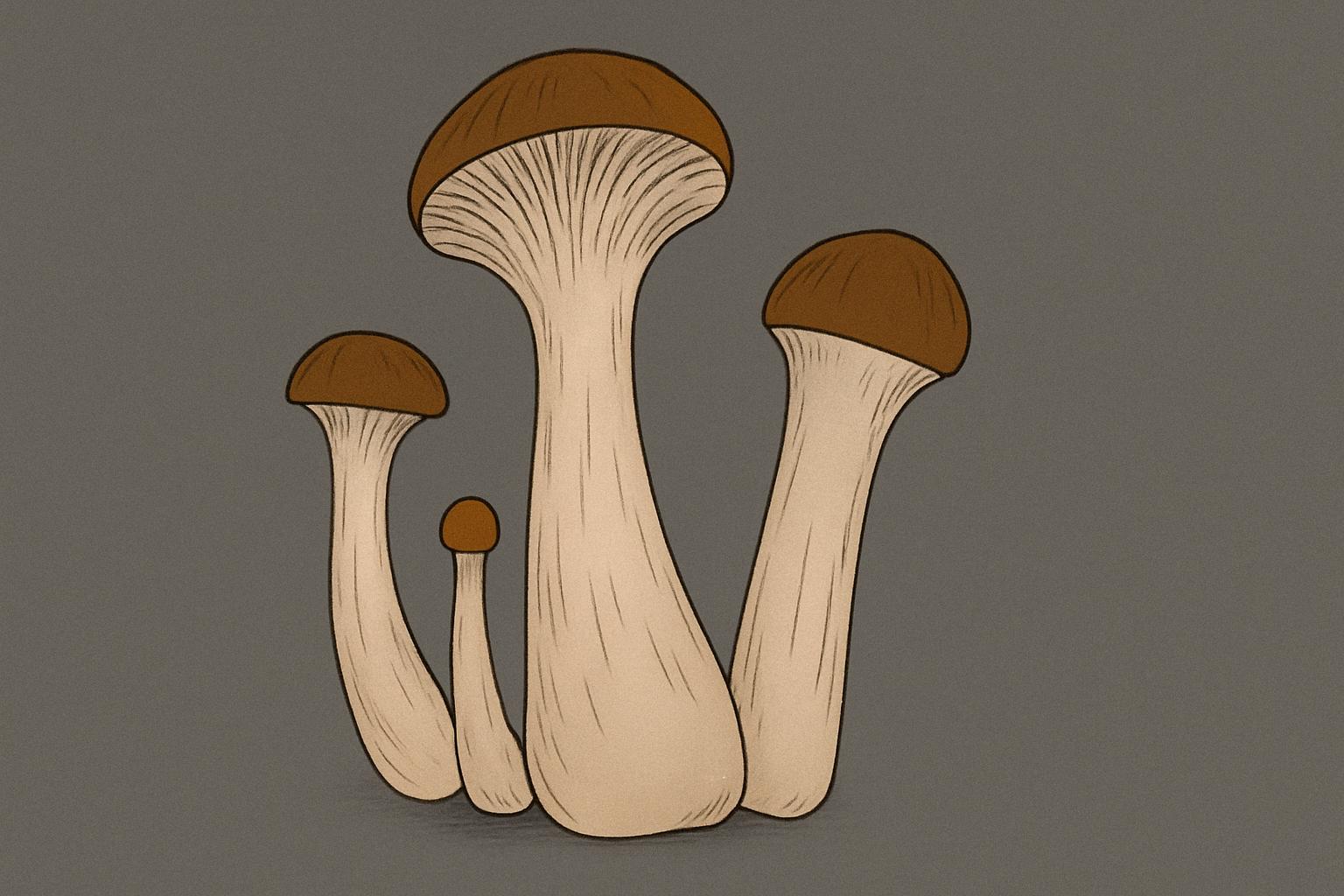
They grow on long, thin stems (thinnest near the cap). The “caps” are relatively small and flat. They go from light brown or even ochre at the edges to dark warts at the very top. Their shape clearly reveals their “bald” origins.
What sets them apart is their high alkaloid content. It’s been suggested that they contain more than the Golden Teacher, from which they supposedly originate. Speaking of origins – where did the McKennaii variety come from? Data on this subject is unclear. Some sources claim that the strain was supposedly cultivated from spores Terence McKenna supposedly left behind. However, it’s more likely that its roots lie in the Netherlands, where an anonymous mycology enthusiast isolated it from the Golden Teacher.
So where does the name come from? There’s no clear explanation here either. Some believe that since the strain is the work of someone other than McKenna, it may be a form of homage. Others believe it’s a clever marketing ploy.
Why is the McKennaii grow kit so popular?
The widespread popularity of this strain is likely due to several factors. The uniqueness of this strain’s mycelium is attractive to amateur mycologists. It works like crazy, creating a wide variety of forms that can put the hyphae of other strains to shame. It’s hard to rule out that its significant alkaloid content also plays a significant role – McKennaii may therefore be of interest to, for example, labs specializing in research on the effects of psilocybin on various mental disorders.
One of the most likely reasons for the widespread desire for this strain is its name. Terence McKenna was a philosopher, traveler, writer, and ethnobotanist, and a popularizer of psychedelic substances, which he saw as more than just compounds with psychedelic effects. He believed that thanks to them, the world could be improved, but he also saw a significant factor in the development of humanity as a species. So, seeing the strain’s name, those interested in this “culture” are certainly interested in its characteristics.
Who is the McKennaii Grow Kit suitable for?
Although these are speculations, reviews of the McKennaii Grow Kit often point to the aforementioned reasons for its popularity. It is certainly true that this strain will be suitable for more experienced mycologists. It’s not only about being careful when collecting material for observation, but also about the speed at which the mycelium is processed to avoid potential undesirable results.