


Medicinal Mushrooms – What You Need to Know?
Since the dawn of time, nature has been providing us with ways to cope with various ailments. Most people associate natural medicine with herbs or the fruits of specific plants. However, medicinal mushrooms are also gaining wider awareness. Used primarily in Far Eastern medicine, they are now also becoming increasingly popular in Western countries, including Poland. Which species have beneficial effects on health and the body? Find out below!
Lion’s Mane
Called Lion’s Mane in English (literally translated as “lion’s mane”) and known in Poland as Lion’s Mane, it is an edible mushroom that prefers dying and dead wood. They are less commonly found on living organisms, but sometimes grow on American beech. The fruiting bodies of this species range from 5 to 40 cm in diameter and are cream or brown in color. They are characterized by a strong, fleshy structure with spines. The taste of Lion’s Mane is associated with seafood, especially shrimp and lobster. It has been known for at least 1,000 years in Chinese medicine, but it also makes an excellent addition to many dishes.
What are the properties of these medicinal mushrooms? Due to the phytochemicals they contain, including polysaccharides, hericenones, and erinacins, they have health-promoting properties, especially for the nervous system—or rather, its main component—the brain. They also have been reported to have anti-cancer properties, effectively lower bad cholesterol, and have a positive effect on the digestive system. Furthermore, Lion’s Mane is a fantastic supplement, helping to increase attention and focus on tasks. It also stimulates memory and perception, making it a good choice during times of high mental stress.
Many scientists believe that it can be used to obtain effective medications for numerous serious ailments. Among these are Alzheimer’s and Parkinson’s diseases, gastrointestinal ulcers and inflammation, and multiple sclerosis. And these are just the first medicinal mushrooms mentioned!
Shiitake Mushrooms
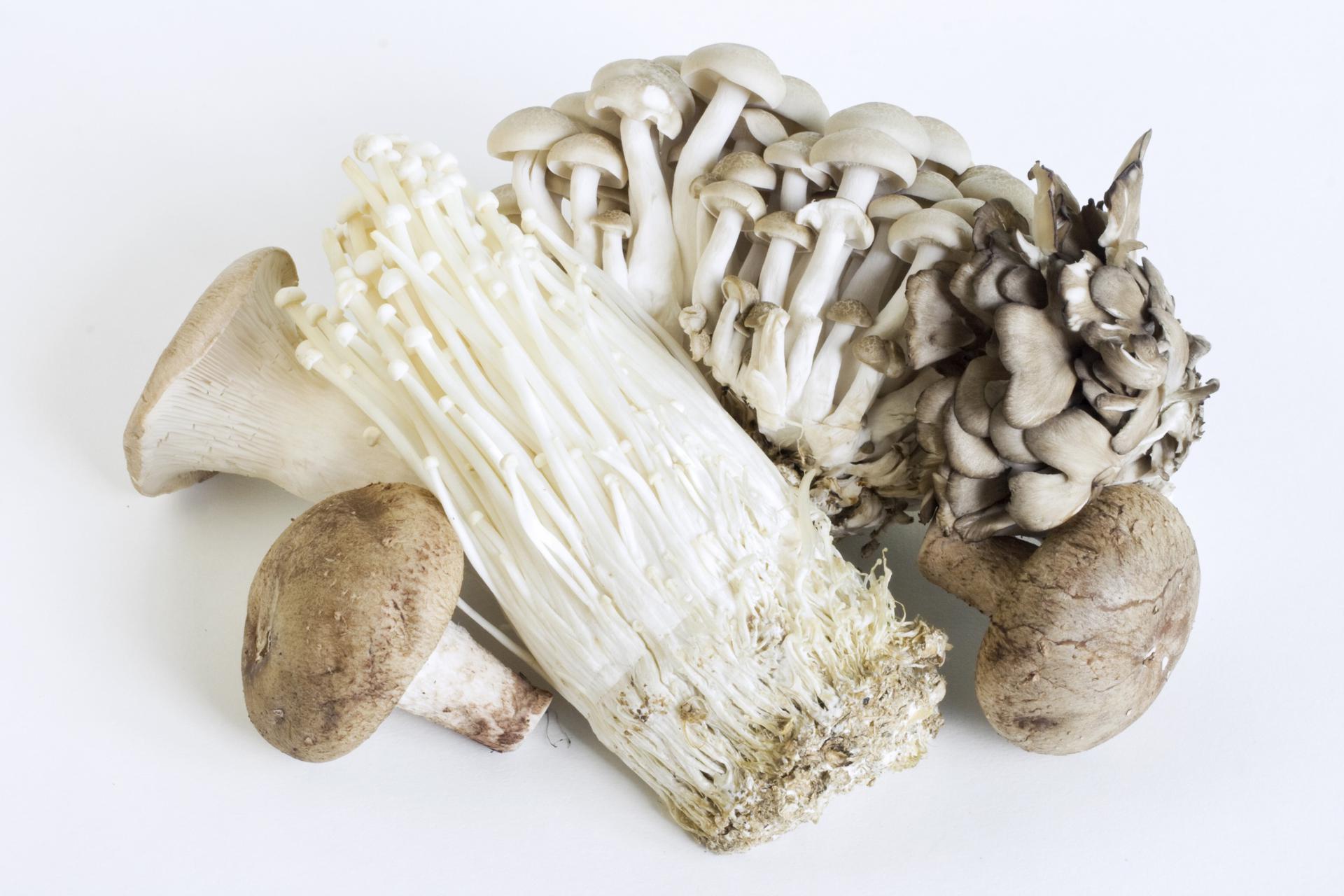
This species is very popular in Asian cuisine, including Japanese and Korean. They can be found in grocery stores as a food additive or in supplement stores. In nature, these medicinal mushrooms are approximately 20 cm in diameter, with a light, brownish stem up to 4 cm long.
What’s noteworthy about them is their rich content of various nutrients. The fruiting bodies contain potassium, selenium, magnesium, zinc, and phosphorus, among other nutrients. Furthermore, and especially important for vegans and vegetarians, they are a valuable source of vitamin B12 and other B vitamins. Because they are a veritable vitamin powerhouse, they boost energy, help manage emotional stress, protect the liver, and strengthen the immune system. What’s more, they are being tested in the context of treating and containing viruses, even ones as dangerous as HIV. In addition, they have a calming effect and may have anti-aging properties.
Psilocybin Mushrooms
These are not so much medicinal mushrooms, but therapeutic mushrooms. And you could call them cursed. Why? The psilocybin contained in them is a psychedelic substance. These compounds are considered illegal under Polish law. Consequently, growing, possessing, and even more so trading in mushrooms containing psilocybin (including Psilocybe cubensis) is strictly prohibited. The law only permits the trade of so-called Growkits containing mycelium, which does not produce this substance.
And how do these therapeutic mushrooms work? It is suggested that thanks to the aforementioned psilocybin, they could completely change the face of modern psychiatry. This is significant because today, the problem of personality disorders, depression, and other mental illnesses is a kind of epidemic. Importantly, preparations derived from this chemical compound are not only effective but also long-lasting. Naturally, they complement, not replace, psychotherapy. However, they can effectively replace existing medications, which are often burdened with numerous side effects.
It’s worth mentioning that Psilocybe cubensis is not the only therapeutic mushroom containing psilocybin. Other notable mushrooms include Psilocybe semilanceata, the native Psilocybe semilanceata, Deconica montana, and Psilocybe mexicana.
Reishi
Belonging to the lingzhi mushroom family, reishi is considered a panacea for almost all ailments in Asian medicine. It’s no wonder, then, that it’s held in almost divine veneration, especially since it’s difficult to cultivate. It’s semicircular and usually brown. However, there are as many as 6 color varieties, including:
- white,
- yellow,
- red (the most valuable),
- blue,
- purple,
- black.
Reishi as a medicinal mushroom has been appreciated not only in Asia but also around the world. I wouldn’t be wrong if I called it the king mushroom. Due to its supposed potency-boosting properties, almost every ruler possessed it.
Today we know that its “magical powers” stem from its richness in various active ingredients, including polysaccharides, alpha- and beta-glucans, coumarin, and alkaloids. It also contains steroid components, which are equivalents of human sex hormones. It also contains vitamins and minerals – copper, zinc, germanium, and many others.
The abundance of health-promoting ingredients means that reishi has a beneficial effect on the immune system, regulates blood sugar levels, and supports the treatment and prevention of circulatory diseases. It is also recommended for allergy sufferers and during periods of increased illness. It is also said to have rejuvenating properties. No wonder it’s a real treasure!
Cordyceps
The last medicinal mushroom on the list is Cordyceps sinensis, which is actually a parasite that feeds on the larvae of the Thitarodes moth, absorbing nutrients along the way… which are, in turn, valuable to humans. It is extremely rare in nature, but is increasingly cultivated due to its nutritional value.
The ingredients it contains are effective antioxidants and have anti-inflammatory properties, fighting a variety of infections. In the past, it was used for upper respiratory tract ailments and liver diseases. Today, cordyceps is used, among other things, to combat stress and symptoms of aging, chronic fatigue, and weakened immunity. It is believed to be an excellent ally in the fight against autoimmune diseases, which is crucial today in many cases, including thyroid disorders. Furthermore, it has a beneficial effect on the excretory and digestive systems, and libido. It also increases energy levels and improves well-being.
Medicinal Mushrooms – Naturally Good?
We’re used to thinking that everything natural is good for the body. This is mostly true, but the dosage of the products we consume also matters. Even carrots in excess can kill! Therefore, when using medicinal mushrooms, you should follow the guidelines of specialists or experienced people who have already tried such treatments. Then everything should be fine.