

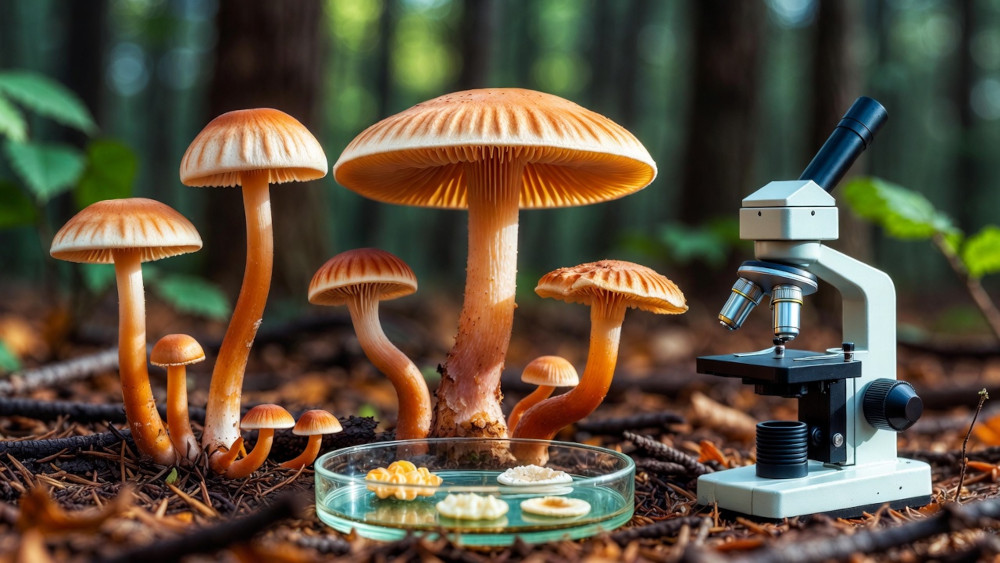

Various, complex processes take place in every cell of living organisms, including those related to metabolism. During these processes, nutrients are converted into, among other things, energy and primary and secondary metabolites. For decades, the latter type in particular has attracted considerable scientific interest. So, what are secondary metabolites? What is their role? And why might they be potentially useful for humans? Read more in the article.
Secondary Metabolites – What Are They?
As mentioned above, metabolites are the product of biochemical transformations in the body, of which primary metabolites are essential for basic life processes, including the body’s growth and development. These include, among others, Amino acids, fats, nucleic acids, and carbohydrates – in other words, everything life needs to grow.
The situation is different for secondary metabolites. These are substances that are not directly needed for the functioning of a given organism. However, they may be important for adaptation and survival in the environment. This means that secondary metabolites can serve, among other things, to defend against potential parasites and predators, but also attract pollinators. On the other hand, they can also be responsible for intercellular signaling. The resultant properties of these compounds include, for example, a specific taste, smell, or even color of a given organism.
Secondary metabolites include, among others: substances such as:
- alkaloids,
- terpenes,
- flavonoids,
- tannins,
- phenols.
Typical Secondary Metabolites of Fungi
Throughout evolution, fungi have developed various secondary metabolites through which they affect their environment. There are three characteristic groups of these compounds:
- polyketides,
- terpenoids,
- nonribosomal peptides.
In addition to these, there are also mycotoxins, which are essentially poisons, as well as alkaloids of various action.
Secondary metabolites of fungi were widely appreciated only relatively late, in the late 1920s, when Alexander Fleming discovered the properties of the fungus Penicillium. Compounds contained in and extracted from it inhibited bacterial growth. This is how the first penicillin in history was obtained. It’s worth emphasizing that these substances can be both very beneficial to humans and deadly toxic.
Functions of Secondary Metabolites in Fungi
Polyketides belong to the group of secondary metabolites, which include compounds widely used in medicine. They are used in the production of antibiotics, anticancer drugs, and anticholesterol drugs, among others.
Terpenes, on the other hand, comprise a wide range of substances with medicinal properties. Such functions are demonstrated, for example, by compounds obtained from Pleurotus ostreatus – the oyster mushroom. They effectively inhibit the growth of Candida albicans – fungi present in the human digestive tract, whose overgrowth can lead to numerous ailments. These same compounds can effectively inhibit the proliferation of selected bacteria, including Escherichia coli and Staphylococcus aureus.
Non-ribosomal peptides have a very broad spectrum of activity. They are used to produce toxins, antibiotics, and substances used in immunosuppressive or cytostatic drugs. The alkaloids mentioned above are a large group of compounds with diverse effects, including psilocybin – a psychoactive substance that, although considered a drug by law in many countries, scientists see as a potential ally in the fight against numerous mental ailments.
Why might secondary metabolites of mushrooms be useful to us?
As I mentioned above, secondary metabolites of mushrooms already have wide applications in medicine. Antibiotics, cholesterol-lowering drugs, anticancer drugs… These are just some of the possibilities these substances offer us. In addition, they can also be used in agriculture as biopesticides and in industry – in the form of flavorings or enzymes.
One of the most interesting applications, however, is related to mental health. In this field, the potential use of both psilocybin (in so-called psychedelic therapy, being studied to treat treatment-resistant depression and PTSD) and functional mushrooms, used as traditional adaptogens and nootropics, is being considered. Although the aforementioned alkaloid is problematic from a legal perspective, a growing number of countries (this year, for example, the Czech Republic) are opening up to its use in the treatment of selected mental ailments.
In turn, secondary metabolites of mushrooms such as lion’s mane, reishi, and maitake can help regenerate the nervous system and reduce stress. There’s also a growing discussion about the role of mycobiota and psychobiotics derived from certain fungi. Bacteria and fungi in the digestive system are linked to mental health. A probiotic yeast strain, Saccharomyces boulardi, known since the 1920s, is often considered in this context. It secretes, among other things, caprylic acid, which destroys the cell walls of Candida albicans (linked to depression). Additionally, it competes with it for habitat, which leads to an effective reduction in these fungi.
Secondary Metabolites of Fungi – Summary
The Kingdom of Fungi still holds many secrets. And the deeper we delve into it, the more opportunities we discover. Secondary metabolites of fungi are proof that we can find thousands of solutions to the problems of the modern world in nature. That is – if they are used appropriately.