


Mushrooms are incredibly popular – not only among autumn pickers, but also among scientists and those looking for functional species. The birch mushroom – chaga (or the Polonized “czaga”) – often appears in this context. What is this organism? What properties does scientific research report? What are the prospects for it, as well as potential side effects? To find out – read this article.
Chaga – or Chaga mushroom
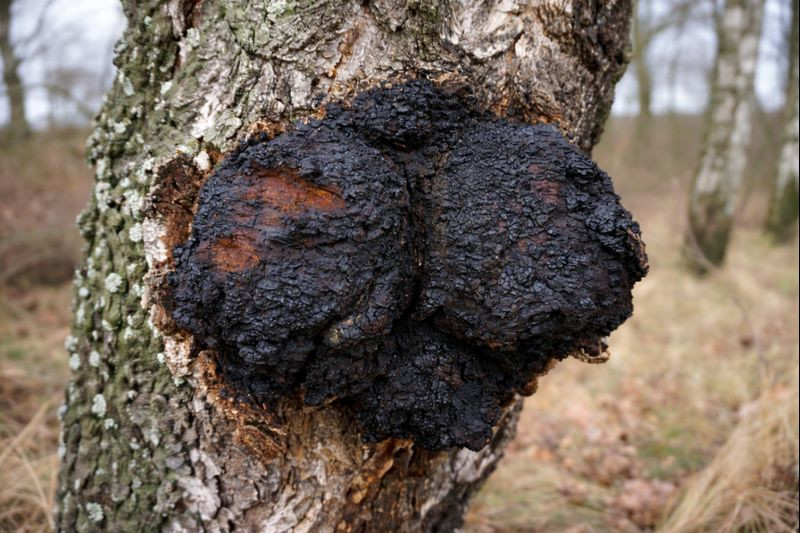
The scientific name for this mushroom is Chaga mushroom. It belongs to the family of chaga mushrooms and looks completely different from most people’s idea of the organism hidden under the word “mushroom.” First of all, chaga produces two types of fruiting bodies – asexual and sexual. The first is a bumpy, fissured wart growing from the side of trees. It is strongly attached to the host and influences the shape of its trunk (often becoming significantly thicker in this area than along its entire length). It resembles a charred lump, hard but also splinterable. Fresh, reddish cracks serve asexual reproduction by producing chlamydospores, which spread when the host dies.
When the tree reaches the end of its life, drained by the parasite, teleomorphs, or sexual fruiting bodies, develop under the bark or even in the wood layers. They are flat, spread out, and grow adjacent to the anamorphs. They are approximately 10 mm thick and up to several dozen centimeters wide. Initially soft (fleshy-leathery), they harden and become brittle over time. Mycelial clusters occur on the edges of these fruiting bodies, which, by prying open the bark, create space for the fruiting body to grow. This causes the trunk to split, thus releasing the fruiting bodies.
In Poland, this fungus is rare and is listed on the Red List of Plants and Fungi, subject to partial species protection. It typically grows in forests, growing on deciduous trees (primarily silver birch and aspen, and less frequently on other species, including hornbeams and elms). Even though it’s a parasite, it can potentially support human bodily functions.
Properties of chaga mushrooms – what does scientific research say?
Before discussing the specific benefits that can be derived from using this mushroom, it’s worth discussing its contents. It is precisely because of the components present in the fruiting bodies of this organism that it is a valuable raw material in natural medicine. It contains, for example:
- amino acids
- phytosterols,
- flavonoids,
- tannins,
- acids phenolics,
- polysaccharides,
- B vitamins,
as well as selected minerals, including potassium, iron, zinc, and calcium.
It is therefore a true powerhouse of natural nutrients. Scientific research on the chaga mushroom indicates that it can help with digestive ailments, including inflammatory bowel disease, gastric and duodenal ulcers, and hyperacidity. Furthermore, it has antioxidant properties, combating free radicals and thus potentially counteracting signs of aging and cancer. It has also been shown to have a beneficial effect on the immune system by stimulating the production of cytokines and immune cells. It also has the potential to alleviate heart and circulatory system diseases by, for example, lowering cholesterol and blood pressure.
What are the opinions about chaga mushrooms?
It all depends on who you ask. Generally, chaga mushrooms have good reviews in various circles, but scientists and medical professionals approach them with caution. The former see their potential primarily due to the presence of numerous nutrients that can be helpful in combating various ailments. Doctors themselves, however, are waiting for clinical trials – until there are tests demonstrating the safety of using chaga-based preparations, they likely won’t consider them health-promoting agents.
The situation is different for those practicing folk or natural medicine. Chaga mushrooms have a very positive reputation among them, and they have been using them in their practices for decades. They call it an adaptogen, which has a beneficial effect on both mental and physical well-being.
Possible Side Effects of Chaga Mushrooms
Generally, preparations based on this material are considered safe. However, research on this mushroom is still ongoing. However, some undesirable effects have already been identified. Chaga’s side effects include:
- potential kidney problems (due to the large amount of oxalates, which can cause kidney stones),
- risk of hypoglycemia (which, in people taking insulin or antidiabetic medications, can lead to an excessive drop in glucose levels),
- blood clotting disorders (due to the presence of proteins that hinder the clotting process),
- risk of exacerbating autoimmune diseases (due to the impact on the immune system; multiple sclerosis, lupus, and rheumatoid arthritis are particularly mentioned in this context).
Birch Mushrooms – Summary
Like many natural remedies used in alternative medicine, chaga mushrooms require further research and, in the case of practitioners, caution in their use. However, if there are no contraindications and symptoms occur that could be helped by a preparation based on this mushroom, you may consider supplementing it.