


Mushrooms of the genus Psilocybe comprise numerous species found worldwide. Arguably the most popular is Psilocybe cubensis. Psilocybe cubansis has become a valuable base for cultivating numerous varieties, characterized by varying appearances (even general form!), growth rates, and even abundance of its characteristic alkaloids. Among the most popular strains, one stands out – the Golden Teacher. The Golden Teacher is essential for every observer of the mycelium of Psilocybe. Adventurous individuals also use it to achieve different experiences or alternative therapies. What is worth knowing about it? Check it out!
Golden Teacher – where does this name come from and why is it so unique?
The strain, which earned its own Latin name – Psilocyne Aurumescens, was introduced in the 1980s. The name “Golden Teacher” – aptly enough – comes from a hat. The golden, noble color of the hat makes it stand out from other P. cubensis strains. Compared to other strains, it fruits in a rather regular and consistent manner in terms of form. The overall appearance lends it a certain dignity, and its high psilocybin content makes it a “mentor” for many in the field of psychedelic experiences.
Amateur mycologists, however, will certainly be more interested in the fact that the Golden Teacher demonstrates understanding when it comes to observing mycelium. Although sensitive to contamination, it is quite forgiving – even for beginners. It does, however, provide extensive knowledge about hyphal development.
As you can see, this mushroom is unique in many ways. However, being a teacher is a serious commitment. A noble appearance is not enough. So what sets it apart from other species of the Psilocybe genus?
What sets Golden Teacher apart from other mushrooms?
When writing about these mushrooms, it’s impossible to avoid the issue of psychedelic experiences. Although using them in this way is illegal, various reports on how Golden Teacher works are available in scientific studies and online. Reviews of it are very favorable, and for good reason.
Its versatility is its hallmark. According to tests conducted with this mushroom, Golden Teacher is suitable for use in a variety of protocols. This means that, depending on the dose, it induces various states. For example, microdosing potentially increases focus on tasks, and therefore productivity. On the other hand, it is also supposed to improve creativity.
However, research also focuses on deeper experiences after using larger doses of Golden Teacher. A sufficiently large dose can support greater insight into one’s emotions, feelings, experiences, and traumas. For this reason, it is probably the most commonly used strain in “gray zone” psychotherapy. Importantly, it doesn’t strike with the sensitivity of a hammer, but rather gradually opens further doors of perception.
I emphasize that I’m not promoting anything here, but rather describing the fact that research is being conducted on the use of psilocybin mushrooms and psilocybin in psychological therapies. It’s important to remember that in Poland, possession of this substance and the organisms that produce it (i.e., the fruiting bodies of these mushrooms) is still illegal. Only licensed laboratories and other facilities can conduct testing. However, amateur mycologists have the opportunity to observe the mycelium of these species, as it does not produce any prohibited alkaloids.
Distinctive Features of the Golden Teacher: Shape, Color, and Growth
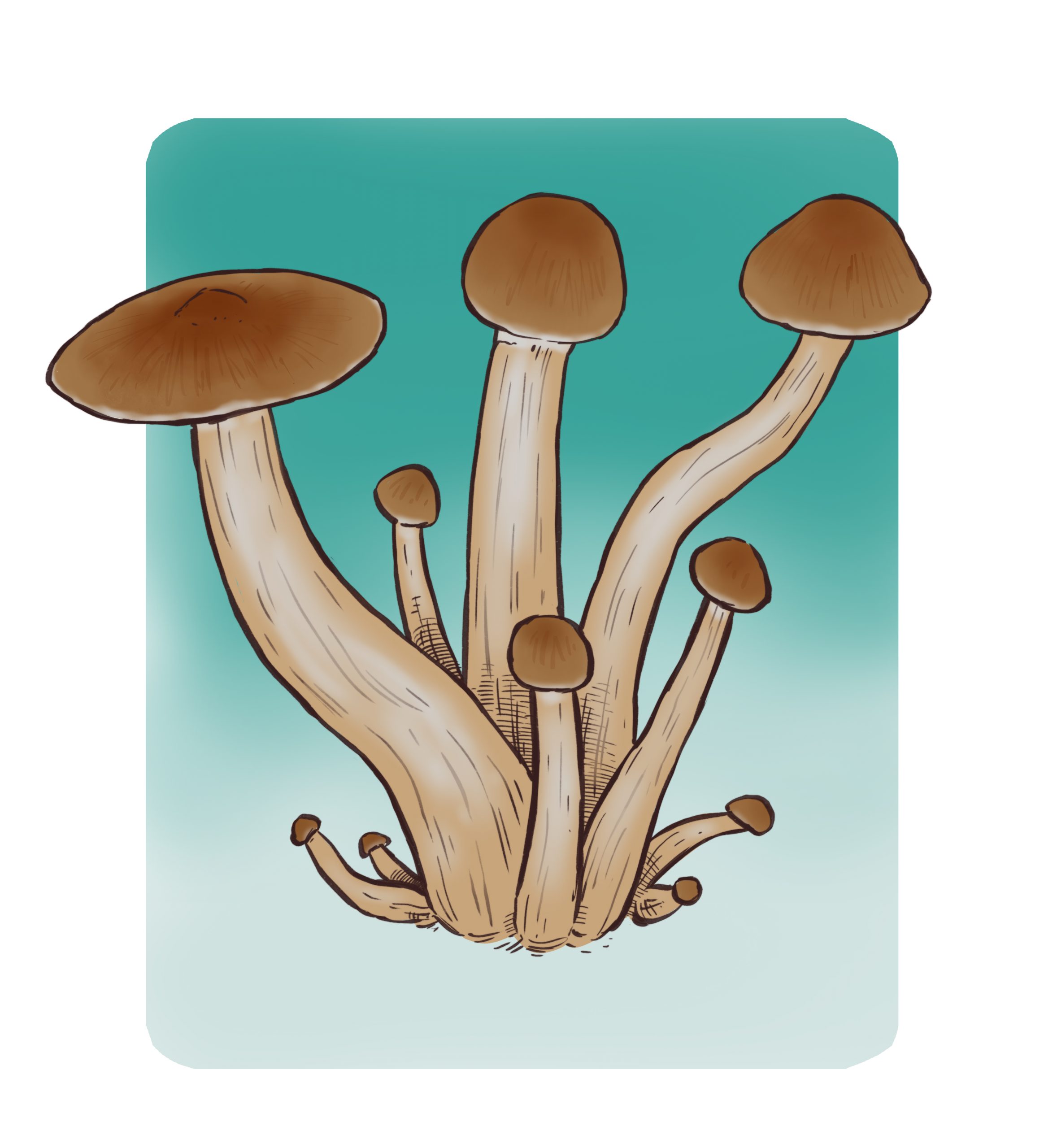
Let’s take a look at what this unique mushroom looks like. Although the fruiting bodies are similar in shape, they can differ in size. In other words, the caps vary in diameter (usually reaching several centimeters) and are shaped either like bells or cones. As mentioned, they usually have shades of golden brown, fading to a delicate brown. They sometimes have light, whitish edges, as well as light patches at the top. The gills are clearly separated and light brown in color.
The stems are cylindrical, growing to about 10-15 cm in length. The color tones are very similar to the cap. Fibrosis is also visible in the upper part. When any part of the fruiting body is damaged, it turns blue. The ellipsoidal spores of the Golden Teacher, on the other hand, are much darker – usually dark brown.
The Teacher prefers a humid environment and temperatures around 20-25° Celsius. The mycelium tolerates various substrates quite well, making its observation recommended for beginner mycologists, among others. In licensed labs, alkaloid-rich fruiting bodies bloom on the mycelium-colonized substrate within a few days to a few weeks.
Golden Teacher – the perfect mycelium for beginners
Golden Teacher is a good strain for beginners who observe mycelium… And as you saw above – not only that. It has a long-standing positive reputation and is still one of the most popular strains. Among other things, you can find it in my store. Golden Teacher Liquid Mycelium and Golden Teacher Growkit. It’s important to remember one thing – these are products intended for microscopic examination. Observing hyphae and mycelium on a glass slide can provide a wealth of intriguing experiences. Therefore, I encourage you to take a closer look at these products.