


Can psilocybin be addictive?
Psychedelics are attracting increasing interest not only from the scientific community but also from the medical community. In the US, for example, there are entire movements aimed at the so-called decriminalization of nature, meaning, for example, not penalizing the cultivation of certain plants, and not just within one’s own sphere, such as in a garden. It so happens that this would also include psilocybin mushrooms, which contain psilocybin, considered by some to be a dangerous psychedelic, banned in the wave of the war on drugs that has been ongoing since the 1960s. However, a question arises – is it really so dangerous and is psilocybin addictive? You’ll find the answer to this question below.
What is psilocybin and where is it found?
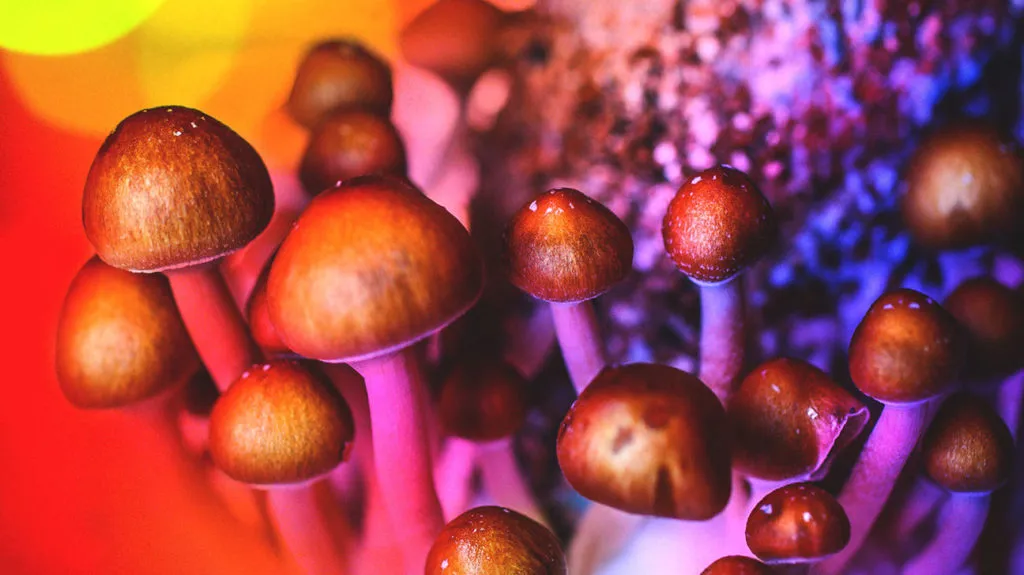
Before you learn whether psilocybin is addictive, it’s worth first talking a little about the drug itself. It’s a natural psychoactive substance found in hallucinogenic mushrooms, including species such as Psilocybe cubensis (Cuban Psilocybe), Psilocybe semilanceata (Silver Psilocybe), and many others. Some of them grow wild in Europe, including Poland, inhabiting areas such as pastures, where they have access to ingredients found in things like animal feces. It’s important to know that this compound is officially banned in Poland, as well as in many other countries around the world. Therefore, its acquisition—for example, by cultivating psilocybin mushrooms—is a prohibited and highly punishable activity.
However, this doesn’t mean that mycology enthusiasts can’t take a closer look at their spores, for example. These don’t contain any illegal substances. They can, however, provide insights into the colonization of mycelium, which must be killed after some time to prevent fruiting bodies from growing on it.
Effects of psilocybin
To understand whether psilocybin is addictive, at least a rudimentary knowledge of how this compound works is required. It is well absorbed in the mucous membranes, causing, among other things, an increase in serotonin levels, which increases sensorimotor stimulation and changes in perception of the external world.
Therefore, it is often compared to, among others, psilocybin. to LSD, although it has a much weaker effect on humans. However, after consuming a preparation, for example one prepared from mushrooms, the effects are estimated to last on average around 4-6 hours. The effects themselves, depending on the form and individual cases (including the metabolism of the person taking such a substance), may appear after 15 or even as late as 40 minutes.
Psilocybin is not addictive…
It’s time to finally answer a very important question – is psilocybin addictive? Numerous studies conducted on it prove that, at least physically, this substance does not have such properties. Some researchers indicate that it has a negligible psychological addictive effect. However, the prevailing view in the scientific community is that it’s impossible to become addicted to it.
It even helps fight addiction!
It’s worth adding that psilocybin, in addition to being non-addictive and not causing recourse to other stimulants, also helps fight other addictions. It has been proven to be exceptionally effective in combating alcoholism. It has been proven, among other things, that the number of days spent drinking heavily decreased significantly in those undergoing treatment.
Extensive research on psilocybin
Now that you know the answer to the question of whether psilocybin is addictive, it’s time to learn how much interest this compound is generating among medical professionals and scientists. Due to its properties, including its potential use as a pharmacological support for the treatment of alcoholism, drug addiction, and numerous mental health conditions, including PTSD, depression, and obsessive-compulsive disorder, this substance is being widely studied in the West, and increasingly in Poland as well. It’s worth following these tests, as they may provide interesting insights into psilocybin and the mushrooms that produce it.